

Move Over, Grass: There's A Tough Lawn Alternative With Flowers

We may receive a commission on purchases made from links.
There is something about a grass lawn that just feels right. It's soft, it's neat, and it gives your home a classic, put-together look. The problem, however, is that some grass types are very delicate. Plus, conventional grass lawns often have the same basic, green, uniform look while requiring a lot of maintenance. Now, this can be a problem for homeowners who want their lawns or backyard to stand out and not just look plain and flat, and that is where grass lawn alternatives like the dwarf cinquefoil (Potentilla canadensis) can help.
If you've never heard of dwarf cinquefoil before, it's a low-growing perennial that is often recommended by experts as a tougher alternative to grass lawns. It stays close to the ground and grows only about 2 to 6 inches tall. Also, like lawn grasses, it spreads through creeping runners that root at their nodes and has green foliage. However, what makes it special is that it flowers and adapts easily to dry sites and poor soils. The flowers appear on the plants in spring and summer, and they attract pollinators like bees as well.
Just keep in mind that dwarf cinquefoil can only handle moderate foot traffic. Plus, it is only hardy in USDA plant hardiness zones 4 to 8. So, if you have a lawn that sees a lot of foot traffic or live outside its hardiness range, you might want to look for some other stunning grass alternative for your lawn. It is also important to note here that dwarf cinquefoil is an aggressive spreader. So, if you use it as a grass alternative, make sure to keep its growth under control.
How to grow and care for dwarf cinquefoil lawn
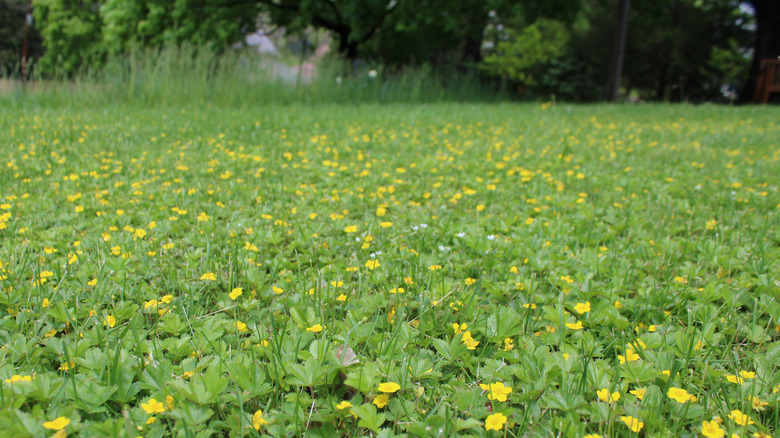
Even though dwarf cinquefoil is low maintenance, it still needs the right growing conditions if you want to use it for your lawn and get the most out of it. For starters, it prefers soil with a pH between 6 to 8. So, start by testing the pH of your soil with a home-based soil pH testing kit, like the Rapitest Soil Test Kit for Lawns, available for $16 on Amazon, covering 20 tests. Then, depending on the results, use sulfur or lime to adjust soil pH. Other than that, pay attention to sunlight as well. Dwarf cinquefoil prefers sunny conditions, although it can tolerate partial shade, too. However, if your yard is pretty shaded, you might want to avoid growing it as a grass alternative for your lawn.
As for how you can grow it, you can use both seed and stolon propagation. If you are a beginner, it is best to go with stolon propagation, as trying to grow a groundcover from seed is relatively slow and less successful. Nevertheless, once you have planted the dwarf cinquefoil, keep it well watered as it is establishing. You then reduce the watering frequency as it matures. Dwarf cinquefoil does not need much water once it is established, making it pretty drought tolerant. Fertilizing is a similar story, too. It often grows in poor soil and does fine without any added fertilizer.
Better yet? You do not need to mow dwarf cinquefoil like regular grass. However, if you want to maintain a neat look, you can occasionally trim the groundcover's top by pruning after flowering. Just make sure that when you are pruning or trimming the dwarf cinquefoil, you do it slightly above its branching points on the stems.