

Why I Would Never Have Wooden Countertops In My Kitchen (Even As A Master Woodworker)
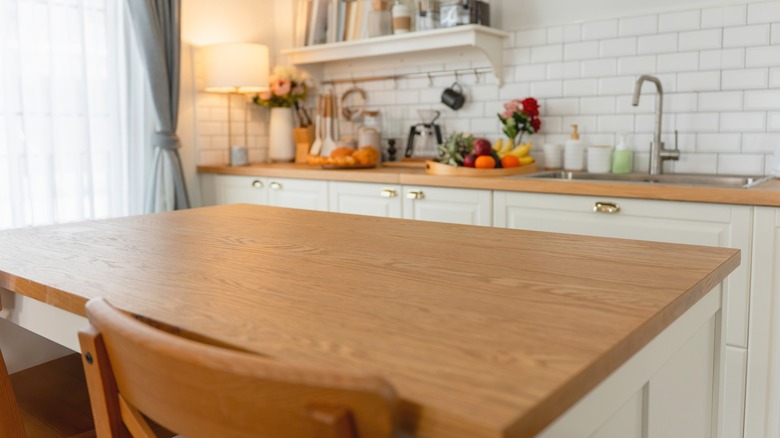
"Dad, should I choose maple or beech hardwood for my countertop?" was the question my daughter asked me several years ago. "Neither," was my reply. She then listened dutifully as I explained why wooden countertops, especially in a kitchen, are such a bad idea. But of course, she naturally followed with, "So, which wood should I choose?" Defeated, I answered: "Maple." Experts are rarely respected so close to home. Nevertheless, as a professional woodworker who has built kitchen cabinets, chairs, tables, lamps, guitars, and even outhouses, I am uniquely qualified to comment on the ins and outs of wooden countertops. And considering my love of woodworking and wood as an unparalleled medium for all sorts of things is well established, you have even more reason to listen when I say: Wooden kitchen countertops cannot handle daily wear and tear. I prefer sealed stone or even artificial options like laminate or solid surface.
Admittedly, there is an undeniable appeal to wood when picking kitchen countertop materials. They're less expensive to buy and install than many alternatives, and when brand new, the figure of the grain is beautiful to behold. They feel nice to the touch and are less likely to break glass or ceramic vessels accidentally dropped on them. Believe me, I've been seduced by the siren song of hardwood countertops, but that attraction fades quickly. Relative to most common countertop options, wood can pick up everyday stains in no time, sometimes within only a week after installation. Factor in the softer surface and its propensity to develop scratches from even minor glancing blows, and you could quickly find yourself stuck on Circe's kitchen island of marks, dents, cracks, and blemishes ... still enchanted by the idea of a wooden countertop but disappointed by its true nature.
The hard facts about wooden kitchen countertop damage
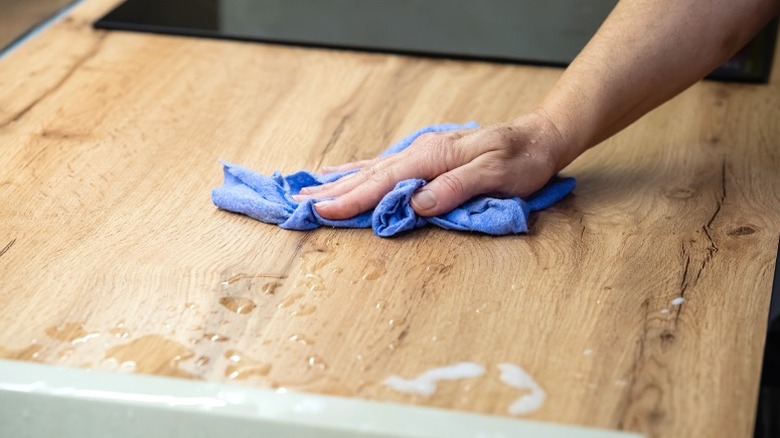
Let's stop and consider what you want from a kitchen countertop. First, you want it to be a firm surface, hard and level. You don't want anything that will easily chip or dent if chopped or struck. Cleanability should be another priority. In my kitchen, the countertops suffer an unholy collection of stuff spilled on them — wine, spaghetti sauce, fruit juice, fats and grease, coffee and tea, just to name a few — so, like most people, we need something that's easy to wipe off. Bonus points if a counter is heat resistant and able to withstand an errant hot pan to some degree.
There was a day when nearly all countertops were made from wood, but we've generally moved away from them. Why? A wooden countertop's Achilles' heel is its fibrous nature. Wood is made up of what can be described as thousands of tightly packed "straws" that will transport water and nutrients to keep the tree alive.
Even in close-grained wood such as maple, the surface of the wood is pierced by pores that are the open ends of those straws. And they're still capable of moving moisture to some degree, whether it be water or wine, to encourage deep-set discoloration. There may not be a perfect countertop to weather every sort of abuse, but sealed stone surfaces and non-porous options like quartz, laminate, and solid surface are much more durable and stain resistant than wood. But can't we use a finish of some sort to block up those pores? Yeah sure, but about that...
Why finishing wooden countertops isn't enough
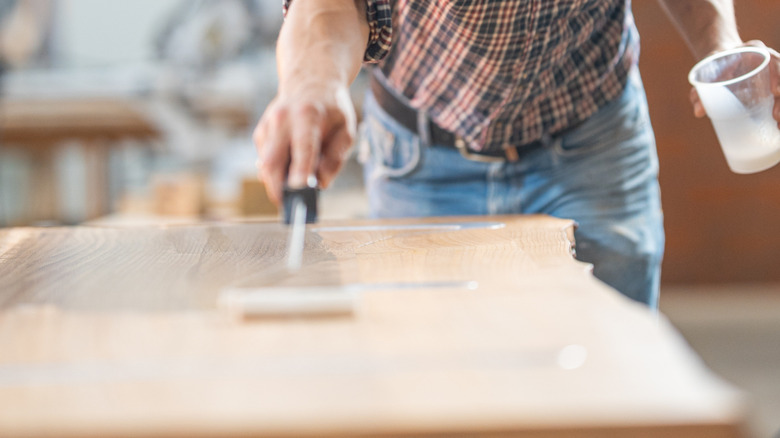
Most wooden countertops have an oil finish to impede liquids to some degree. You could use mineral oil as a wood finish, but products like walnut oil or linseed oil also work well. Besides improving the wood's looks, oil makes the surface simpler to clean. Oil fills the pores, hindering (but not completely preventing) liquids from getting into the fibers. It provides some protection but is also easily sanded away for refinishing ... which you'll have to do every few years to keep your counters looking their best. This process can be painstaking; you may need to apply multiple oil coats with hours of dry time between them, potentially leaving the counters out of commission for days. Refinishing is messy, annoying, and something I don't have to worry about with my current soapstone countertop.
Okay, if oil doesn't do the job perfectly, you might think a durable polyurethane or lacquer is the right choice. That sounds logical, but those finishes are still easily marred, crazed, clouded, broken down from oils and fats, and discolored by heat. When they're distressed, I find them very hard to refinish. Ah-hah! But what about woodworking's latest trend, sealing wood with epoxy resin? Perhaps better, but similar problems persist, and there are only a few brands considered food safe (none if you add colorants).
Curiously, if you insist on having wooden countertops, putting no finish may be the best treatment. Let it develop its own patina from food and drink interactions over time, sand it smooth occasionally, and leave it be. But while that solution might work for some, never in a million years would my spouse live with the constant mess and maintenance. For me, at least, wooden countertops are just a bad idea.