

You Don't Need Cleaning Vinegar: A Better DIY Solution That's More Versatile
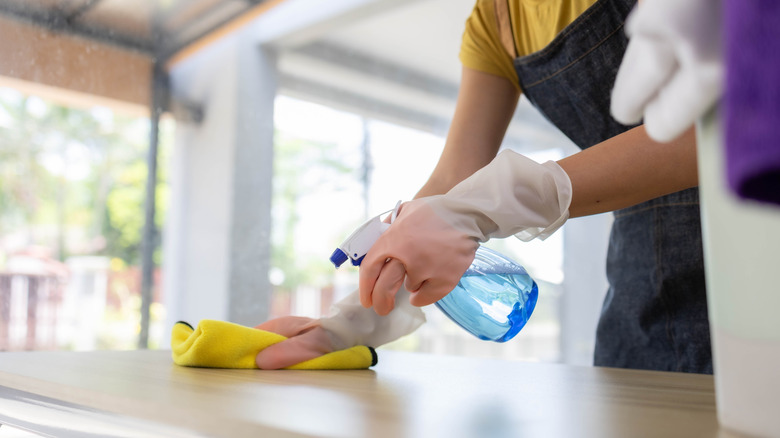
When it comes time to deep clean the home, you probably don't want to switch between five different products made up of various harsh chemicals. Because there are so many ways vinegar can clean your home without the added synthetic cleaning agents, it's become a staple for many households. Although cleaning vinegar has its pros, it isn't a reliable all-purpose cleaner. It contains a high concentration of acetic acid, which is the compound responsible for cutting through things like grease and soap scum. Unfortunately, its acidity is also what causes etching or damage to numerous vulnerable surfaces, including natural stone, grout, and electronic screens. The acid could also break down protective sealants and finishes from countertops, cabinets, furniture, and floors. For an even more versatile, safer, but perfectly effective alternative, you can make an all-purpose cleaner using water, liquid castile soap, and rubbing alcohol.
This DIY all-purpose cleaner is a great way to naturally clean your home because you're able to use it on more surfaces and it may be even more effective at cleaning than vinegar. While vinegar is great at dissolving mineral deposits, it's not as effective on greasy messes. Castile soap is an all-natural, biodegradable soap made up of amphipathic molecules, which contain a hydrophobic tail and a hydrophilic head. When mixed with water, the soap forms micelles around grease, grime, and oil particles to pull them away from the surface and trap them inside their cores. Isopropyl alcohol works well with the soap and water mixture, as it dissolves both water-based and oil-based compounds. It will help loosen stubborn residues and evaporates quickly, promoting a streak-free clean.
How to make and use this DIY all-purpose cleaner
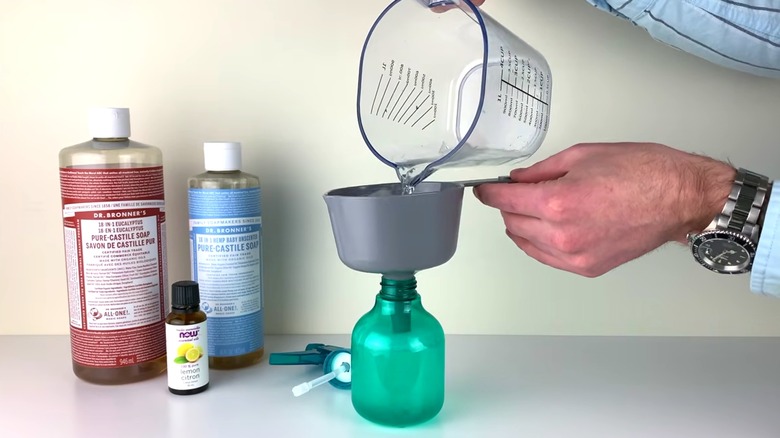
To make this DIY spray cleaner, combine ¼ cup isopropyl alcohol with 1 ½ cups of distilled water in a clean, empty spray bottle. Then, add 3 to 5 drops (about ½ to 1 teaspoon) of liquid castile soap. To keep every room of your home smelling fresh, you can top it off with 5 to 10 drops of your favorite essential oil. Gently twirl the bottle in a circular motion to combine the ingredients and avoid having bottle of suds. When you're ready to use it, spray it on the desired surface. Wipe the area down with a soft cloth until it's dry, and that's it! No need to rinse afterwards.
According to Dr. Bronner, castile soap is safe to use nearly anywhere in your home. You may use it to safely clean things like painted surfaces, wood tables, doorknobs, carpets, plastic, toilets, and stone or tile countertops. Isopropyl alcohol is also safe to use on most surfaces when diluted like this, though it can be potentially damaging to sensitive plastic items. While this mixture has some antibacterial properties due to the alcohol, the dilution reduces its effectiveness, and it may not have enough dwell time to effectively kill germs if you spray and immediately wipe it up. Similarly, many essential oils are considered to be antibacterial, but their main purpose in this solution is to impart a pleasant scent (something you definitely won't get with cleaning vinegar). It's also important to note that some essential oils, like tea tree, aren't safe to use near pets, so be mindful of the situation as you formulate your DIY cleaning solution.