

Better Than Mums: The Pretty Porch Flower For Fall Color
The spring and summer are traditionally associated with adding colorful plants outdoors, but autumn offers additional opportunities to brighten your garden or porch. Chrysanthemums are one of the more traditional fall choices, and they seem to be everywhere. The problem with mums is that they can hard to grow for beginning gardeners; they need frequent watering and special pruning. If mums aren't your favorite, or you're looking for something unique, there are alternatives to fussy fall mums to consider. One easy-to-grow and low-maintenance choice is strawflower (Xerochrysum bracteatum) .
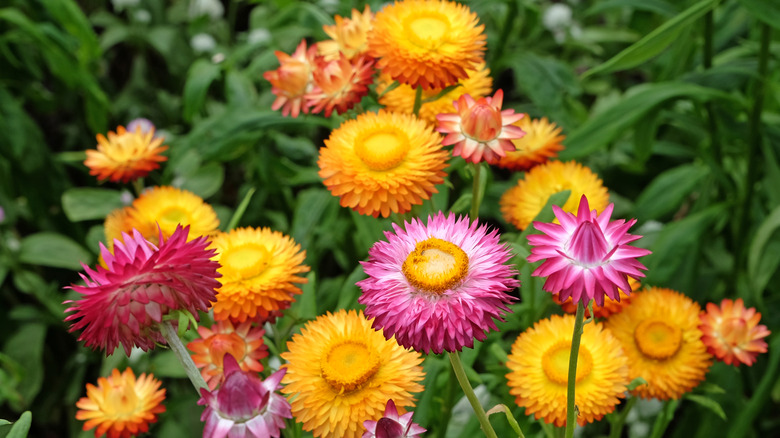
Also known as "everlasting flower," strawflowers have multiple-petaled, paper textured-looking blooms. They look similar to daisies, and come in a variety of bright colors, such as white, red, pink, and yellow. Typically grown as annuals from late spring until the first frost, strawflowers may also be grown as perennials in USDA hardiness zones 8 to 10.
While it's common to plant strawflowers in landscape beds, they work equally well in containers. This option is especially appealing to add color to the front porch. As a bonus, you may even attract butterflies and other pollinators to these pretty flowers.
Tips for growing strawflowers for the fall (and beyond)
Just like mums, strawflowers prefer full sun. Ideally, if you're planting them in containers for your porch, they should receive at least six hours of full sun so that they continue blooming through the fall. If you have a screened porch with no direct sunlight, you may want to consider an alternative. Strawflowers also prefer drier conditions, and may not do as well in areas of high humidity. When growing this plant in smaller pots or window boxes, consider dwarf varieties that grow up to 12 inches tall. You can expect most other varieties to grow between 2 and 3 feet tall, per NC State Extension.
You should always check the care instructions for the strawflower variety you buy, but all of these plants share similar needs. Strawflowers prefer moist, well-draining loamy soil. Container-grown strawflowers benefit from an all-purpose potting mix. They are drought-tolerant once established and dislike soggy soil. When overwatered, the plants are vulnerable to downy mildew and may not flower as well. Fertilizers are not necessary, but regular feedings could encourage the plants to produce more blooms. You can also extend their blooming time by pinching off some of the spent flowers.
As a bonus, you don't have to stop enjoying strawflowers once autumn transitions into winter. The plant's blooms make excellent dried flowers that retain their color and papery texture. You can place them indoors as part of a dried flower arrangement, or even use them in a variety of crafting projects.