

Skip The Bath: Attract Birds To Your Yard With A Thrifted Lampshade
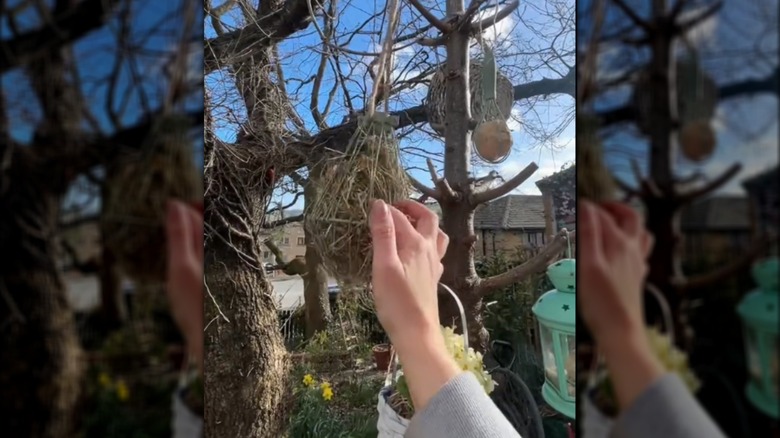
Many people enjoy adding bird feeders or water sources, such as bird baths, to their gardens. Birds also seek nesting sites and materials, and providing these can attract more feathered friends to your yard. TikTok DIY influencer @mrsclarehoops shows how, in a few minutes, you can convert an old wire lampshade frame and what appears to be a handful of wheat straw into a form that holds a supply of nesting materials for local birds. She removes the cloth shade, paints the wire frame, fills it with straw and hangs it in the garden.
It's not unusual to leave everything from grass clippings to dog fur in a suet cage for birds to pick through as needed. Hoops replaces the suet cage with a collapsible lampshade frame, which she paints and ties up with a bit of twine. And, following a few rules, this can be among the best ways to attract birds to your yard.
Pre-building a nest, on the other hand, might not work as well. Birds will reuse nesting boxes, birdhouses, and platforms, but will rarely reuse old nests . This habit reduces parasites and predation, and many species seem to prefer picking their own nesting sites.
What nesting materials to provide
The watchwords for bird nesting materials are clean and dry. Clean here includes chemical-free, so you must choose nesting materials with care. Pet fur is a common materials supplied by homeowners to encourage birds, but this is one of the word choices. Research published in the journal Science of The Total Environment shows that veterinary medicines and insecticides (flea treatments, for example) in nesting fur lead to poor survival outcomes for bird offspring exposed to them.
In general, it's best to provide what local bird species commonly use. Learn about the most common nest types and how to tell them apart, and focus on natural items. Straw is a great choice, as are pine needles, dried grass clippings, native plant trimmings, dried leaves, moss, twigs, and down-like fluff from plants like cottonwoods and cattails. In addition to pet fur, steer clear of human hair and human-made stuff like dryer lint, yarn, plastic strips, and aluminum foil. In the same vein, if you do decide to paint your lampshade frame, follow the same rules as you would when choosing a birdhouse paint: Choose a non-toxic paint, preferably water-based. Choose a low VOC Or No VOC non-toxic paint like real milk paint.