

You Don't Need A Bench Grinder To Sharpen Drill Bits: Here's An Easy Hack In A Pinch
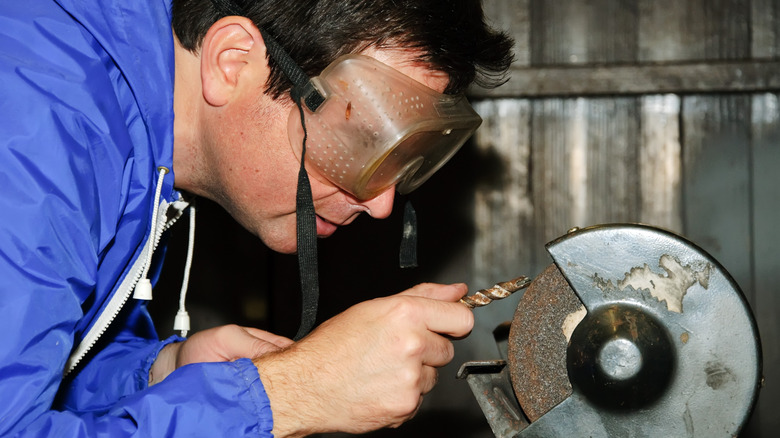
One of the fastest ways to sharpen drill bits is by using a bench grinder. But not everyone has theirs set up — or owns one, for that matter. If you've yet to invest in a bench grinder, or aren't in your shop, here's a quick way to sharpen dull bits in a pinch: Sandpaper.
Sandpaper, aka abrasive paper, is actually a tried-and-tested sharpening method for tools like chisels and blades. It can also work for slightly dull drill bits. However, you have to choose the right sandpaper. To sharpen high-speed steel (HSS) bits, you'll need to use a high-quality abrasive paper like aluminium oxide. Aluminum oxide retains its sharpness and is hard enough to work on HSS steel.
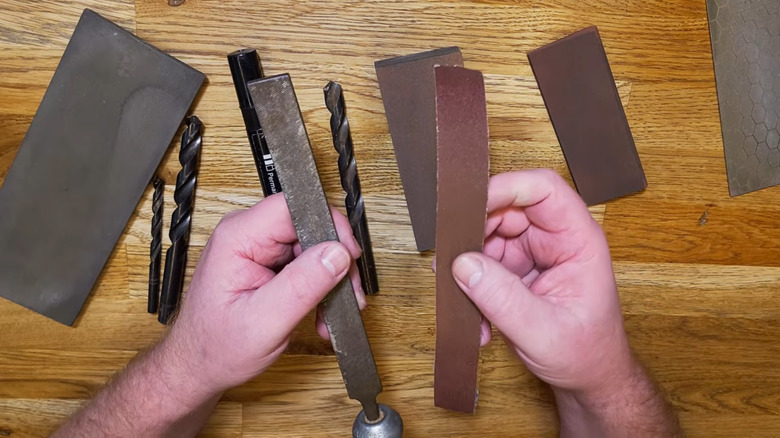
To get started, gather your dull bits and a vise or another way to hold them steady during the sharpening process. As for the abrasive paper, 240 grit should be the right coarseness for honing. Finally, you'll need a file, a sturdy strip of plywood, or other scrap to wrap the aluminum oxide abrasive paper around. Double-sided tape or spray adhesive can help keep the paper in place.
How to sharpen drill bits with aluminum oxide abrasive paper
Before trying this hack, it's important to be aware that it won't work on all types of drill bits. Bits made from tungsten carbide, for instance, are too hard and require a different method. Also, bits ranging from ⅛-inch to ⅜-inch are easiest to sharpen by hand. Anything smaller is hard to see; anything bigger is time-consuming. This method works best on lightly nicked or dull bits. Badly damaged ones are best repaired with your bench grinder.
Secure your bit at a 90-degree angle in a vise with the cutting edge parallel to the vise's jaws. Shade one of the bit's flanks with a marker to track progress. Wrap the stick or file with abrasive paper. Following the flank's profile, use short, light strokes, taking care not to round over the cutting edge or tip. Adjust your angle based on bright spots you make on the shaded flank. It should take only a few strokes. Repeat the process on the bit's opposite side.
The principle is the same no matter the bit, but the angle of attack varies. For a spade bit, match the cutter's angle, avoiding the edges of the center point. On Forstner bits with teeth and brad point bits, you'd need to wrap the paper around thinner material and use fewer strokes.