

What Happens If You Don't Dilute Cleaning Vinegar With Water?
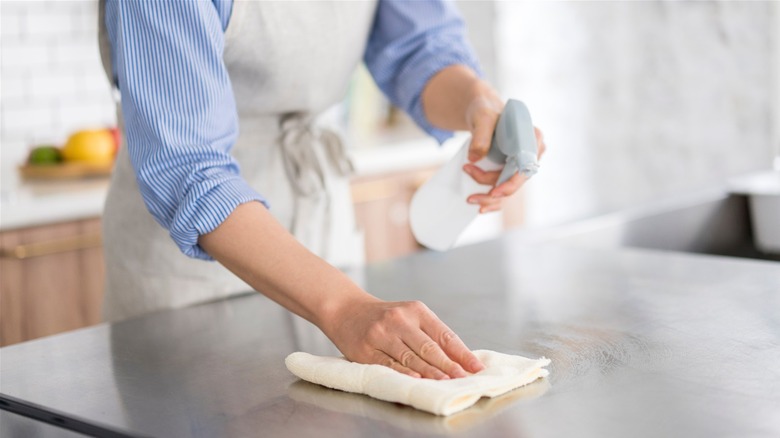
Vinegar may seem like the perfect natural cleaning solution when you're trying to avoid harsher products. However, cleaning vinegar is not quite the same as the vinegar you have in your pantry. Many cleaning vinegars contain 6% acetic acid; meanwhile, standard white distilled white vinegar has 5%. Do the math, and that single percentage point works out to roughly 20% more acetic acid, which can make a real difference. If used straight from the bottle, cleaning vinegar could not only make your home smell like the inside of that one bit of Tupperware you once used for a vinaigrette, but it can also irritate your skin and damage acid-sensitive surfaces. Not every undiluted splash will result in disaster, but using higher concentrations of white vinegar haphazardly is risky.
Before using cleaning vinegar, consider the material you intend to use it on, how long the vinegar will be sitting for, and the directions listed on the bottle. On compatible surfaces, cleaning vinegar's high concentration of acetic acid can help break down soap scum and hard-water residue. However, that same cleaning power can work against you elsewhere. "Just as it eats away at coffee stains, imagine it doing the same thing to other surfaces in your home," chemist Joe Glajch told Consumer Reports. Using it undiluted is unnecessary for many cleaning jobs; in most cases, you should be watering it down and reserving the original solution only for compatible materials. Understanding how to properly use cleaning vinegar and why dilution matters can spare you an irritating cleanup and a potentially expensive mistake!
The risks of using undiluted cleaning vinegar
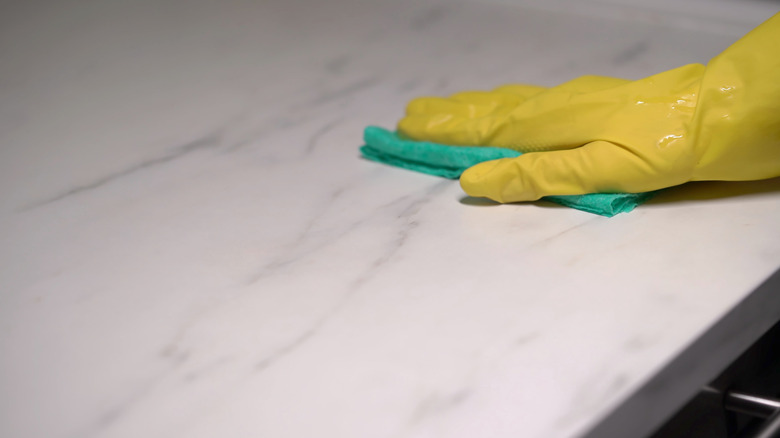
Your hands may be the first place where undiluted cleaning vinegar makes its presence known. Brief skin contact may just cause some itching and localized redness, but repeated exposure can bring about pain or even dermatitis. Poison Control also warns that prolonged contact with vinegar can cause burns, while a splash in the eye causes irritation at best and corneal injury at worst. If you're in the U.S. and suspect you have vinegar poisoning, contact your local poison control center by dialing 1-800-222-1222.
If cleaning vinegar can be that harsh on your skin, it should come as no surprise that there are several household items you should avoid cleaning with vinegar, too. Marble and limestone, for instance, are composed primarily of calcium carbonate, which makes them sensitive to acidic solutions. Wood is particularly vulnerable to being damaged by moisture and acid. If enough vinegar solution seeps into unfinished wood or flooring seams, the added moisture can make the material swell and shrink, potentially causing warping as it dries. Finished wood is not automatically safe from vinegar, either. Even diluted vinegar can damage certain finishes and wood flooring, leaving the surface cloudy or sticky.
For a gentler alternative, you can make a homemade vinegar cleaning solution using ordinary distilled white vinegar instead of cleaning vinegar. Simply combine 1 cup of distilled white vinegar and 1/2 cup of water in a spray bottle, add 15 drops of lemon essential oil, and shake. Remember to properly label all your cleaning solutions that aren't in their original bottles to avoid confusion — and a potential cleaning catastrophe — down the line.