

Can I Hose Down My Grill?
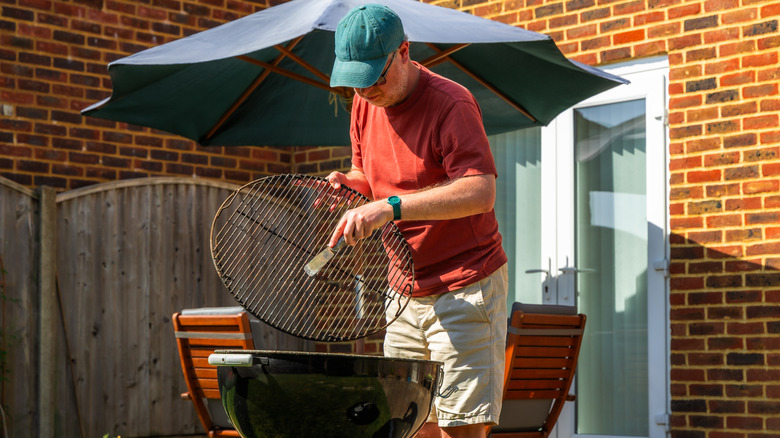
Everybody wants to be King of the Grill until it's time to clean it. From sticky barbecue sauce to gooey marshmallows, it's amazing how fast a grill can get covered in the gunky stuff. While you might already know everything there is to know about firing it up, many people find themselves looking at a crusty grill and wondering if it's okay to simply hose it down. For starters, you should never just start wildly spraying water all over your charcoal or gas grill to avoid damaging sensitive internal components. That said, a hose can come in handy for cleaning your grates, grease trays, and certain exterior surfaces.
Knowing how to clean a grill is just as important as knowing how to use one. More than just changing the taste of your food, dirty grills can be downright dangerous. Over time, buildup can attract rodents or start growing harmful bacteria and mold. It can also clog up burners or cover up rust that's eating away at your metal grates, both of which can drastically shorten the life of your grill. Heavy coatings of grease can also quickly turn a minor flare-up into a fiery situation. Before grabbing a hose, it helps to understand the different components and how they work so that you only soak sections of your grill that won't be permanently damaged by water.
There are ways to hose down a grill without damaging it
The exact anatomy of your grill will depend on whether you have a charcoal or gas version, but both typically consist of a heat source, a firebox, and cooking grates, topped by a hood or lid. Your grill may also have flavorizer bars, which are angled metal plates that sit on top of the burners and below the grates. Higher-end models are often equipped with additional features, like grease trays, drip cups, side tables, and even rolling carts.
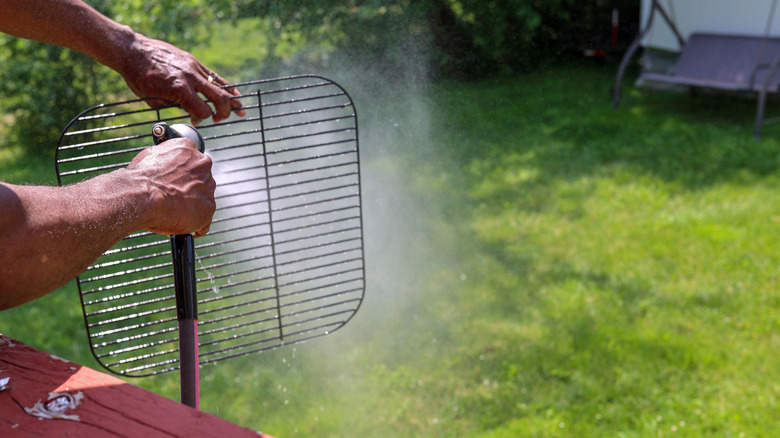
While hosing off any removable parts won't replace a good scrub with the best products to use for cleaning a grill, it can help loosen and rinse off caked-on food. It's still important to take care by avoiding the highest settings on your hose nozzle and resisting the temptation to pressure wash these parts, since blasting them could damage their protective coatings. Instead, a quick rinse followed by a soaking session in warm water mixed with a degreasing detergent like Dawn can work wonders.
There are a few other parts of your grill that are okay to hose down, too. If your lid is completely removable or can be easily detached from the grill body, it won't hurt to give it a rinse inside and out. The same goes for the external base of your gas grill or old-school analog charcoal grills without any electronic igniters, digital displays, or other automated features. As long as you're nowhere near a propane tank or any internal components, a little vinegar spray followed by a rinse with the hose can get your grill glistening in no time.
Never use a hose near sensitive internal components to avoid damaging them
Remember, hosing down an entire gas or charcoal grill can cause serious damage. Water ruins electronics, wiring, and igniters. It can get trapped inside the grill, causing the firebox itself to rust and corrode. Moreover, spraying water too close to your grill's gas lines can interfere with the valves and regulators, leading to safety issues. While it's possible to repair a barbecue regulator or clean the valves, these are the kinds of hassles you don't want to tackle the morning of a backyard gathering.
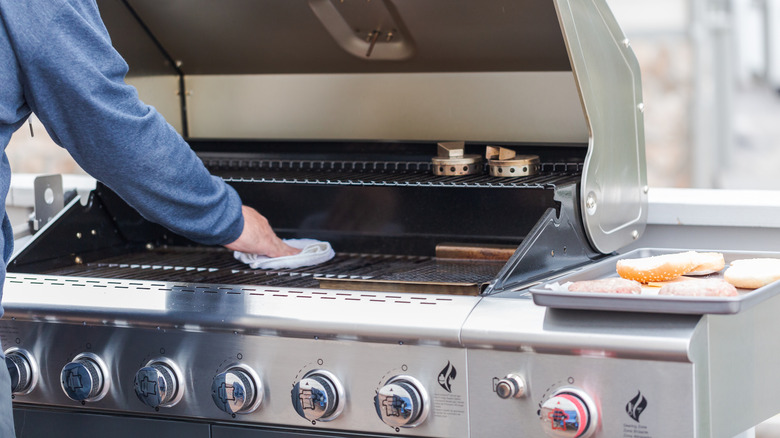
Then there's the inescapable fact that oil and water just don't mix. Even the highest-powered nozzles will typically make a greasy situation inside your grill even worse. Instead of a hose, the best way to clean the inside of a greasy grill is to don a pair of gloves, scrape as much grease away as you can with a putty knife, then coat the surface with a degreasing spray before wiping the surfaces clean with a damp microfiber cloth. The process can be time-consuming, but it will help you avoid scratches, rust, or serious damage to your grill's most water-sensitive parts.
Regular cleaning is a much better solution than hosing down your grill once in a blue moon. Each time you cook, allow the grill to cool before using a scraper or balled-up piece of aluminum foil to remove stuck-on particles. Then, remove charcoal ash or empty the grease trap and wipe splatters from the lid, side tables, or body. You can also invest in a cover to protect your grill from extreme weather and discourage rodents from inviting themselves to the party.