

Bumble Bee Vs Honey Bee: How To Easily Tell The Difference
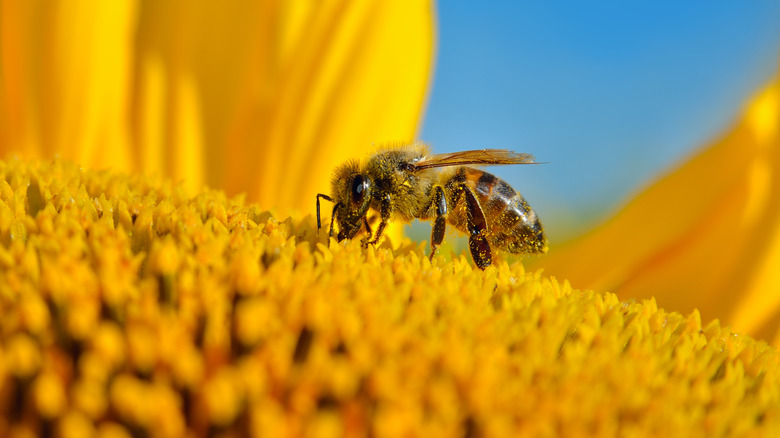
Bees are undoubtedly crucial to earth's ecosystem (not to mention their benefits to human food supply), and you may be interested in creating a garden to attract them. There are numerous species that could potentially stop by if you do so. In fact, the Oklahoma State University Extension says there are at least 20,000 bee species, and just 5% are considered social bees. Among these include two common types you might spot around your yard or garden: bumble bees and honey bees. Despite their common traits, there are some key differences to be aware of if you're trying to tell these two bee species apart. Aside from physical features such as their size and amount of hair, bumble bees and honey bees can also be easily identified based on some of their behaviors and nesting habits.
Bumble bees are large in size, and are often mistaken for deck-drilling carpenter bees. But unlike carpenter bees, which have smooth abdomens, bumble bees have numerous black and yellow colored hairs that give them a notable fuzzy appearance. There are more than 250 types of bumble bees, per PennState Extension, and they are all annual species.
Honey bees, on the other hand, are perennial species, and their queens have longer lifespans. While some worker bees and drones can be similar in size to some bumble bees, they are nowhere near as fuzzy. Honey bees also have much more slender bodies than their bumble bee counterparts.
Hives and behaviors of honey bees vs. bumble bees
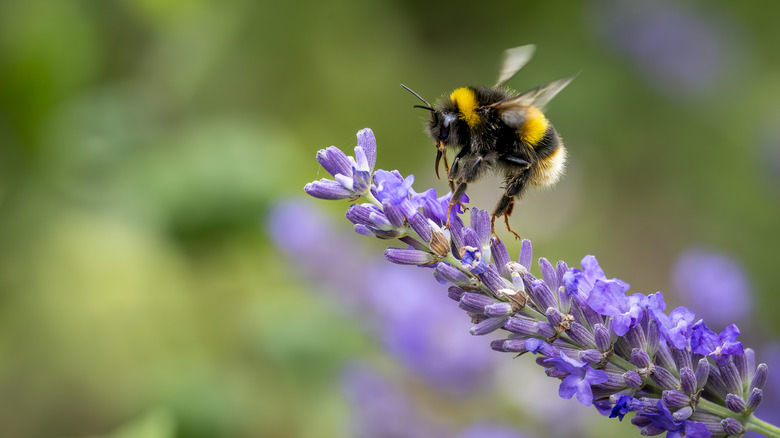
Honey bees are notorious for building large hives, and you might see these in the hollows of trees and fallen logs. These bees can unfortunately build their nests inside buildings from time to time as well, with attics and hollow spaces in walls being the possible spots for hives. The colonies can also break apart and move together in large swarms before building their hives, with their notable buzzing noises hard to miss. Honey bee colonies are extensive, and may contain between 20,000 and 60,000 bees at a time, according to the Oklahoma State University Extension. Behaviorally, honey bees can be quite aggressive if anyone approaches near their hives. But unlike bumble bees, these bees only sting once before they die from the loss of their stingers.
Bumble bees are not as aggressive as honey bees, but females will sting over and over if people disturb their nests. You may see fewer bumble bees around because their colonies are smaller in size, too. They tend to nest under the ground, where each colony only produces a few hundred new bumble bees at a time. Bumble bees never move in swarms, though it's possible to see several moving around together in the vicinity of a nest.
In most cases, seeing a bumble bee or honey bee in your garden or yard isn't a concern. If you've found a hive of bees that is in a dangerous or inconvenient spot on your property, do not attempt to move it yourself. A beekeeper may address outdoor hives, while a pest control expert can deal with those inside buildings.