

Is It Okay To Pressure Wash A Fence?
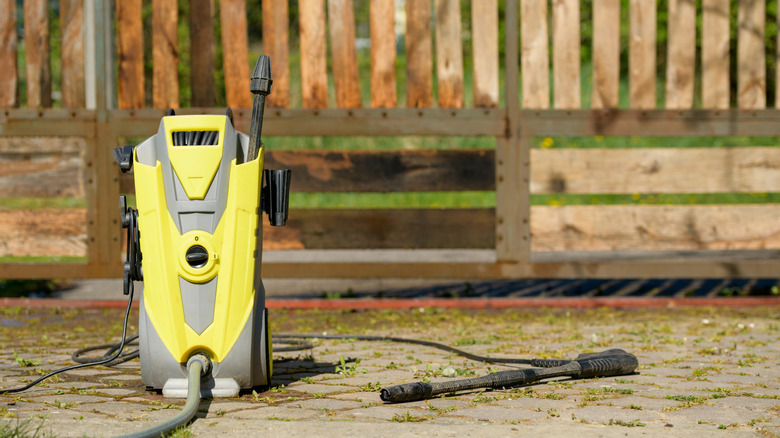
Not only is it okay to use a pressure washer on a fence, but it's usually a great idea. Of course, this depends on the condition of the fence and the material from which it's made. Pressure washing, which — fun fact — is not the same as power washing, means using a high-pressure water spray for cleaning. Pressure washers can generate pressures of up to 7,000 pounds per square inch (PSI), and their nozzles can focus the spray tightly enough to cause considerable damage. Obviously, you want to avoid that, and the way to do that is to keep the pressure low (around 2,000 to 3,000 PSI) and use a nozzle with a fairly wide spray pattern. 25 degrees is ideal, while a 15- to 18- degree nozzle may be better for tougher dirt.
Although there are some things you shouldn't pressure wash, you can pressure wash most fence materials, including wood, metal, and vinyl. However, it's not recommended for composites and may even void the product warranty. Older composite decking and fencing boards have a habit of absorbing water and swelling when pressure washed. Newer products are typically "capped" with a vinyl coating to prevent this, and they may be safe to pressure wash at low pressure, but only if the manufacturer's instructions say so. If you don't know the manufacturer, it's best not to use a pressure washer on your composite fence. Old wood fences, on the other hand, can usually handle pressure washing, but if the wood is fragile, this is another situation in which you may have to use very low pressure to avoid damaging it.
Tips for getting great results when pressure washing a fence
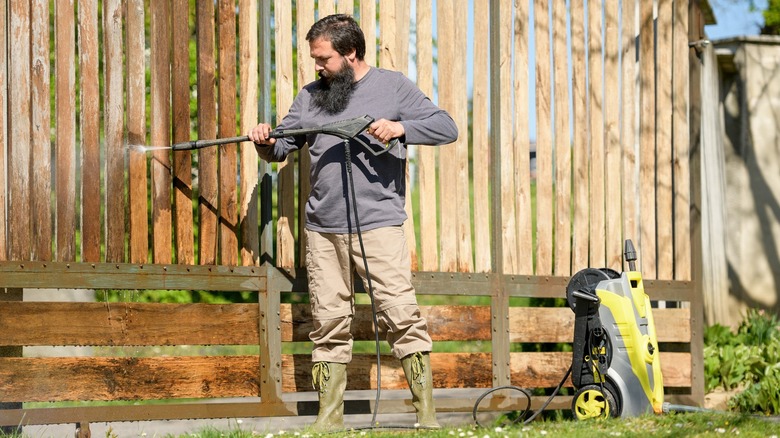
The key to getting your fence as clean as possible without damaging it is to hold the nozzle the right distance away. A good average distance is somewhere around 18 inches. You may want to get closer at times to wash away mold or algae, but if you get any closer than about 12 inches, you can gouge wood and leave tracks on most materials — and tracks are hard to blend or erase. It's always a good idea to test the spray on a hidden part of the fence before you start the job.
Adding soap to the spray is a good way to dissolve dirt, and it's fairly easy to do. Most pressure washers have a soap reservoir into which you can pour bleach-free, pressure-washer-safe detergent. Use a special wide-angle nozzle when applying soap (it's usually black), and start at the bottom of each fence board and work your way up. When you're done, switch back to the 25-degree (green) nozzle and rinse the boards from the top down to avoid leaving streaks.
Once you get into the rhythm of pressure washing, you'll find it easy. Just make sure to keep the nozzle at a 30-degree angle with respect to the surface of the fence to make it even easier. This eases the pressure a little more to help protect the fence and prevents water, paint chips, and whatever else was on the fence from spraying back in your face.