

Out With Concrete: A Natural, Long-Lasting Alternative For Patios

Building a patio often starts with a poured concrete slab or concrete pavers, but poured slabs are susceptible to cracks over time, and colored concrete pavers are prone to fading. You can help prevent cracks and unsightly fading in your brand-new patio by skipping the concrete entirely and using sandstone pavers instead. Although sandstone pavers can cost more than double that of concrete pavers, and substantially more than a poured concrete patio slab – they're likely to look more beautiful as they age. Like colored concrete, the surface shade can fade or change over time. But where weathered concrete looks run down, weathering in sandstone emphasizes the natural look.
Sandstone also has a higher density than poured concrete patios. Most concrete patio slabs have a pounds per square inch (PSI) rating of 2,500 to 3,500. Concrete pavers can range up to 8,000 PSI. While softer sandstone ranges from 4,000 to 7,000 PSI, harder sandstone pavers can exceed 15,000 PSI, rendering them less prone to cracks compared to concrete slabs and low-quality concrete pavers. Fixing cracks in a poured concrete patio can cost up to $800. While cheaper to install than a sandstone patio, you might lose this savings over time if you continually have to address cracks.
Concrete also isn't one of the most environmentally friendly patio options. As a recyclable, natural stone material, sandstone is better for the environment than concrete when sourced responsibly. Sandstone also has better surface temperatures than concrete. Whereas darker concrete absorbs heat and becomes hot in the summer, sandstone's naturally light color helps reflect heat and keep surfaces comfortable year-round.
Types of sandstone pavers for patios
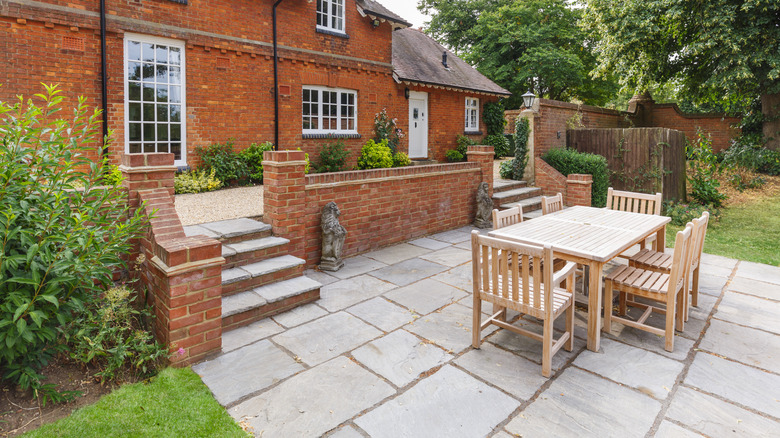
Sandstone comes in various colors, allowing you to truly customize a DIY patio design. Buff sandstone sports the traditional sandy hues that earned the material its name. Bluestone has a cooler gray hue, and brownstone has an earthy red tone. There are various finishes and shapes to choose from, including irregular sandstone pavers. Building a flagstone patio is a good choice if you want a natural look. Tumbled and natural cleft finishes also offer a more rustic feel. Conversely, honed finishes are a good option for contemporary designs, but have less slip resistance.
One warning: It might be best to avoid sandstone if you live in a region that experiences frequent freezes. Like other paver materials, sandstone is susceptible to freeze-thaw cycles due to its porous properties. If moisture seeps into the stone, it can expand when frozen and cause cracks and spalling. Bluestone sandstone is less porous, making it a better option if you're worried about freeze-thaw damage. One way to maintain your sandstone patio to ensure it withstands Mother Nature is with regular sealing. You can do this by choosing a sealant designed specifically for sandstone pavers and resealing your patio every two to five years.