

Goodbye Shade Sails: 6 Better Ways To Cover Your Patio

Sun shade sails are a convenient way to provide shade to your patio space. But all it takes is one loose corner for the fabric to flap in the wind. You may even feel like you need to take your sail down when it's stormy or windy to protect it. However, reliable coverage gives you more creative freedom to organize your patio layout and truly enjoy your outdoor space. That may mean looking for stylish alternatives to sails to create a cool and tranquil retreat or a shaded party patio.
When tackling a new outdoor project, always be mindful of local building permit requirements and homeowners' association guidelines. For example, a dreamy wooden gazebo may require HOA approval before building, but a pop-up version may not. There also might be restrictions on awnings and the colors you can choose. Pergolas can be considered permanent or semi-permanent structures by some building codes and zoning laws. So, even homes without an HOA will need to check to comply with local laws before purchasing and installing.
Pergola
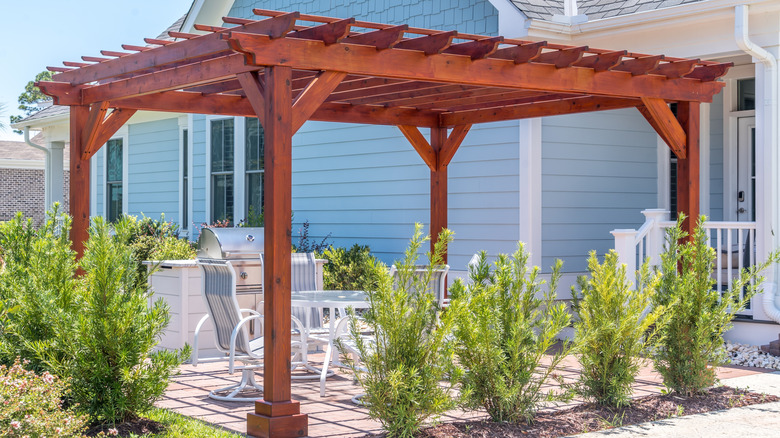
The classic pergola is bright and airy, reminiscent of Italian villas and historical gardens. A natural, wooden pergola offers customizable shade and allows the breeze to pass through. Some can be anchored in cement in the ground, and others can be attached to the side of your home. Bonus: some are strong enough to hold porch swings. If you need more shade, plant climbing flowers like wisteria in planters at the base of each support beam or in the ground surrounding the structure. A canopy of blooming flowers and leafy green vines overhead provides more coverage and a lush feel.
Wooden gazebo
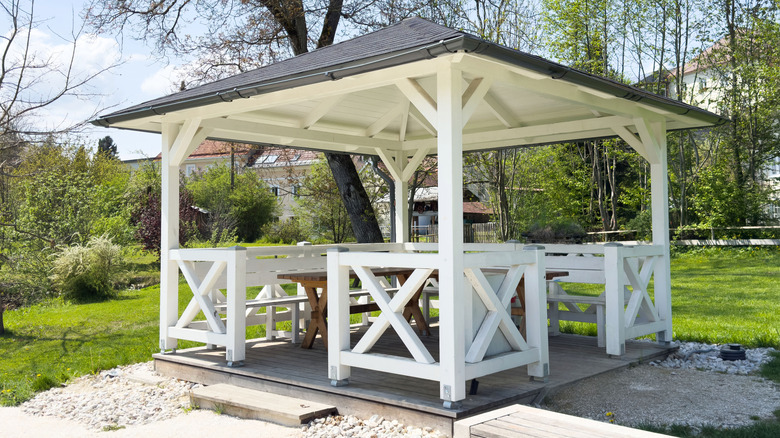
Timeless and customizable, a wooden gazebo structure built over your patio provides shade and adds charming character to your yard. Plus, you can deck it out at night with string lights or glowing lanterns. Treat the wood to prevent decay, and keep it clear of spider webs and wasp nests with routine cleaning. As noted, a wooden gazebo may be considered a permanent structure when it comes to your municipality's laws or your HOA's guidelines. So, double-check before you start shopping for a structure or building one.
Retractable awning
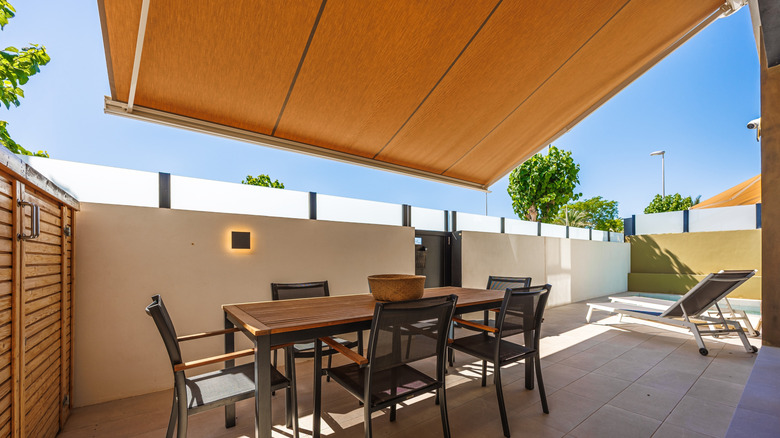
Retractable awnings may get a bad rap for being old fashioned or in the realm of RVs and campers. Today's retractable awning are sleek, modern, and missing the circus color patterns of the 1950s suburbs. Available in various styles, they can either be motorized or manual. There are standard sizes available, but you could also order a custom one to perfectly cover your space. Since they are retractable, you can roll it back to soak up some winter sun, or use its shade protection on the hottest days.
Pop-up gazebo
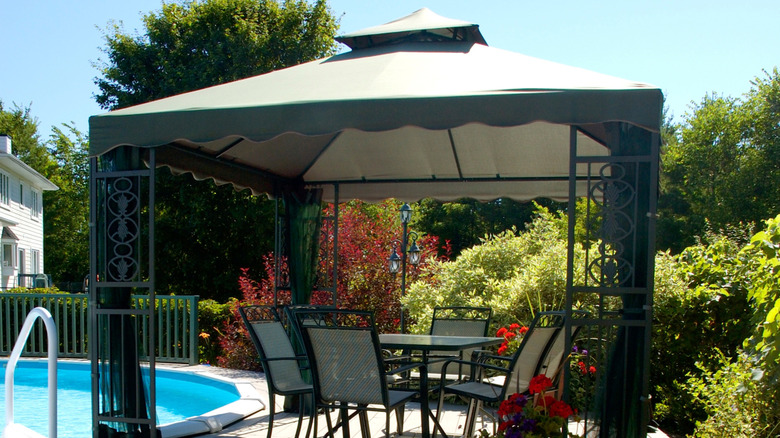
A pop-up gazebo provides shade like a permanent wooden build, minus the hassle and high price (thousands for a wooden gazebo vs. hundreds for a pop-up). It's also renter-friendly, since no holes are drilled into walls and no cement is needed. Setup difficulty ranges from easy-peasy to a two- or three-person job, depending on the size and brand. The downside is that these aren't meant to stay out through all of the seasons like their permanent wooden counterparts. Heavy snows and winds can damage pop-up gazebos. So, they should be taken down in the winter and reassembled when warm weather returns.
Patio umbrella
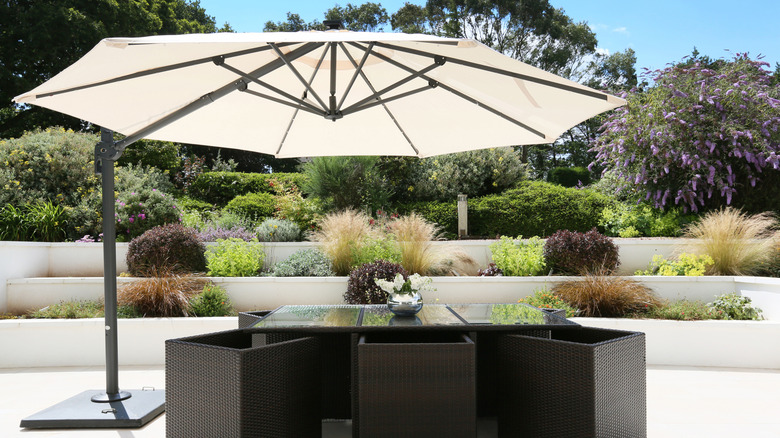
The simplest option for shade is the classic umbrella. There's nothing to build, no permits to get, and no concrete to pour. Renter- and homeowner-friendly, opening a patio umbrella can instantly shade your space while adding color or pattern. An offset canopy umbrella hangs away from the base, so your seating area or dining table is covered without a pole in the middle of the space. If you have a large patio, put up multiple umbrellas for more shade. Strong wind and weather alert? Roll down your umbrella, and done.
Roman shades
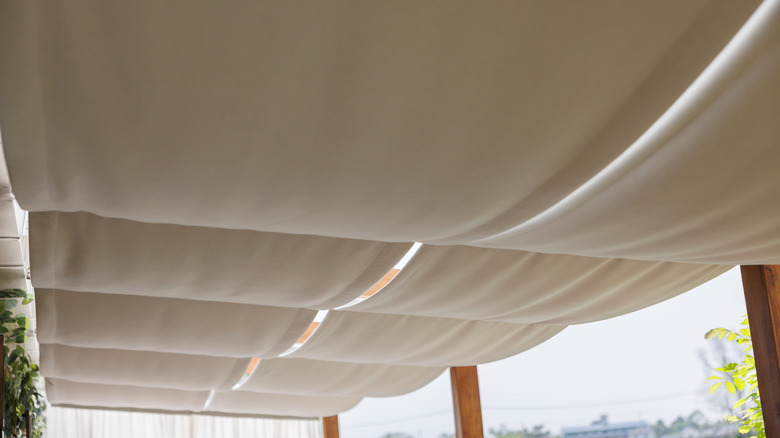
When in Rome? How about when at home? This option is best for those who are not quite ready to give up the fabric look of sun shade sails, but still need an upgrade. Not only do they provide shade, but the draping fabric allows ventilation. Today's options can be retractable (much like an awning) or permanently hung on a frame. The frame holding the Roman shades is much like a pergola without as many cross-beams. Retractable Roman shades can be attached to the home or to the framework, and some are even waterproof.