

What Happens If You Mix Isopropyl Alcohol And Hydrogen Peroxide?
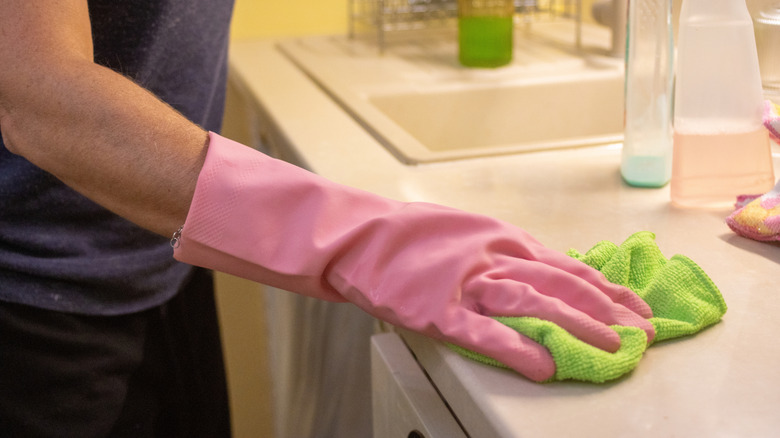
As more people are interested in alternatives to commercial cleaners, you've likely seen recipes that call for DIY cleaners containing more than one ingredient. Yet you also don't want to just mix random ingredients together without knowing their reactions. One such option involves isopropyl-containing rubbing alcohol and hydrogen peroxide for certain cleaning solutions. The good news is that mixing these two ingredients together accidentally is unlikely to pose risks to human health, and is not among the most dangerous household chemicals known to cause reactions. However, combining isopropyl alcohol and hydrogen peroxide on purpose is unnecessary for home cleaning purposes, and you might unintentionally damage certain surfaces, too.
First, an important note: When people talk about isopropyl alcohol, they are generally referring to rubbing alcohol you can easily find in a drugstore. Isopropyl alcohol is a pure form of alcohol, and is usually exclusive to industrial settings due to its dangerous health effects. Rubbing alcohol typically contains a 70% concentration of isopropyl alcohol, along with water. This formula still has the same disinfecting features that pure isopropyl alcohol does. When used alone, rubbing alcohol may be used to disinfect doorknobs and other frequently touched surfaces, as well as minor skin abrasions. Aside from rubbing alcohol, isopropyl alcohol is also an active ingredient in commercial disinfectants, as well as hand sanitizers, as it can kill germs fairly quickly.
While once erroneously recommended for disinfecting wounds (don't use this on skin!), hydrogen peroxide is used as a disinfectant on various surfaces, such as trash cans, sinks, and children's toys. On its own, a typical 3% concentration you might find at a drugstore has the ability to kill germs.
Why you shouldn't combine isopropyl alcohol and hydrogen peroxide
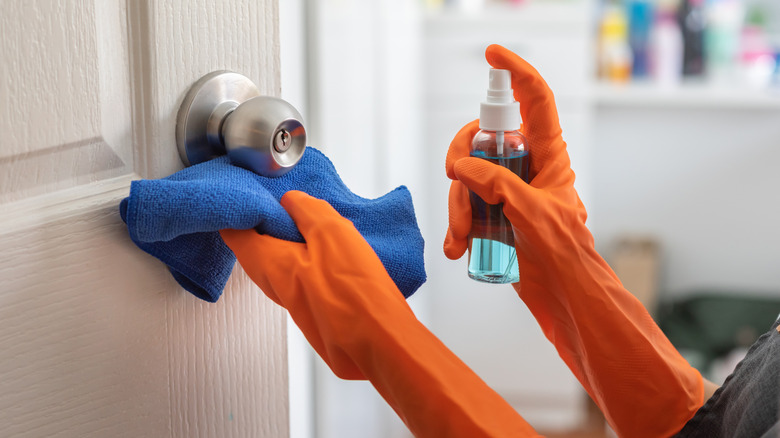
Given their potential to kill certain germs, some people may be interested in combining rubbing alcohol and hydrogen peroxide in an attempt to create a homemade disinfectant. You shouldn't ever mix any cleaning products, though, and these two ingredients are no exception. The problem with this combination is that while each ingredient serves a purpose when used separately, mixing isopropyl-containing products with hydrogen peroxide is not a proven solution for having more germ-fighting power. Doing so can end up leading to an unnecessary waste of product, and the combination may even damage certain surfaces. For example, rubbing alcohol may be too strong for porous surfaces, such as stone countertops, while hydrogen peroxide will stain fabrics and ruin screens on electronics. Also, while rubbing alcohol kills germs more quickly than hydrogen peroxide, it does not kill mold spores like its counterpart can.
It's also worth knowing which isopropyl alcohol and hydrogen peroxide combinations are dangerous. First, never mix isopropyl alcohol with bleach, as this can create toxic chloroform. Hydrogen peroxide can also be dangerous when combined with other common DIY cleaning ingredients. One such example is vinegar, which can create highly corrosive peroxyacetic acid. (It's also worth knowing other cleaning products you should never mix with vinegar.) Again, it's best to use these ingredients separately, and always in well-ventilated spaces while wearing gloves, too. Other dangerous combinations include bleach and vinegar, as well as bleach and ammonia.