

Don't Toss Old Aluminum Trays — Use Them To Make Stylish DIY Pavers On A Budget
We may receive a commission on purchases made from links.
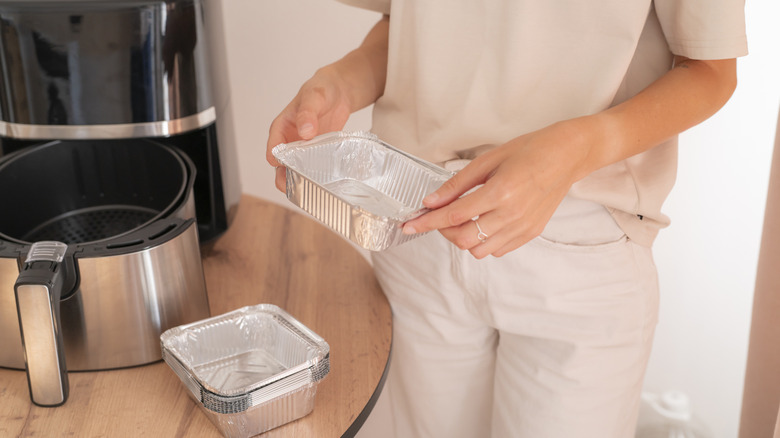
Stepping stones may be small, but their price tags can make a surprisingly big dent in your wallet if you're trying to landscape on a budget. With the average cost of stones running around $5 to $10 apiece, a simple garden path could cost almost $100, and that's before any other landscaping expenses enter the scenario. But what if we told you a perfectly good paver mold may already be hiding in your cabinet? All you need are some old aluminum trays, Quikrete packaged concrete, chicken wire, nonstick cooking spray, and your chosen embellishments (like paint or tile) to make your own stylish DIY pavers.
Any aluminum tray will do, whether it's a large rectangular pan, a round one to create softer stepping stones, or a narrow tray for a smaller space. With these items, each paver will cost approximately $2. Of course, that estimate depends on dividing a bag of mortar among several stones, but it is still an intuitive alternative to filling your cart with premade pavers — and your wallet will definitely thank you. These DIY pavers offer an eclectic way to create a path through your yard, lead visitors toward your home, or add a touch of whimsy to a wildflower garden.
How to turn old aluminum trays into DIY pavers
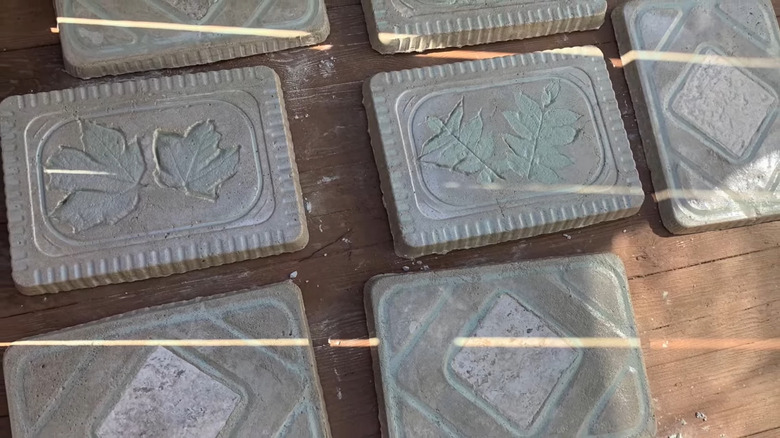
Start by adding water to the Quikrete mortar until it becomes workable. For the pavers, spray the aluminum mold with nonstick cooking spray so it's easier to release once dry. Then, fill each mold halfway with your Quikrete, place chicken wire across the center for added support, and cover it with the remaining mortar. After roughly a day and a half, the stones are ready to be unmolded. But make sure you follow the product's curing directions before walking on them, as leaving the mold does not mean they are ready for foot traffic. Once they are fully cured, you can lay the paving stones on grass or wherever you need a path.
Want to create a custom design that you won't find in the garden aisle? Integral mortar pigment can add color throughout the stones, while numbered tiles placed facedown can display an address or meaningful date. You could also add smooth pebbles, tumbled sea glass, or exterior-rated mosaic pieces, keeping each decoration flush with the surface to avoid creating a tripping hazard. Painting the top with acrylic latex paint is another good way to add customization, but make sure you seal it with a product like Modge Podge to help keep your design intact against the elements (and add some shine).