

There's A Smarter Way To Update Your Bathroom Without Replacing The Shower Tiles
We may receive a commission on purchases made from links.
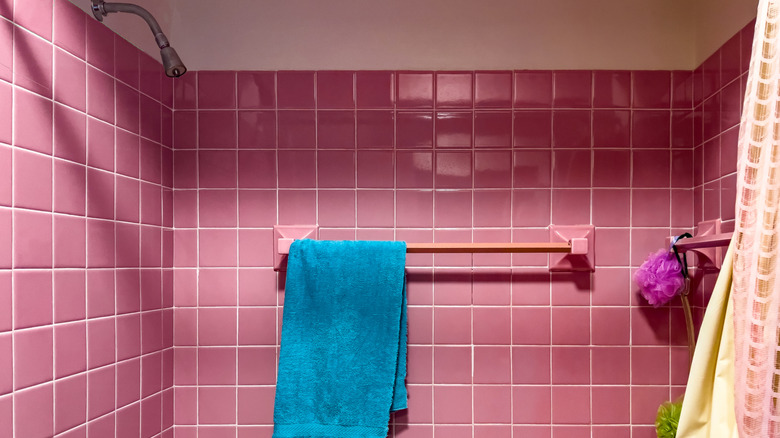
When your bathroom screams 1970s (give or take a decade), it's often due to the color scheme, largely dictated by the shower or tub tiles. One option is to remove the tile and redo it, but if you don't want to break the bank or live in a construction zone, there's a cheaper way to update your bathroom. Increasingly, paint brands have been developing specialty tile paint that, depending on the amount of traffic and water contact, can last anywhere from one to several years, making it an ideal holdover until you can afford a full remodel. TikTok creator flippinnewtons, for instance, painted their wall tiles and added stick-on floor tiles while waiting for a planned renovation the following year — and the refresh only cost them $110.
Before you go down this road, there are a few important details to note. First, the safest route is to use a product specifically formulated for tiles, like Rust-Oleum's bathtub and tile paint, a two-part epoxy acrylic. Painting tile means you'll also be painting the grout in that color. So, if you like the tiles defined, perhaps you should rethink this DIY. (But read on for a potential fix.) And depending on the primer, paint, and sealer you select, you might have to avoid using the painted bathroom for three days to a full month to allow enough curing time.
How to paint bathroom tile
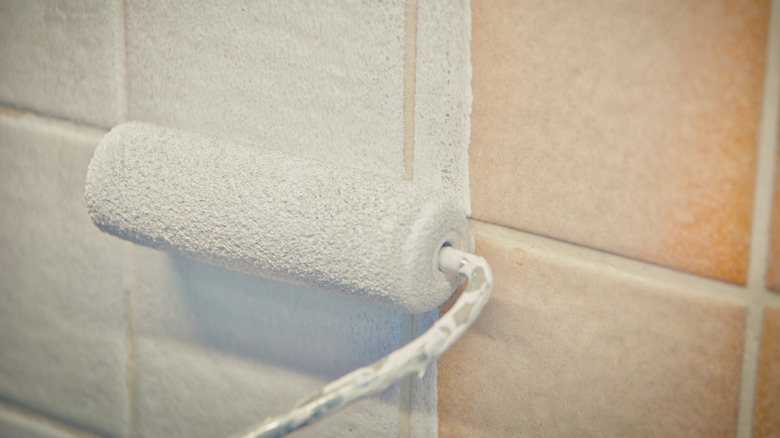
Different brands of tile paint might have slightly varying directions, but here are the general steps for painting over tile. Begin by thoroughly cleaning both the tile and grout. This is also a good opportunity to repair any chips and cracks you see on the tiles. Then, prep the surface. Sand it with 100-grit sandpaper (at minimum), making sure to get the tile edges, too, in order for the paint to adhere. Tape off edges and any fixtures coming out of the tile to prevent paint smears. With a roller, apply a primer that's formulated for use on ceramic and porcelain surfaces. You might need a small brush to get all corners and edges. Refer to the product label for drying time. Then roll on the new paint color once the primer is dry, using a small brush for hard-to-reach spots. For extra protection, you can finish with a non-yellowing polyurethane sealer after the paint fully dries.
Feeling industrious and have a lot of time on your hands? Go even further by painting the tub and shower if they're acrylic. If you don't want to paint the grout the same color, try using narrow-gauge/ultra-thin masking tape over the grout lines before painting or a grout pen on the lines after the paint has dried. Color-block by painting specific sections with different hues. Or stencil on graphics or patterns with the paint to make your DIY update look like custom tile.