

Spider Mite Webs Look Different: Here's How To Identify Which One Is On Your Plants
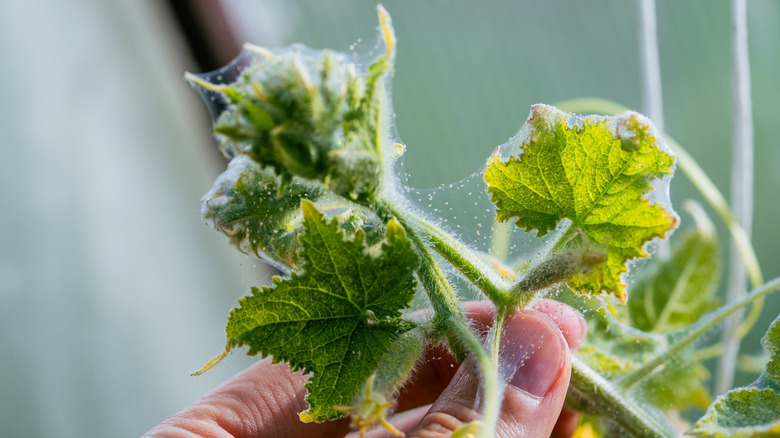
When it comes to spiders, there's admittedly little you can do to prevent these arachnids from spinning their webs around your garden. It's understandable that you might need to take down webs in undesirable locations, but spiders can also be beneficial in controlling other pests. The same cannot be said for spider mites and their webs, though. Seeing webs around your plants may be warning signs of a spider mite infestation, and they can unfortunately be mistaken for spider webs. Thankfully, there are some key features that can help you distinguish spider mite webs from those of spiders. These features include their location, density, and texture, as well as items you might spot within the webs themselves.
Spider mites are named for both their spider-like appearances as well as the ability of most species to create webs. When these pests infest gardens, they sometimes build webs to protect themselves and their colonies from predation. The webbing is rather dense and extensive, covering widespread portions of a garden, rather than consisting of a standalone web you might see with an orb spider. Overall, spider mite webbing is fine in texture, and it can form clumps that surround the leaves and stems of your plants.
Such features are distinct from spider webs. The exact types of webbing can vary by species of spider, with some spinning notable geometric shaped-webs. No matter what the shape though, spider webs are used for catching prey. These can sometimes be spun in between plants in your garden if the spiders sense a large influx of insects that can feed upon, but they are certainly not exclusive to these spaces.
Other signs that may point to spider mites vs spiders
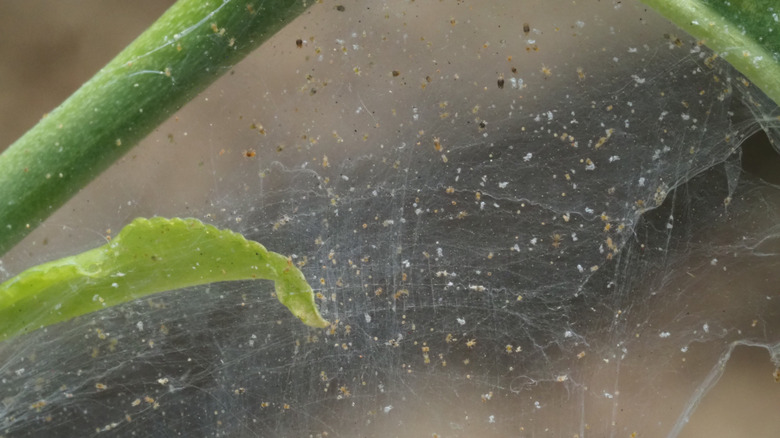
Another way to confirm whether a web belongs to a spider or a spider mite involves the presence of either of these arachnids themselves. Once a spider spins their web, they often hang out along the silky threads in anticipation of prey. Normally, you will see a single spider on one active spider web.
Spider mites, on the other hand, are much harder to spot with the naked eye. These microscopic arachnids are only ¹⁄₅₀ of an inch long, and there are usually multiple pests crawling around and feeding on an affected plant. You may be able to spot the mites underneath leaves with the help of a hand lens, as well as within any webbing covering the impacted plants. Since these pests are so small, though, an infestation may also be confirmed with signs of related plant damage. This includes yellow or white spots on leaves that may progress to discoloration, defoliation, and eventual death of the plant.
Why spider mite webbing identification is so important
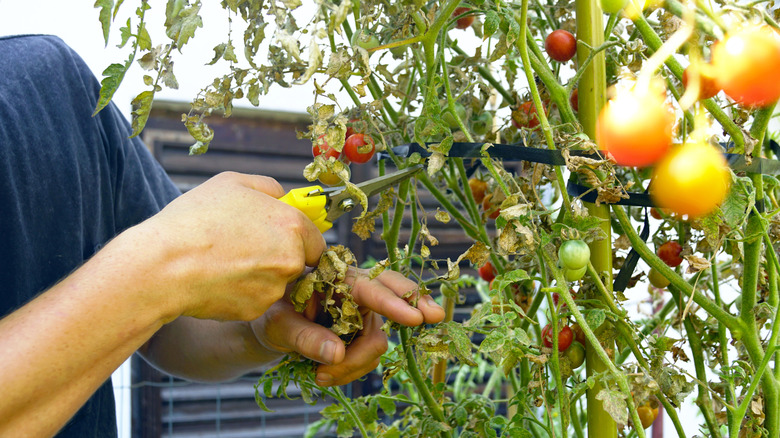
Early detection of spider mites is critical to the survival of plants in your garden, and you should check for them every few days. These pests' quick reproductive cycles can lead to widespread infestations within a couple of weeks, according to Utah State University. Such problems are especially prevalent in the summer due to hotter conditions that are more conducive to reproduction for these mites. Spider mites are known to feed from hundreds of different types of plants in home gardens, including berries, tomatoes, and lettuce greens, to name a few. They also attack a variety of trees and shrubs in landscape beds. Spider mites can even attack mint plants.
Unfortunately, the presence of webbing usually means that the infestation is already widespread. You can help to prevent further damage by spraying the mites and their webbing off of plants with a high-pressure nozzle attached to a garden hose. Insecticidal soaps are other options to get rid of spider mites, but know that repeat applications are often necessary to fully eradicate infestations. When choosing this route, be sure to follow all product labels for both safety and efficacy.