

The Easy Way To Level Bumpy Grass Using An End-Of-Season Garden Staple
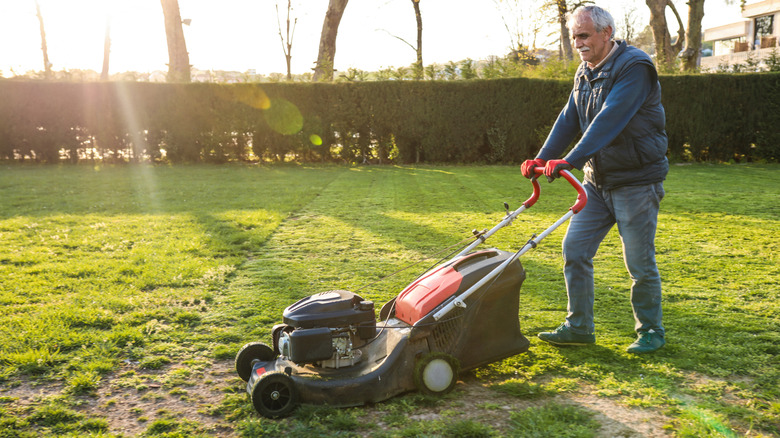
Not everyone has a green thumb. If you've unsuccessfully tried to raise potted plants, you're probably staring at a collection of empty containers filled with bagged soil you aren't sure what to do with. Before you dump it in the trash, put that leftover potting mix to work: combined with topsoil, it can be an easy way to smooth out those annoying low spots and bumps in your lawn.
Prior to taking on this task, it's important to understand the difference between potting soil and topsoil. Topsoil is what's most commonly used to fill in those low spots throughout your landscaping. It's designed for planting and outdoor use because it contains a mix of sand, silt, and clay; organic material, such as plant leaves; and beneficial bacteria, fungi, and earthworms. Potting soil, which is what you'll find in the bottom of those potted plants, is much lighter, mainly because it doesn't have any soil at all. Instead, it's a mixture of peat moss and other quick-draining materials. On its own, potting mix is too light for lawn leveling and can shift or wash away, which is why blending it with topsoil is important.
For the leveling trick to work, you'll need to mix equal parts of potting soil and topsoil to prevent it from packing down easily or washing away when it rains. Empty those old pots into a larger bucket, taking care to remove any root balls or dead plants. If the plant isn't doing well, it's better to toss out the soil rather than risk exposing other plants to a potential disease. Likewise, skip any potting mix that contains obvious mold, pests, or other signs of contamination.
How to repurpose dirt to smooth out your yard
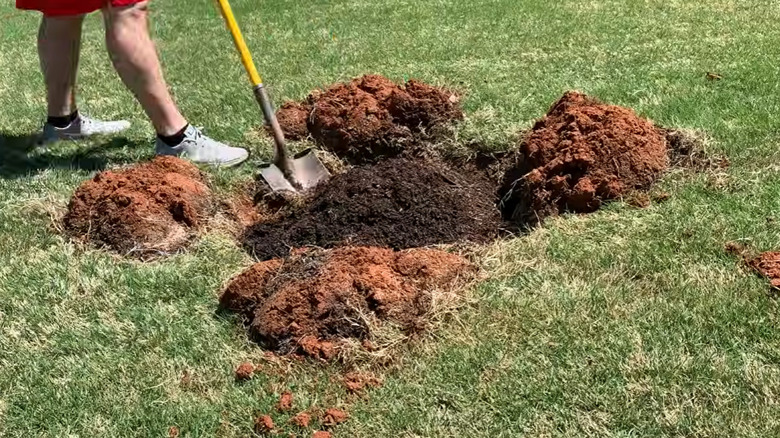
If holes have suddenly popped up in your turf, it's a good sign you've been invaded by some type of digging or tunneling critter. You'll want to get rid of moles in your yard before attempting to fix the holes. Do this by installing traps or sprinkling animal-repellent granules. You can also make a natural repellent by mixing 6 ounces of castor oil, 2 tablespoons of dish detergent, and a gallon of water. Spray generously over the ground. This will eliminate their food source and send them packing to other grounds. It can take several weeks to completely get rid of them; just be sure to look for new holes.
Once you have solved your pest issues, you can fill the holes in the lawn with soil. Start by raking the low spots to loosen up existing dirt. If you have low levels and grass growing, you'll want to use a shovel to remove the top layer of turf. Shovel the dirt on top of existing soil, then add the grass back. This ensures the live turf continues to receive the sunlight it needs. Shovel your blended soil mix and spread it out evenly with the flat side of a rake.
Try to pack the soil down by walking on it so it doesn't sink later. A light watering can also help settle the mix, but avoid soaking the area and washing away the new material. You can also throw down some grass seeds to help fill it in, so it isn't bare. If you're overseeding, keep the area consistently moist until the new grass is established.