

3 Different Ways To Use Lattice To DIY Charming Backyard Privacy
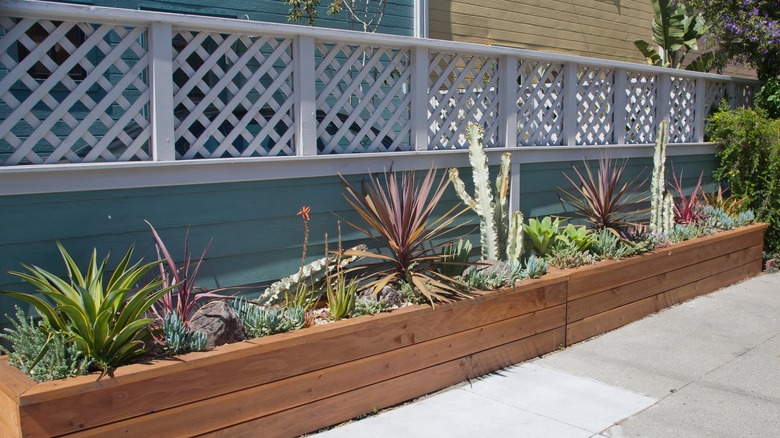
If you're waffling among various privacy solutions for your outdoor space, look no further than the waffle-like pattern of the lattice. The classic criss-cross design in wood, resin, or vinyl presents a framework for aesthetic separation, allowing sunlight in while offering extra privacy without making the space look too closed off. Best of all, lattice is flexible enough to work with what you already have, whether that means adding panels to a deck or fence, or erecting a freestanding DIY privacy screen exactly where you need one.
Lattice panels give you plenty of options for customizing coverage as needed. You can enclose a large outdoor living area, add a single panel to wall off one specific spot, or extend an existing barrier upward for some extra height. A freestanding design offers privacy without committing to a permanent fence, which is especially useful if you're a renter or simply a fan of rearranging things.
Before settling on a design, consider where your lattice will sit and how it may affect the surrounding properties. Check local regulations and HOA rules, if applicable, especially if you're adding height to an existing fence. If your new screen will sit directly along a property line or significantly change your neighbor's view, giving them a heads-up beforehand is a good idea as well, so you can create a neighbor-friendly fence. Once you've sorted out the logistics, there are three simple ways to turn that criss-cross lattice into a charming backyard privacy feature.
Add lattice to a deck or build a freestanding screen
One of the simplest lattice privacy screen ideas is adding lattice to an existing deck. You can go for full coverage around the perimeter, or strategically install a few panels along the side facing your neighbor's property, the sidewalk, or any other area you'd rather not see or be seen from. For installation, one option is to build a frame around lattice sheets and mount the entire assembly on top of the existing deck railing, adding height without requiring additional posts. Another option is to replace shorter posts with taller ones and frame the lattice between the extended posts and rails. If you're working with aluminum railing, you can similarly extend the posts. Place the lattice into U-channels on top and bottom, add aluminum rails to the top, and screw the channels into each post and both rails.
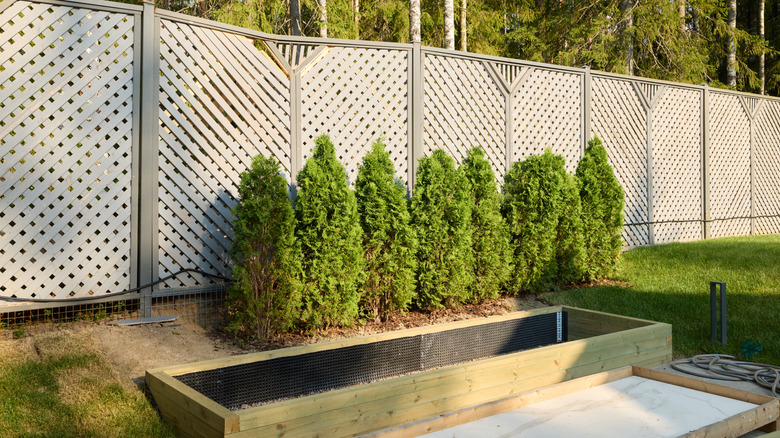
Another option is to build a freestanding vertical lattice privacy screen or fence. To build one, you can frame your lattice panel with wood, then install sturdy wooden posts into the ground. You'll want to put about a third of the post in a hole that's three times the size of the post and deep enough to add about 6 inches of gravel to the bottom. Place and level each post, filling the gaps with quick-setting concrete. Once the concrete has set, position the framed lattice between the posts, check that everything is level, and secure the frame to the posts. You can install multiple panels side by side or adjust the dimensions for a custom build that suits your space. Remember, when digging to install posts for your lattice, always call 811 before installation to ensure you won't disturb underground utilities.
Extend a fence and make the lattice your own
Lastly, a lattice can top off an existing fence to add extra height and privacy without replacing the entire thing. For a secure installation, attach the framed lattice topper to the fence's structural posts rather than the fence boards themselves, using weather-resistant screws to hold it in place. Before starting, make sure your existing posts (or post extensions if needed) are sturdy enough to support the added weight and wind resistance, and check local fence height restrictions and any HOA rules to ensure the finished fence stays within code. You can also create a freestanding extension, essentially setting up post supports adjacent to your fencing so the lattice sits higher than your fence. You get the added privacy without impacting your shared fence.
Once you have the basic framework, customization can really make your lattice privacy screen stand out (or blend in). Paint or stain wood lattice to match your fence or deck for a seamless, cohesive look, or use the addition as an opportunity to introduce a pop of contrasting or complementary colors.
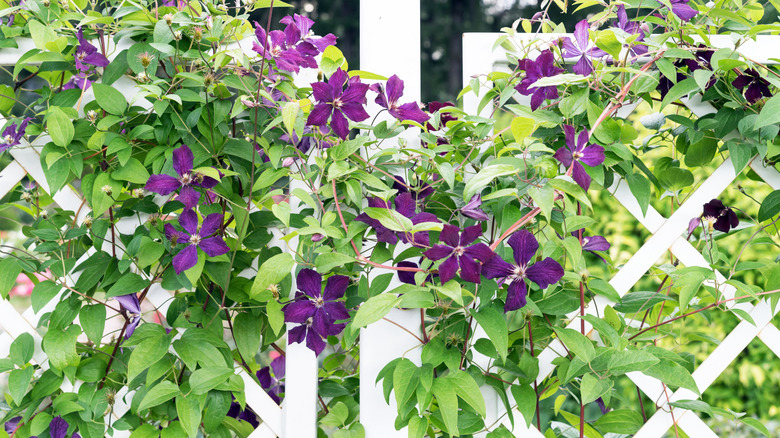
For even more beauty (and privacy as an added bonus), any of these lattice screen options can double as trellises for climbing plants. You can start a container garden of climbing plants and place them at the base of your lattice, or you can plant directly in the ground where it works. For deck and fence-mounted lattices, add hanging planters over the edge just below the lattice, or build an elevated garden bed to house climbing plants.