

Trade In Your Mums: These Gorgeous, Fragrant Flowers Bloom Until The First Frost
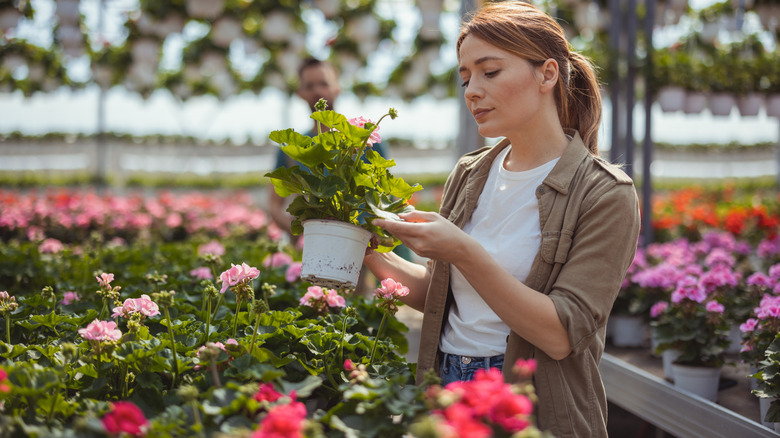
One of the easiest ways to make your yard look beautiful is to plant colorful flowers or add containers to your front porch. Many flowers will wow your neighbors this spring with color until the beginning of fall. Then there's the quintessential fall flower, Chrysanthemum x morifolium (mums), which blooms from August until the beginning of November and is often seen adorning porches as soon as leaves start to turn and temperatures drop. If you're looking for something different to take you into the cooler months, Spiranthes cernua (nodding ladies' tresses) is another flower to consider.
Native to the eastern United States, these perennial wildflowers thrive best in USDA hardiness zones 5a to 9b. What makes these fragrant blooms so special is that they are part of the orchid family. The blossoms are bell-shaped, start near the base of the plant, and spiral elegantly up the stem. The plant grows between 9 and 18 inches tall. In the wild, these flowers are commonly found near water sources, like swamps, damp meadows, and bogs.
If you love orchids but haven't had a lot of success keeping them alive in the past, these special flowers are the perfect choice. By trading your traditional mums for nodding ladies' tresses, you can breathe new life into your late-season landscape.
How to incorporate nodding ladies' tresses into your flower beds
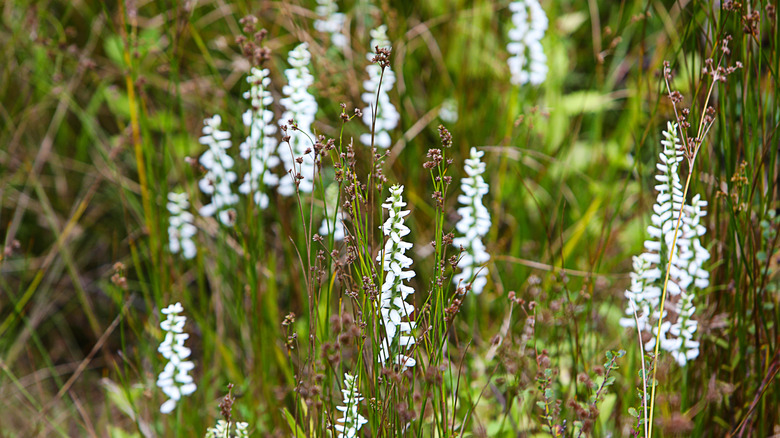
One of the tricky tasks for all orchids is knowing how and when to water them to keep them healthy and blooming. For nodding ladies' tresses, you'll need to make sure they get enough water every day. Set up sprinklers or plan on scheduling a daily watering session. These plants will die if you let the soil dry out. You can also plant them near ponds and other water elements where the soil is naturally damp. They also prefer acidic soil, which is soil with a pH below 7.
Nodding ladies' tresses prefer partial shade. However, they can still grow in full sun as long as you keep the ground wet. If your soil or growing conditions aren't ideal, you can also plant these flowers in containers and make an elegant yard display.
When you start mapping out your garden, remember that these flowers can't compete with aggressive species, like Convallaria majalis (lily-of-the-valley) and Vinca minor (periwinkle). To keep them growing and blooming, give each plant plenty of space to breathe, spacing them 2 to 6 inches apart, and avoid heavy mulch.