

Move Over, Metal Files: The Tool Attachment That Can Sharpen Chainsaws Quickly
We may receive a commission on purchases made from links.
If you own and know how to use a chainsaw and a rotary tool, you are at the juncture of a happy coincidence that will make your landscaping chores a lot easier. When it comes to cutting logs and trimming shrubbery, chainsaws are hard to replace. Unfortunately, they can also be hard to sharpen, a crucial task if you want speedy, safe cuts and clean results. Working with a manual file is often labor intensive, especially since you have to give each chainsaw tooth equal treatment every time you sharpen them. The good news is that, with a rotary tool attachment, you can sharpen the teeth on your chainsaw quickly and easily. Guide attachments like the Dremel A679-02 Sharpening Attachment Kit, which only cost around $10 to $15, fit onto your rotary tool and sharpen the chainsaw teeth at just the right angle.
Each link in a chainsaw "blade" has a small cutting edge manufactured into it. To effectively sharpen your chainsaw, you need to know the chainsaw pitch or tooth dimensions (e.g., the differences in a 3/8 vs. .325 chainsaw chain). You'll need to match the diameter of the grinding bit you are using to the tooth's C-shaped opening. Conveniently enough, tools like the Dremel A679-02 typically come with a selection of grinding bits to fit the more common chainsaw pitches. You must also understand the proper technique of grinding the chainsaw tooth to sharpen the cutting edge, but various features of these sharpening kits take the guesswork out of the process. You'll rapidly sharpen each tooth with only a few passes. If your rotary tool is battery operated, this is a handy way to keep your chainsaw in tip-top condition out in the field.
Using a rotary tool sharpening kit on your chainsaw
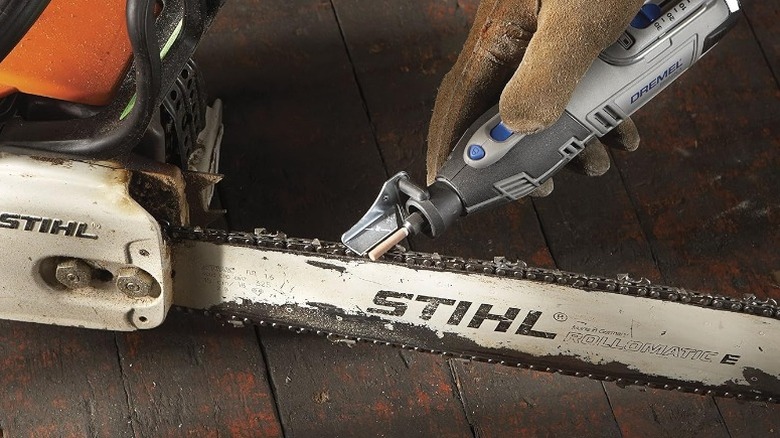
Once you choose the right grinding stone size, sharpening a chainsaw chain with a rotary tool attachment kit is not hard work or overly technical. Always wear gloves and eye protection when sharpening the chain. When you look at a chainsaw tooth from one side, you'll find a C-shaped opening in the tooth. On the top of the tooth, that C ends with a sharp bevel, the cutting edge. Half the teeth on the chain have a reversed C shape but work the same way. Sharpening removes a tiny bit of metal from the inside of that C, creating a sharp angle at the top edge.
Rotary tool sharpening kits like the Dremel A679-02 align to the bar of the chainsaw and control the grinding angle. Markings on the guide help you get the correct angle on the blade; hold the tool so the guide mark is parallel to the chainsaw bar, and you'll know you've got the proper position. It's not hard to do if you look closely at the tooth and follow its shape. Getting a sharp edge while removing the least amount of metal is the goal. If you remove too much metal, you'll need to lower the raker (the non-cutting part of the tooth) with a file, but that won't be needed until after several sharpenings.