

What To Do If You Keep Finding Cicadas In Your Yard
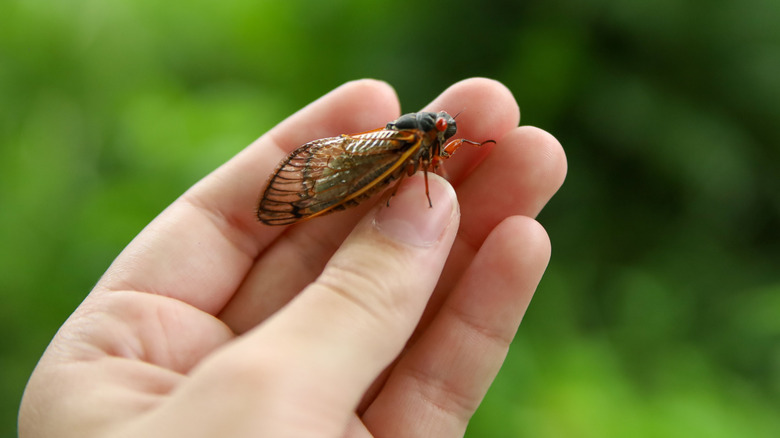
Cicadas: While you might not always see them, the males' tell-tale singing (i.e., really loud buzzing sounds) among trees are unmistakable. Depending on the species, cicadas can be annuals that emerge from mid to late summer, with some species emerging every 3 to 5 years. Others can be a part of periodic broods (periodical cicadas) that hatch every 13 or 17 years in late spring throughout eastern parts of the United States. While harmless to both people and pets, you might be concerned about whether a cicada emergence could cause damage to your yard or garden. The good news is that cicadas are not associated with extensive damage to plants around homes, but you may need to take steps to help protect younger trees from periodical cicada species before they're expected to emerge. Otherwise, you do not need to take any further action if you find cicadas in your yard.
If you do happen to spot a cicada, there are some distinguishing features between periodical and annual cicada varieties. Periodical cicadas have black bodies with bright red eyes, while annual cicadas are longer, with black or dark-green bodies and white or gray bellies. Periodic broods also sport red veins in their wings, while annuals have green veins. While annual cicadas lay their eggs in similar fashion, their numbers are generally too small to cause widespread havoc on trees.
The greater concern is the larger number of periodic broods that can potentially injure young trees and shrubs. After cicadas mate, the females create small slits inside twigs that range between ⅛ to ⅜ inches long, per North Carolina State Extension. Here, they can lay more than two dozen eggs at a time in each incision.
Protect any younger trees you might have from periodical cicadas
The injuries cicadas make to trees can create a type of damage called flagging, which may subsequently cause weakened branches and browning leaves. Some of the affected branches may break off altogether. Older, established trees and shrubs can recover from cicada-induced flagging without any permanent damage. Younger trees are more vulnerable to the numerous injuries sustained from a sudden, high population of periodical cicadas trying to lay eggs in their twigs.
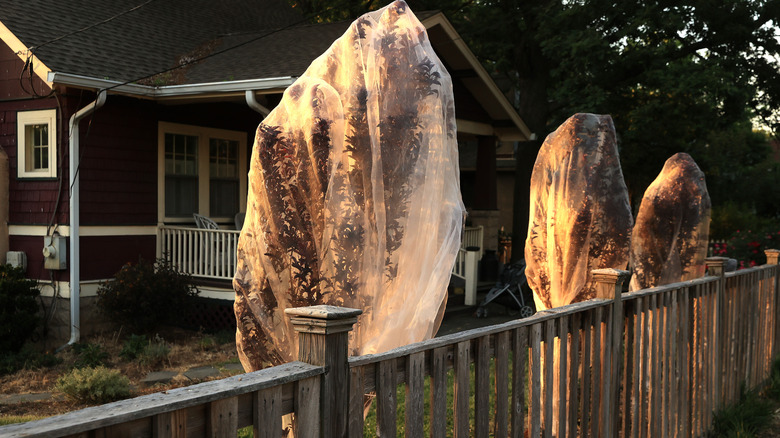
If you know of an upcoming brood that's due to emerge, one of the first things you should do is to protect young trees you have in your yard. In particular, those that have been planted within the last 3 to 4 years are especially vulnerable to damage from periodical cicadas, says Purdue Entomology. You can protect these trees from cicada damage by draping them with mesh netting of ¼ inch or finer. Any damage that occurs to larger, more established trees is more likely to occur on the tips of their branches only. These tips can be cut off to improve the aesthetic appeal of any affected trees, if desired.
Periodical cicadas can, in fact, cause so much damage that North Carolina State Extension recommends that you avoid planting new trees within 2 to 3 years of an expected brood emergence. You might also want to hold off on any late-summer tree pruning in the middle of an emergence year. Doing so can ensure that any nymphs that hatch from eggs in the tree branches will not end up entering the soil surrounding tree roots they can potentially feed from.
Should you ever use pesticides to protect trees from cicadas?
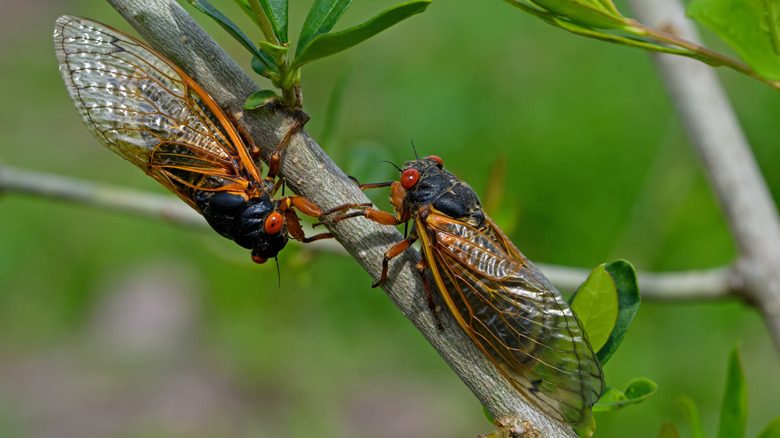
While you might wonder whether pesticides are options for cicadas, the fact is that these are unnecessary and ineffective against these insects, says the Environmental Protection Agency. Using pesticides against cicadas around your yard can also have unintentional consequences. These products not only pose risks to humans and pets, but they can also harm non-target insects, as well as cicada predators. A more selective approach to tree protection works best, especially since only younger trees are the most likely to sustain harm from the cicada egg-laying process.
Despite their annoyance, cicadas are a short-term problem, as they only live for a few weeks above ground. Furthermore, these insects play vital roles in the ecosystem, as they are important food sources for birds, reptiles, and some mammals such as squirrels and foxes. (They are even prey for cicada killer wasps!) Cicadas are also surprisingly healthy for home lawns, too. Their nymphs burrow under the ground, thereby providing a natural source of aeration. What's more, decomposing cicadas on the ground can provide nutrients as just one of many components in healthy soil. Such benefits are free to enjoy, as long as you let the cicadas go on with their natural life cycles in peace.
Finally, while cicadas can eat tree sap, this usually doesn't damage the plants. They also do not feed from leaves of flowers, as well as fruits or vegetables you might have growing in your garden. You can feel at ease knowing that your home garden, annuals, and established ornamentals are generally safe from these insects.