

The Valuable Vintage Dishware You Should Search For At Thrift Stores (And It's Not Pyrex)
We may receive a commission on purchases made from links.
While there are plenty of valuable vintage dinnerware pieces to look for at an estate sale or thrift store, there are likely brands that even some of the most seasoned shoppers still don't know about. Most of us can spot a colorful Pyrex pattern from a few aisles away, but there's another line with similar aesthetics and value that you should also add to your list. Franciscan dishware, particularly the Desert Rose pattern, often demands great resale prices. Complete sets can go for almost $2,000, while single pieces have been sold for nearly $100. Whether you plan to resell what you find or hold Franciscan Desert Rose in your permanent collection, it's a mistake not to search for it when you're out thrifting because of how well it holds its value.
This particular design has a unique origin story. Unlike other fine china patterns, which appear printed and uniform, many like the Desert Rose pattern because of its hand-painted look. Even though the pattern is consistent across pieces, there is a vulnerability to the painting. You can see the "brushstrokes" and the paint appears unevenly applied in places. It looks just like the desert rose (Adenium obesum). This is because the company that owned Franciscan dishware, Gladding, McBean & Co., purchased the template from Californian artist Annette Honeywell. She sold them her rendition of the Californian flower (likely inspired by another company's work, El Rancho) in 1940.
How to spot Franciscan Desert Rose at the thrift store
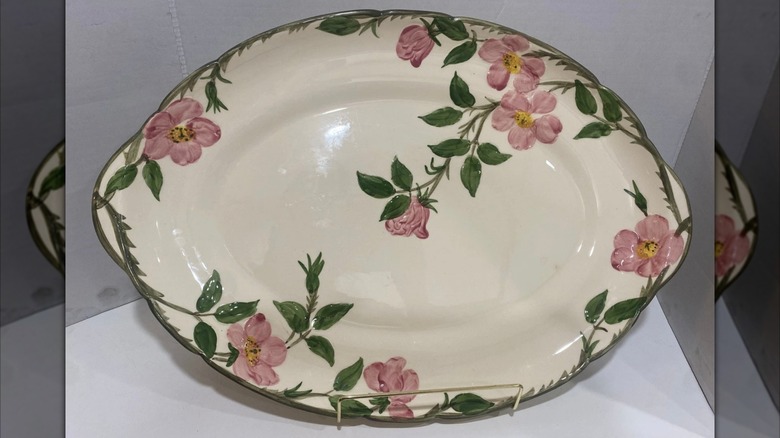
Another reason Franciscan Desert Rose is so valuable is because it's not produced anymore! The limited number of pieces in circulation adds to its exclusive appeal. There are three distinct eras of the pattern to be on the hunt for. Knowing how to identify these antique dishes is essential. The first are the "Made in USA" options. These plates have scalloped edges, plus the leaves that look more hunter green than other later editions. If in doubt, check the back! There will be a stamp indicating these were handmade in California. Then, in 1979, Wedgwood Group purchased the line and soon after moved its production to the United Kingdom. Dishware collectors will likely recognize this name, as it was a home brand the late Queen and her family loved. The flowers on this era also appear a touch more pastel pink. If you come across pieces from this era of production, they will have "Made in England" etched into the bottom.
In the early 2000s, production moved to China. The colors from this era are a bit deeper, but everything seems more zoomed in. They will be marked with "Made in China." Most collectors stay clear of this era, which ceased production in 2013. These pieces are too new and lack the craftsmanship and nostalgia associated with the other production lines. That said, the person pricing the dishware at your local thrift might not know the difference, so you could score vintage American-made pieces at mass-produced prices.