

Safer Than Hand Pulling: The Better Garden Tool For Removing Poison Ivy
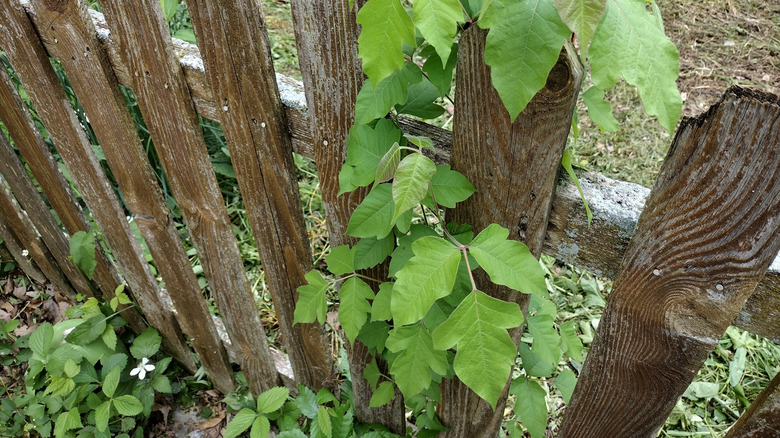
There's a saying about identifying poison ivy: "Leaves of three, let it be." While we usually welcome green, leafy spaces in the garden or the yard, there are some plants that just need to go. Every part of the poison ivy plant (roots to leaves) contains urushiol, an oil that creates a painful, itchy, blistering reaction on skin. So, touching it with your hands is a no-go. Simply cutting down the leaves and vines does not guarantee it will not return. However, removing the roots will help curb the spread and permanently kill the ivy. Using a sharp shovel allows you to dig up and remove the harmful plant without exposing yourself to an annoying and potentially painful rash. This also has the advantage of removing the extensive root system of the plant to cut it off for good. Plus, utilizing this common garden tool puts less strain on your body than hand pulling.
Before any contact with or attempt to remove poison ivy, you have to be prepared. This is not a plant that can be easily weeded without the right protection. So even when using a shovel, it's important to cover up skin with pants, long sleeves, and high-quality gloves. Make sure there is no skin exposed at the ankle or wrists.
How to remove poison ivy with a shovel
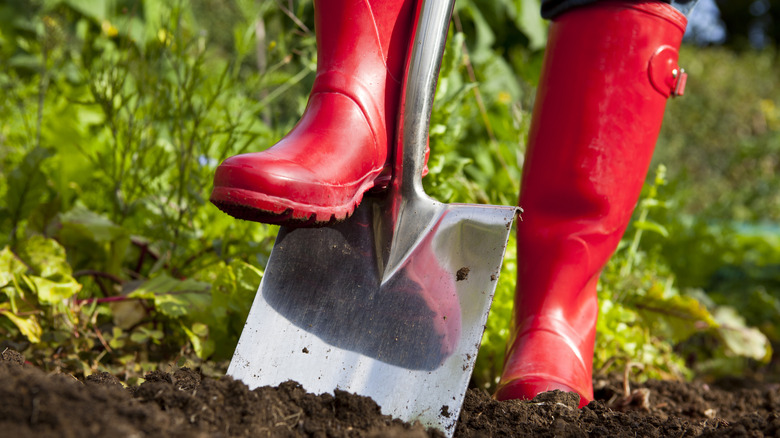
Once you're properly covered, it is safe to start the removal process. All of the plant has to be removed, or it can regrow from its roots. If it's large or growing up a tree or fence, cut the stems back as much as possible with shears or pruning tools before digging. Carefully place the foliage in a heavy-duty plastic bag, tie it tightly, and throw it away. Even breathing in the urushiol can cause a reaction, so all removed plants must be bagged, not burned.
When the foliage is low enough that forceful digging will not release urushiol into the air or whip the plant leaves against your body, it's time to tackle the roots. The sharper the shovel, the better. Poison ivy roots can reach up to 12 inches deep in the soil. Dig in a circular pattern to break up the system that can extend outward up to 20 feet in width. Pull the roots from the soil loose with the blade of the shovel, and put them in a heavy-duty plastic bag as well. Poison ivy can also be killed with a bleach mix in a spray bottle if there are any stragglers that cannot be safely reached.
All clothing will need to be washed immediately . Even plants that are dead can contain urushiol, and clothing items that have the oil on them can still infect the skin for up to 10 years. (Yikes!) This also means you should clean the poison ivy off your tools after digging up these pesky plants, too.