

It's Time To Dump Pressure-Treated Wood: A More Durable, Eco-Friendly Deck Option

We may receive a commission on purchases made from links.
Wood decks are lovely additions to any home, but wood is an organic material that is prone to breaking down, making it a maintenance headache over the long term. Rain and snow cause rot and decay, while pests like carpenter bees can turn your once-lovely amenity into a hazard. This is why residential decks are often built of pressure-treated lumber that is chemically treated to make it resistant to weather and insect damage. A chemical-free alternative is to have your deck built from tropical hardwoods like teak and mahogany, which naturally resist pests and decay, but are unsustainably harvested from endangered rainforests. But a new kind of wood for your deck can be both eco-friendly and durable without harsh chemicals, using a process called thermal modification.
Thermal modification uses high heat and steam to treat natural wood so that it is more durable and resistant to rot and decay over time. Pressure-treated wood contains chemicals like creosote, arsenic, and pentachlorophenol that are highly toxic. For a deck where you may be sitting, eating, and watching the kids play, having safe wood is a priority. In thermal modification, just heat and steam (usually applied to the lumber inside a specialized kiln) alters the wood's own chemical structure to make it more resistant to moisture and insects. The process also protects this lumber from the growth of common fungi that normally breaks wood down in nature.
Good-looking and sustainable decking
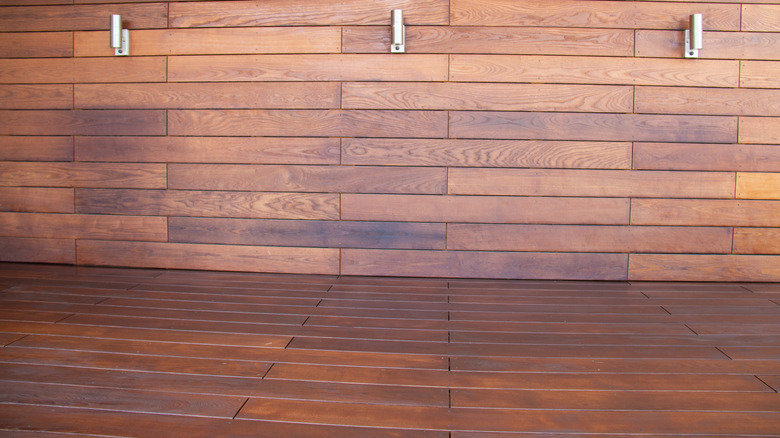
Thermal modification can be used on a number of different wood species popular for decking, including oak and pine, which are also woods that can be harvested sustainably. And you don't have to sacrifice your design style for an eco-friendly deck. Pressure-treated wood can be unattractive, and you need to stain it to even look like wood and get rid of that green tinge of chemicals it typically comes with. Thermal modification darkens the color of the wood naturally, but retains its grain and beauty. For your deck, you can decide to keep the dark look by finishing it with an oil- based stain, or let the thermal wood weather naturally over time, where it will turn more silver in tone but retain its structural integrity. Although it is a newer product, you can easily find the kind of thermal treated wood that meets your design style at local hardware stores, through specialty manufacturers like Lunawood and Americana, or even at Home Depot.
Thermally-modified wood isn't perfect. It can easily cost double the price of pressure-treated lumber. But it also lasts just as long or longer than treated wood, with less frequent sealing required. Although thermally modified wood is more fire resistant than untreated lumber, making it preferred under some fire codes, it may still need to be treated with a fire retardant to meet local requirements. Thermal wood manufacturers often offer a treatment for their product to meet such codes.