

What Is The 20-Degree Rule For Air Conditioners? When It Matters — And When It Doesn't

Household thermostats cause an awful lot of drama for such a tiny device. In a Vivint Solar survey of 2,000 Americans in domestic relationships, 75% of couples admitted to fighting over the perfect temperature setting. More than half have sneakily changed it when no one else was looking. While the best air conditioning setting for your home may remain up for debate, a recommendation called the 20-degree rule has made the rounds. Essentially, it suggests that homeowners should never set the thermostat to more than 20 degrees below the outside temperature. But according to Jim Foster, HVAC Expert with American Home Shield, as long as your air conditioner is properly maintained and your home is well-insulated, the 20-degree rule may not matter as much as you might think.
"The ability to efficiently cool your home without overworking your unit depends on the home, the air conditioning system, and how well both are maintained," Foster told Hunker during an exclusive interview. "In many cases, a properly sized and maintained AC unit in a well-insulated home can keep indoor temperatures comfortably between 72°F and 75°F, even when outdoor temperatures reach 100°F," he explained.
Like the advice you may have heard about keeping your thermostat set to 78°F at all times, the 20-degree rule is a general guideline. It's based on how air conditioners work: by pulling hot air out of your house and pushing it over refrigerant-filled coils to cool it before circulating more comfortable air back into your space. The issue isn't that your air conditioner can't cool things off more than 20 degrees. It's that the process requires your unit to run constantly, which can lead to wear and tear plus higher utility bills.
It's probably okay to turn your thermostat way down (but there are other ways to cool things off)
Unless you've been neglecting the essential air conditioner maintenance you can do yourself or your unit is extremely old, the rule shouldn't pose a major concern. As Jim Foster told Hunker, "Most newer A/C systems are designed to cool from 30°F to 40°F degrees depending on where you live, so setting your system to a temperature a bit outside the 20-degree rule should not cause harm." He further explained, "For example, if the temperature is 100°F outside, a homeowner should not experience performance issues when setting their thermostat temperature to 70°F – 75°F — that is, if the system is kept clean and well maintained with regular filter changes and annual tune-ups."
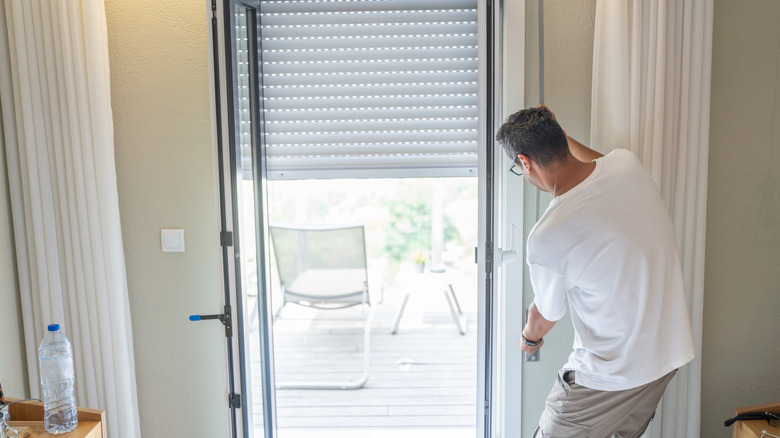
Of course, turning the thermostat way down isn't the only way to cool your home especially if you're concerned with overworking an older unit during an extreme heat wave. Closing your window blinds or curtains can limit the amount of sunlight that comes into your home, keeping indoor temperatures cooler as a result. It also helps to avoid turning on the oven or running your dryer on the highest-heat settings, both of which can also warm things up.
While you don't necessarily need to limit yourself to the 20-degree rule, Foster suggested setting your thermostat a few degrees higher than you normally would when it's really hot outside. But that wasn't the expert's only suggestion. "Keeping vents and filters clean ensures proper airflow, while strategically using fans can make rooms feel cooler. It's also important to cool the home early in the day before peak temperatures arrive," he recommended.
Signs it's time to call an HVAC professional (plus another rule you should know)
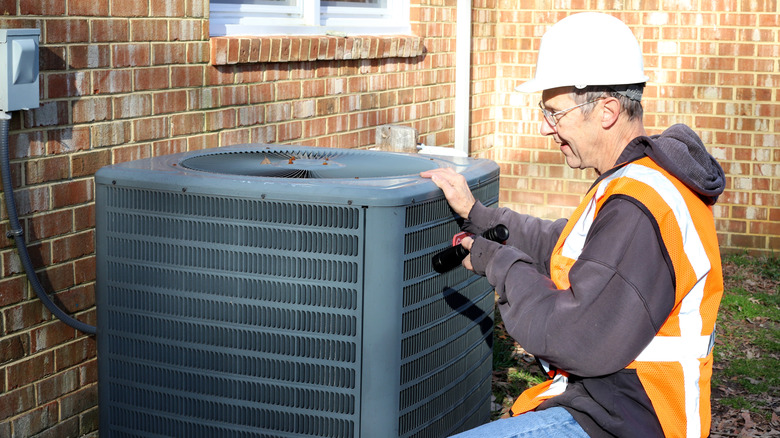
Whether you adhere to the 20-degree rule or the weather gets so hot you can't resist dropping the temperature more, there are some signs that your unit isn't working as well as it should be. According to Jim Foster, you'll know there's a problem when no matter how consistently you leave your air conditioner running, it just won't reach your desired setting. "Other warning signs include weak airflow coming from vents, unusual noises during operation, or ice buildup on the unit," he told us. "If homeowners notice any of these issues, it could indicate that the system should be inspected by an HVAC professional to identify and address potential problems before they worsen."
According to Angi, the average HVAC repair service call costs around $350. That's just one of the reasons you'll want to catch any efficiency problems early. Running your unit nonstop requires constant power, driving up electricity bills, while also causing wear and tear on the air conditioner itself.
While a quick fix might not cost more than a few hundred dollars and a short lecture on the 20-degree rule by your repairman, if you're looking at a more serious or costly repair there's another number you should also keep in mind. The $5,000 rule for air conditioners can guide you toward making the right decision between repairing or replacing your system. Essentially, it's calculated by multiplying repair costs by the system's age in years. If the number is greater than $5,000, a replacement is probably your best bet.