

What Do Orange Electrical Wires Mean?
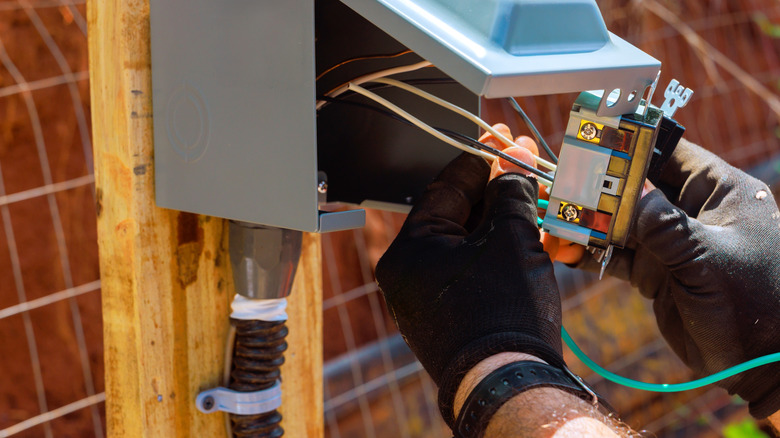
We may receive a commission on purchases made from links.
Doing your own remodeling projects can be empowering and exciting. But if you don't know how to treat the wires behind your walls, your demo could turn deadly. Cracking into your drywall can reveal a rainbow of colored wires and cables, which are carrying power and energy throughout your home. The different colors are there to tell electricians what each wire is for. Black, red, white, and green are the most common electrical wire colors carrying power between your residential electrical panel and your outlets and appliances. Red or black wires are "live" or "hot", meaning they are actively bringing power to something. White or gray are usually neutral, sending power back to the electrical panel. And green is usually a "ground" wire, which works to send dangerous electrical surges straight into the earth to prevent a fire. Occasionally, though, you'll find an orange wire — and this color must be treated with special caution.
Orange wires are usually "hot" and carrying electricity. They often indicate a secondary power source for a big appliance or system that needs more than the typical 120 volts coming from your panel. You won't always see orange wires used for this, however, because red or black wires can do the same job. Another place you may see an orange wire is in a hard-wired alarm system. Orange is the wire color used to interconnect hard-wired smoke alarms, telling all alarms to go off at the same time when one is triggered.
Proceed with caution
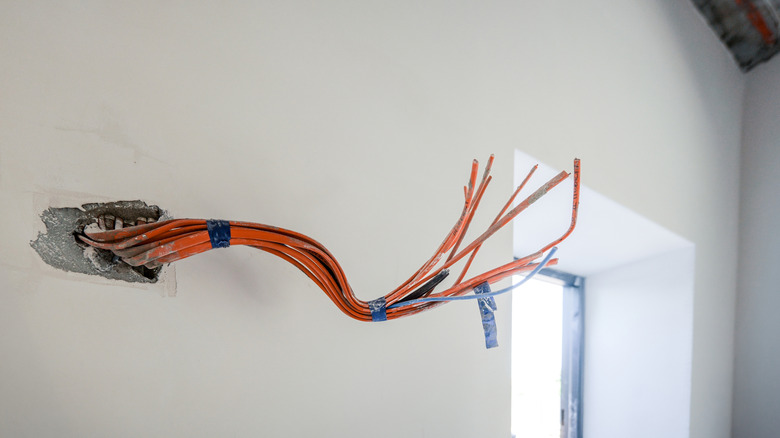
Confused? You should be. Wiring or rewiring your own home isn't a good idea, and with the confusing array of electrical wire colors adding to the complexities, you'll want to hire a professional for big jobs. While there is a National Electric Code (NEC) in the U.S. that establishes color coding for wires, this code isn't universally adopted and can be amended locally. If your house is built before the 1940s, it probably doesn't even have wires colored consistently with this more modern code. The NEC was updated in 2026 to require orange to be the color used for a "high delta, high leg" system, but you won't typically find this type of electrical system in your house. It is used more in commercial or manufacturing buildings where both high and low voltages are needed.
In your house, some small projects (like wiring a new GFCI outlet) may be DIY-worthy if you have some familiarity with electrical wiring. If you do encounter an orange wire while doing such a project, assume it is live, and be sure to shut off the power to it at the circuit breaker before going further. To be certain about whether it's hot or not, test the wire with a volt meter or a multimeter that's good for home use, like the Klein Tools MM325 Multimeter.