

Can You Clean An AC Unit With A Water Hose?
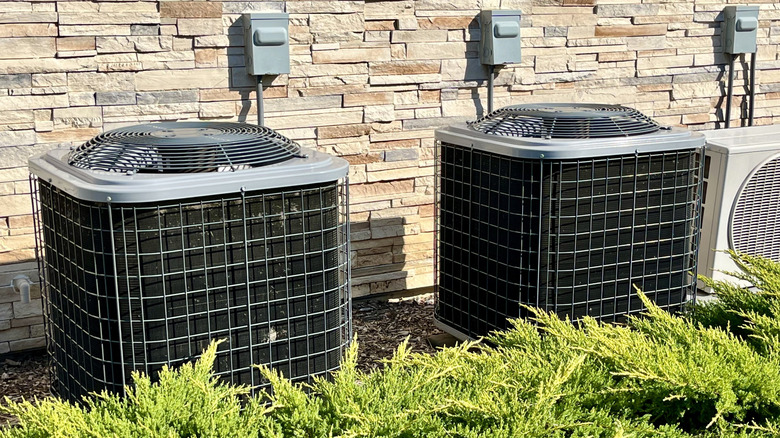
When the weather turns hot, having a working AC unit can mean the difference between being comfortable in your home and being miserable. To keep it in good shape, one of the essential air conditioner maintenance tasks you can do yourself is cleaning it. If your AC unit hasn't been cleaned in a while, or if you just don't have a lot of time to spend on it, you may be wondering if you can just spray it with your water hose. The answer is yes – if you're careful. AC units are electrical devices, meaning they can be dangerous when wet. Plus, there are some fragile components that can be damaged if the spray is too forceful.
Water hoses are great at removing excess dirt and dust that has built up on an outdoor or window AC unit. You can gently spray the outside of the unit to rinse your air conditioner. While you can use other tools, such as a spray bottle, using your hose allows you to clean your unit at a much faster rate. It may not be able to get rid of everything, though. Since too much pressure can damage some components of your AC unit, anything that's too tough for a gentle spray may need to be handled differently. The hose may still be helpful, as water can soften some stuck-on grime even if it doesn't completely wash it away. However, you may need to grab a soft brush to finish the job.
Precautions to take when cleaning your AC unit with a water hose
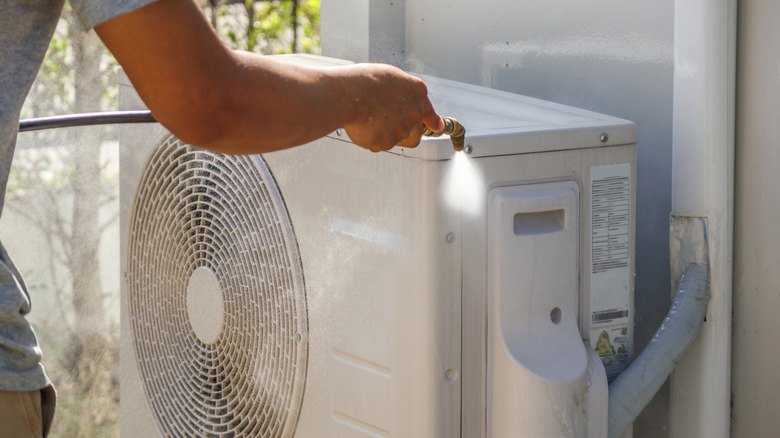
Before you start spraying your AC unit, there are a few precautions to take to keep both you and your AC unit safe. To start, be sure the unit is turned off completely. There may be an electrical disconnect box outdoors near it, or you may need to turn it off at your breaker box. Window units should be unplugged from the outlet. If there's any electrical current flowing through the unit, you could be in for a nasty surprise when you try to wash it, so it's crucial that the AC is fully disconnected from its power source.
The other issue to be aware of is the pressure of your water hose. You shouldn't spray the AC with full force; instead, use an adjustable spray nozzle to control the strength of the water. You can use other means of controlling the spray if you'd prefer — such as covering part of the hose's opening with your thumb – as long as you aren't hitting the unit with the hose on full blast. Never use a pressure washer or another high-powered sprayer to clean your AC unit, either. The thin fins on the sides are the most likely to be damaged, so take extra care with them. If you do accidentally damage your AC unit while washing it, this guide to the $5,000 rule for air conditioners can help you decide if it's better to repair or replace it.