

This Low-Maintenance Turfgrass Can Attract Pollinators Through September
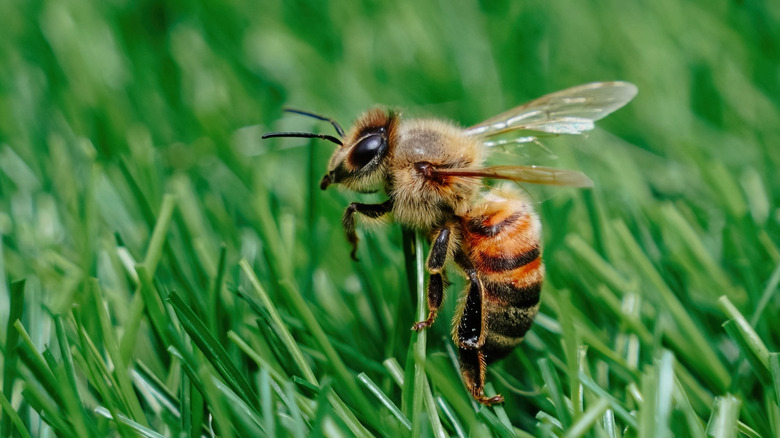
Every homeowner wants a healthy lawn, though most turfgrasses require considerable maintenance to keep them looking their best. Between frequent mowing and fertilization, it can take a lot of work to maintain that dense, green growth. Additionally, most lawns provide little to no resources for beneficial insects. However, there's a turfgrass that requires minimal upkeep while benefiting our local pollinators. Meet centipedegrass (Eremochloa ophiuroides): a light green, warm-season turfgrass that thrives with infrequent mowing and fertilization. Unlike most turfgrasses, centipedegrass also attracts and provides food for bees and other pollinators through September.
In summer through early fall, centipedegrass puts out inch-sized flower spikes that were previously thought to provide little ecological value. As it turns out, this doesn't seem to be the case. According to a 2026 study conducted by researchers at the University of Georgia, these tiny purple flowers can be a highly valuable source of pollen for several types of bees. While observing over 150 foraging bees from 28 species, researchers discovered that adult bees actively gathered grass pollen to feed both themselves and their young. Bees are facing population decline, and providing late-season food is one way we can support them. "Urbanization is reducing both nesting habitat and food resources for them, so anything we can provide in addition helps," Shimat Joseph, UGA associate professor and study co-author, shared with UGA Today.
How centipedegrass attracts several pollinators
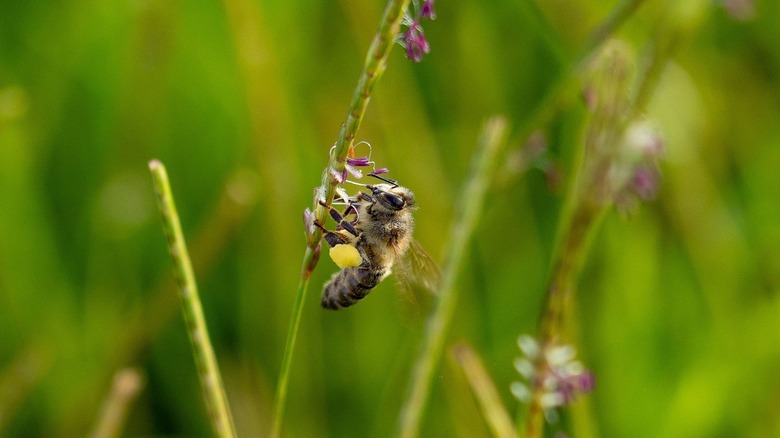
From July through September, bees collect and store large amounts of pollen to help sustain the colony through winter. Centipedegrass blooms during this time, when other sources of pollen can be harder to come by. Furthermore, centipedegrass may be just as beneficial to bees as dicotyledonous (dicot) plants, like butterfly bush (Buddleja davidii). The UGA researchers noted that native bees, including bumblebees, actively gathered pollen from centipedegrass, even when dicot plants, like butterfly bush, were nearby. Even better, the researchers found that the grass's pollen was comparable in quality to butterfly bush's pollen in supporting bees in their larval and pupal stages.
Adult hoverflies have also been found to collect pollen from centipedegrass. Although these insects sometimes get mistaken for wasps, they're completely harmless and are one of the most beneficial insects to have in a garden. The adults help pollinate as they move through the flowers when feeding, and their larvae prey on common pests like aphids, mealy bugs, and thrips.
Surprisingly, centipedegrass also benefits some butterflies. While its flowers don't produce nectar for adult butterflies, the turfgrass provides necessary food for caterpillars. Butterflies must lay their eggs on specific host plants, and centipedegrass is one of the few host plants for the Carolina Satyr butterfly. Adult butterflies tend to occupy areas that contain their host plants, so growing centipedegrass can be a great way to attract more to your garden.
How to grow and care for centipedegrass for pollinators
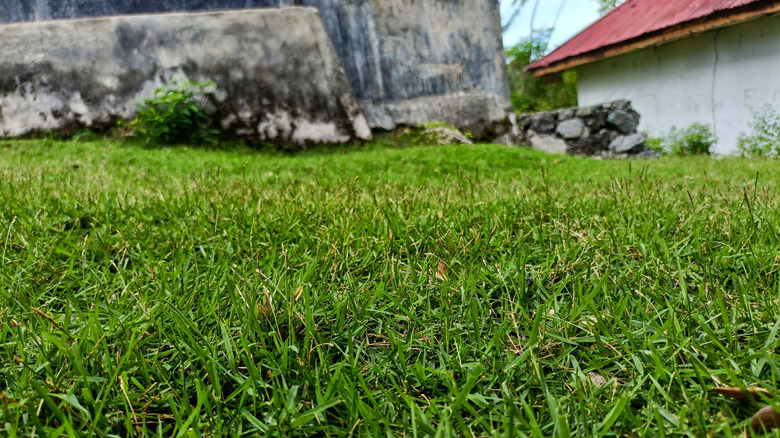
Centipedegrass is a warm-season turfgrass native to South China, so it thrives in USDA hardiness zones 7 through 10. Although it grows best in full sun, it can tolerate moderate shade. It grows best in acidic, well-drained, loamy, or sandy soils and cannot tolerate alkaline soil. Like many turfgrasses, it needs regular watering to maintain its bright green color. While it can survive occasional dry conditions, the grass will eventually turn brown without irrigation. This grass has extremely low fertility requirements, so one application of a slow-release fertilizer in April can be sufficient for the year. Overfertilizing can be detrimental for centipedegrass, so it's a good idea to conduct a soil test before supplying it with any additional nutrients.
Of course, if you want your lawn to benefit bees in September, you'll need to make sure you aren't mowing before your centipedegrass flowers. The UGA researchers found that bees collected the most pollen 10 to 12 days after the lawn was mowed. They recommend keeping mowing sessions at least 10 to 14 days apart to give centipedegrass time to flower and provide pollen for bees. If you're able to, keep a dedicated area of your lawn un-mowed. In addition to helping bees, tall grassy areas give Carolina satyr butterflies a safe place to lay their eggs and an undisturbed feeding area for developing caterpillars. Lastly, to protect pollinators, aim to have a healthy lawn without using pesticides and herbicides.