

What Causes An Air Conditioner To Blow Hot Air And How To Fix It
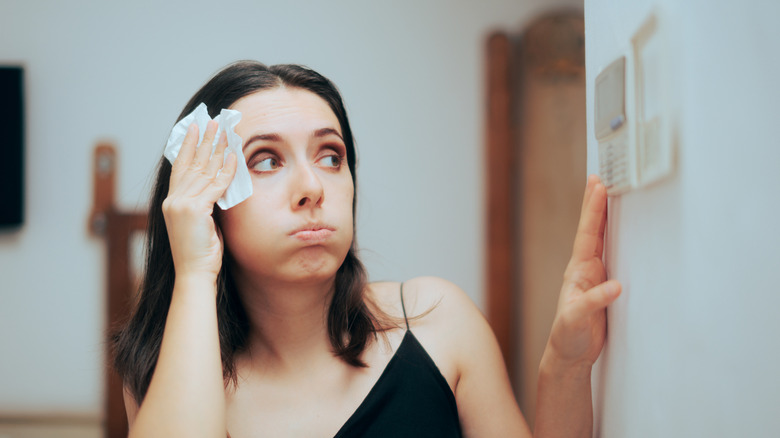
When it's so hot outside that you're slightly paranoid your flip-flops are going to melt into the pavement, air conditioning can feel like a godsend. During the hottest summer months, nothing is worse than walking inside only to realize that brisk relief you were expecting is nowhere to be found. But what causes an air conditioner to suddenly start blowing hot air? And is there anything you can do to fix it? To find out, we spoke with Robert Michiels, Chief Operating Officer at Hurn Mechanical Heating & Cooling.
During his exclusive interview with Hunker, the HVAC expert said there are a wide range of potential culprits that are easy to fix, from swapping out dirty filters to switching thermostat modes. If you're still sweltering after ruling out the most common causes, you may need to call a professional for help. "Sometimes it's something as simple as accidentally switching the thermostat to fan mode instead of cool," Michiels said. "Other common reasons why your AC is blowing hot air can be dirty filters, a blocked outdoor unit, refrigerant leak, or electrical issues," he added.
According to Michiels, the single most common cause behind an air conditioner blowing hot air is a filthy filter that needs to be swapped out. Despite being one of the easiest essential air conditioner maintenance tasks you can do yourself, Michiels said that "a lot of people simply forget about the routine change that filters need."
Steps you can take to fix your AC yourself
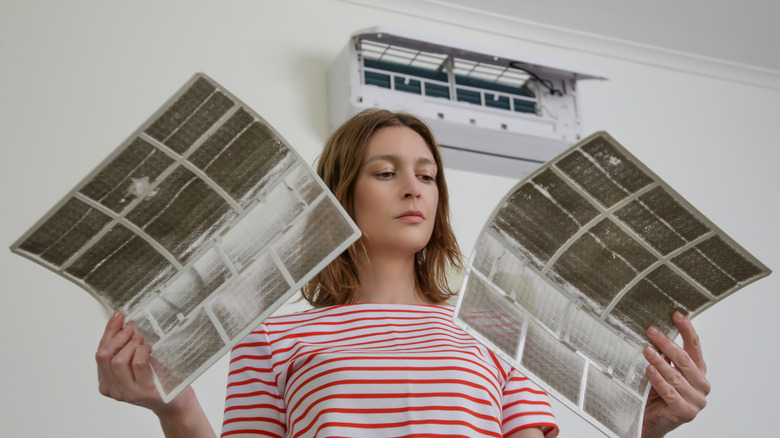
Even though a dirty filter is the most common cause, you shouldn't start with swapping it out. "The first and most simple thing to check is the thermostat setting. Check if it is correctly set to cool," Robert Michiels recommended. If the perfect AC temperature is always up for debate in your house, it's possible someone turned the setting up, switched to fan mode, or even turned your unit off. In those cases, the fix is even easier than swapping out a filter because you can simply reset it. If that doesn't isolate the problem, Michiels recommended checking your filters next, replacing them if necessary. These two basic troubleshooting steps can often have you cooling off in no time.
If you still don't have luck, Michiels said you can check the circuit breaker to ensure that the unit is receiving power. He also recommended making sure the area surrounding your outdoor unit is completely clear of blockages. You might be surprised to find grass clippings or other debris caked around the sides of your unit, which can severely restrict airflow. Along with making your unit work much harder to cool the air, it's also likely to make your electric bills go up. This is another easy fix. Just turn off the unit, remove the debris by hand, and spray down the condenser coils with a garden hose (not a power washer!).
But what should you do if you've checked everything and the air conditioner is still blowing hot air inside your home? "If all of these things look fine then trial and error is not advisable," Michiels cautioned. "It's better to call a professional for proper diagnosis and resolution."
When to call in a professional for help
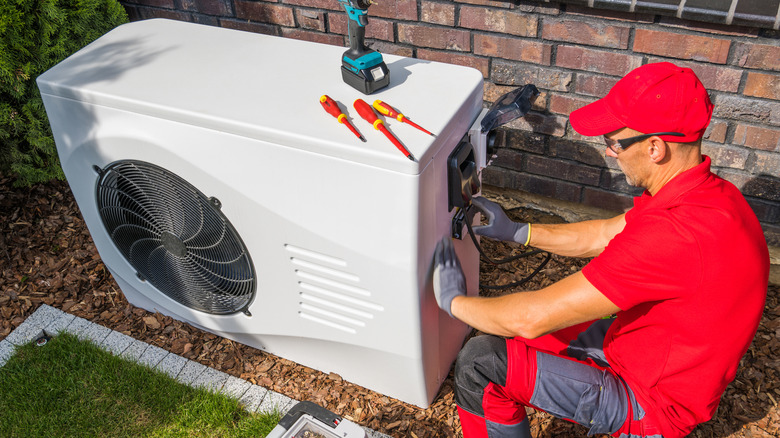
The cost of HVAC repairs varies widely depending on your area, seasonal demand, and what's actually going wrong with your system. An initial service call typically costs between $100 and $250, and according to Angi, the average HVAC repair costs $350. Depending on what's causing your air conditioner to blow hot air, these costs can rise sharply based on how much labor and how many parts are required.
In the event you're looking at a more serious or costly repair, a knowledgeable HVAC technician can guide you through the pros and cons of repairing versus replacing your system. For many homeowners, the decision comes down to the $5,000 rule for air conditioners. Essentially, you'll want to multiply the repair cost by your unit's age in years. If the number is greater than $5,000, replacement is typically the better choice. If it's less, you're probably better off paying for a repair followed by proper ongoing maintenance.
Once your home is cool again, there are some preventative steps homeowners can take to ensure their air conditioners are unlikely to break again when they need them most. "Seasonal tune-ups help avoid sudden AC issues that cause major discomfort," Michiels said, adding that this helps catch problems before they turn into costly breakdowns. "Apart from professional service, staying attentive to any unusual noises, uneven cooling, etc. can help identify issues early and keep your HVAC system in good shape."