

Bed Bug Poop Looks Different: Here's How To Identify It In Your Home

When it comes to pest problems, bed bugs are undoubtedly among those that can make your skin crawl the most. Not only are their bites extremely itchy, but these tiny insects are also challenging to get rid of. There are multiple ways bed bugs can sneak into homes, they can hide out in virtually any spot humans occupy, and they can be difficult to spot due to their small size, tendency to hide, and ability to quickly crawl away. Their excrement may provide some clues, though. You can tell bed bug poop apart from that of other common household pests by its color, size, and location, as well as its likelihood to stain surfaces.
Bed bugs are reddish-brown colored and wingless; they are sometimes mistaken for ticks or roaches. They have flat, oval bodies and are just under ¼ inch long. Since they are so small, their poop is tiny, too. You're more likely to spot stains from their excrement than actual droppings. Bed bugs feed on human blood, and their poop often leaves bloody marks behind. These may look like small, unexplained rusty or black spots on surfaces they've infested and are one of the more telling signs of bed bugs around your home. These dark stains make bed bug poop more distinct than that of other common pests, which can vary in shape but is not as soft or stain-prone.
According to the Ohio State University Extension, bed bugs have become increasingly widespread since the 1990s, so if you do find signs of their excrement, you're certainly not alone. The sooner you identify a possible infestation, the sooner you can seek professional pest control to eradicate the problem. Knowing where exactly you're most likely to find bed bug poop is a good first step.
Where you're most likely to find bed bug poop, and what to do
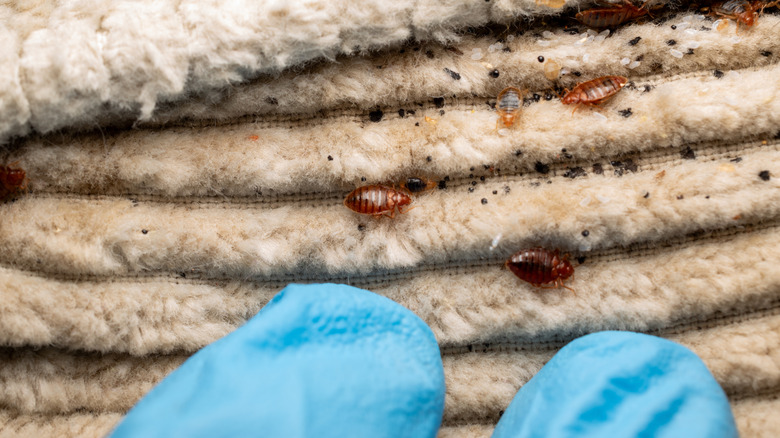
Bed bugs tend to hang out in human-occupied areas like mattresses because of their need to feed on blood. Due to their elusive nature, live bugs tend to hide out in seams, cracks, and crevices around beds and other furniture, or even parts of your home's structure. Common examples are mattress seams, box springs, sofas, door frames, floor cracks, and even within plaster and inside picture frames. Besides their excrement, there are other red flags that you may be dealing with a bed bug infestation. These include old exoskeletons and poppy seed-length eggshells belonging to the bugs, as well as a musty odor where they are hiding and breeding. It's also possible to find live or dead bugs or the bloody stains their bodies leave when crushed.
Bed bugs do not transmit diseases to humans, but they can quickly grow in numbers and cause your household a lot of discomfort. In fact, a single female bed bug can produce up to 250 eggs! Some people might develop welts as a reaction to recent bed bug bites. Unfortunately, the insects are also difficult to control on your own. For this reason, it's best to consult with a pest control expert if you think you have a bed bug problem in your home. They can accurately identify the insects, as bed bugs are only some of the many possible types of bugs found in beds. Also know that even with professional pest management, getting rid of bed bugs often takes two treatments (and sometimes several) to fully eradicate the bugs, because they can hide out and survive for months without feeding.