

How To Identify The Difference Between A Groundhog And Beaver In Your Yard
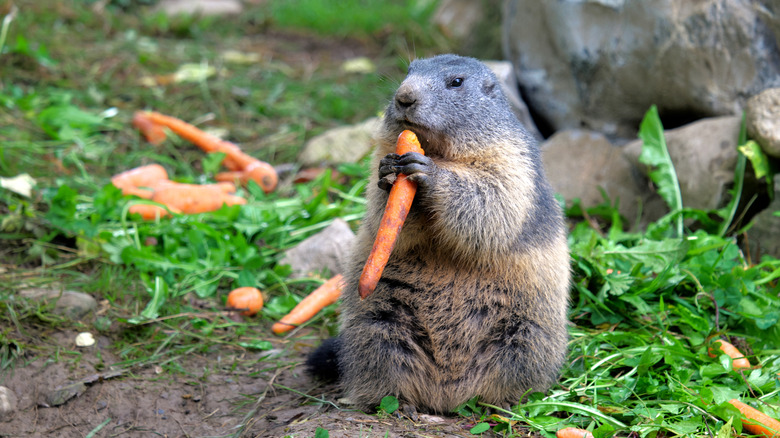
How much of your yard can a woodchuck chuck? Endless amounts, it seems—but is that the animal that did it? Garden and landscape damage from a groundhog and a beaver can seem similar at first, but there are a few ways to determine which of these bucktoothed bandits is responsible. Although both can chew up plants and be quite destructive, the type and location of the damage can usually help you identify the culprit. Groundhog damage tends to center around burrowing and edible garden plants, whereas beavers typically leave much more conspicuous evidence on trees and around bodies of water.
Groundhogs, also known as woodchucks, are herbivores that feed on vegetable gardens, grasses, and legumes, with a special affinity for crops like beans, peas, tomatoes, and soybeans. They can also gnaw woody vegetation, including fruit trees and ornamental shrubs, so damaged bark alone isn't necessarily enough to rule them out against beavers.
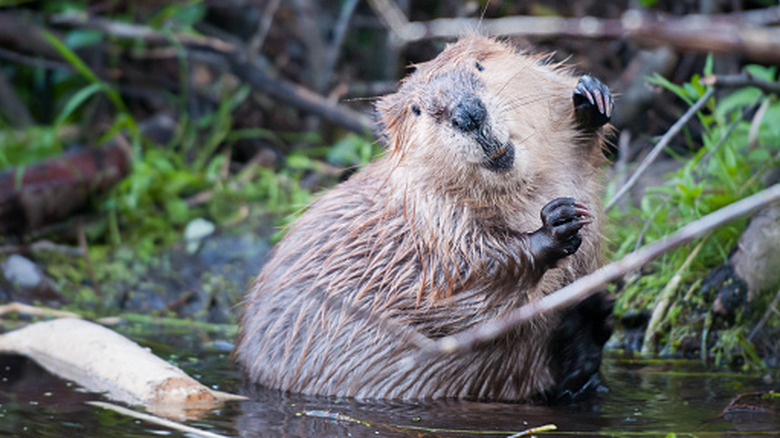
Beaver damage is harder to mistake for ordinary garden damage. Rather than digging up your lawn or going to town on your tomatoes, these industrious rodents cut and gnaw trees and shrubs, often working on several trees at a time. Look for trunks or branches bearing large, obvious tooth marks at a 45-degree angle, along with partially- or completely-felled trees.
Groundhog vs. beaver habitats and characteristics
Aside from the main signs of damage, looking for each animal's habitat can help identify groundhog versus beaver activity on your property. When it comes to groundhogs, a key giveaway is their burrowing. These burrowing animals dig holes anywhere from 8 to 12 inches in size, often digging several at a time that are connected by a larger system of tunnels. They build dens under porches, sheds, and similar overhead structures to nest and avoid predators.
Beavers, on the other hand, are known for their dam building. They use wood, stones, mud, and plant material to construct their signature dams, which are roughly 3 to 4 feet high on average. They also build dome-shaped lodges that can reach upwards of 6.5 feet tall and roughly 40 feet wide. However, the absence of a dam doesn't necessarily rule out a beaver, since those living along lakes and rivers with relatively constant water levels may not build one.
Finally, if you're able to see the furry perpetrator firsthand, this should be the easiest tell due to the big difference in size. Groundhogs are small, plump critters with brownish fur, typically weighing 5 to 10 pounds and measuring 20 to 27 inches from head to tail. Adult beavers are much larger, averaging anywhere from 35 to 65 pounds and measuring 3 to 4 feet long, including their distinctive broad, flat, leathery tail.