

The Breakfast Leftovers You Should Never Dump Down The Drain
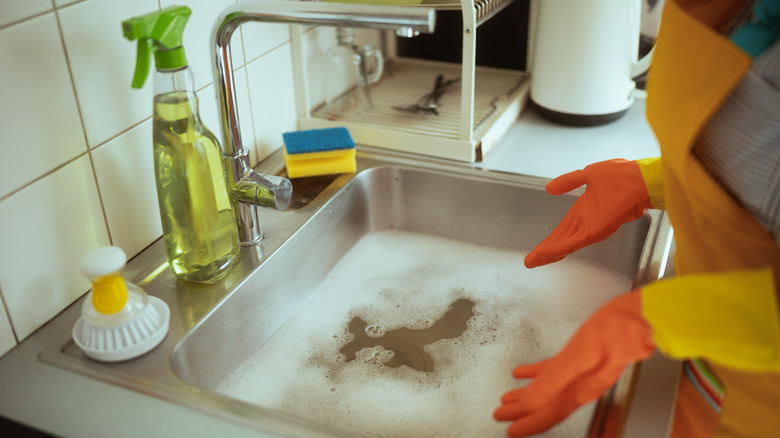
Since their invention in the 1920s, many people have become accustomed to having garbage disposals in their kitchens. Not only do these items help break down foods, but they're invaluable devices when helping to keep your kitchen clean and germ-free. But this doesn't give you free range to put just any scrap down the drain, as these can cause serious food clogs in your kitchen. You might be aware of some of the most talked-about offenders, including oils, grease, and bones. It turns out that another one of the worst foods you can dump down the drain may be one of your go-to breakfast choices: oatmeal.
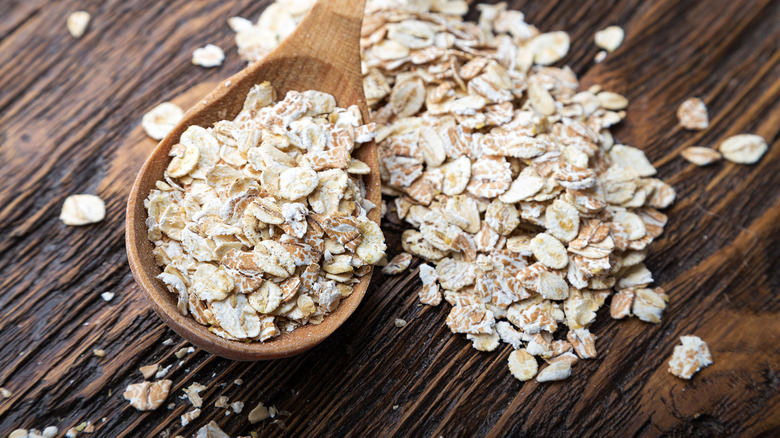
While seemingly harmless due to its soft texture, oatmeal can lead to some surprising (and potentially costly) issues with your kitchen sink. Whether you use rolled, instant, or steel cut oats to make your bowl of oatmeal, all of these grains have some key features in common. When you add liquid to oats, they inevitably expand. This can prove problematic when oats are put down the drain, as these small grains will continue to grow in water before turning into a thick paste-like substance. It can then adhere to other food particles and create clogs, which may also harden over time. For these reasons, you should always place leftover oatmeal in a garbage can or compost, and not down your drain.
Oatmeal isn't the only food item that can clog pipes in this way
Oatmeal is one major offender when considering the health and function of your kitchen sink. However, some of the same features of oatmeal are similar to other foods that should not end up in your drain. Rice and pasta are also notorious for expanding and sticking to pipes and garbage disposals, and should never be dumped down the drain. Coffee grounds and fibrous vegetable skins, like potatoes, also carry the risk of forming clogs in garbage disposals and pipes, although these do not have the same sticky and expansive qualities as the aforementioned grains. Knowing the list of things you should never put in the garbage disposal is a good starting point to overall pipe maintenance.
Now that you know that oatmeal is a no-go for drains, you might be wondering if other forms of oats are safe. Dried oats may also be problematic because they can still expand when they interact with water. Store-bought colloidal oatmeal, on the other hand, is a completely different situation altogether. Unlike oatmeal, this common bath aid used to treat itchy skin from eczema and other conditions processed into a fine powdery substance that can dissolve in water. Commercial colloidal oatmeal products are safe for bathroom drains, so long as you adhere to all package instructions.
Due to its texture and adhesive qualities, it can be difficult to remove sizable oatmeal clogs on your own. A severe clog not only causes slow-draining water, but you might also observe unexplained smells from your kitchen sink. If you don't see improvements despite attempting to unclog your drain, consider calling a professional for assistance.