

5 Common LG Washing Machine Problems You Should Know About
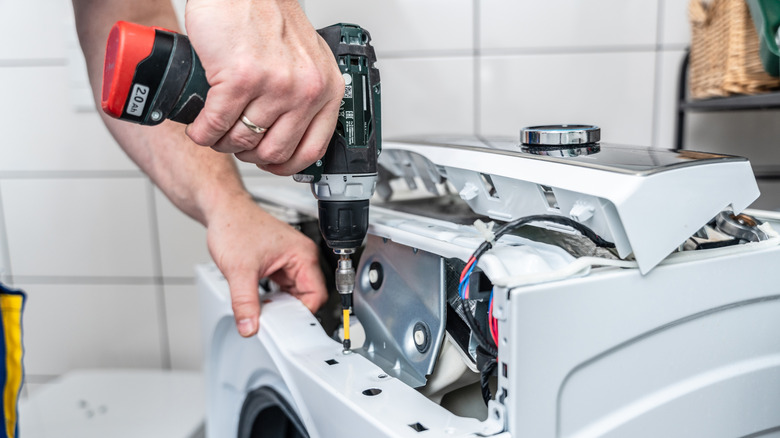
When it comes to something like a washing machine, consumers probably have unrealistic ideals about reliability and maintenance. Over the course of a decade or so, an appliance that regularly manipulates 200-pound loads is bound to need some upkeep. (That's with the water weight — if you're curious about that and the average weight of a washing machine, it's about 150 to 200 pounds.) So when we look at the most common LG washing machine problems, we see what you'd expect ... motor couplings, bearings, pumps, and valves eventually breaking down, but not necessarily more frequently than with other brands.
It's easier to agitate a 150-pound person than 150 pounds of water and laundry, and if you decide to undertake fixes to any of these problems as a DIY project, there's a chance you'll find yourself agitated along the way. You might, for example, have to remove six unrelated screws and break one irreplaceable locking tab to remove a single screw on an LG washer. And you'll need to keep up with all those screws so you can reassemble the appliance with the fewest possible leftover pieces. The good news is that there seems to be a bit of redundancy built into all these fasteners. The bad news is that no company pays for extra screws unless they're necessary for dealing with long-term vibrations caused by 200-pound loads. So, keep up with as many as you can.
Note that the issues below aren't unique to LG washers. In fact, LG was the most trusted washing machine brand of 2025 and consistently tops lists of best and most reliable washers.
Washer won't spin because of motor coupling
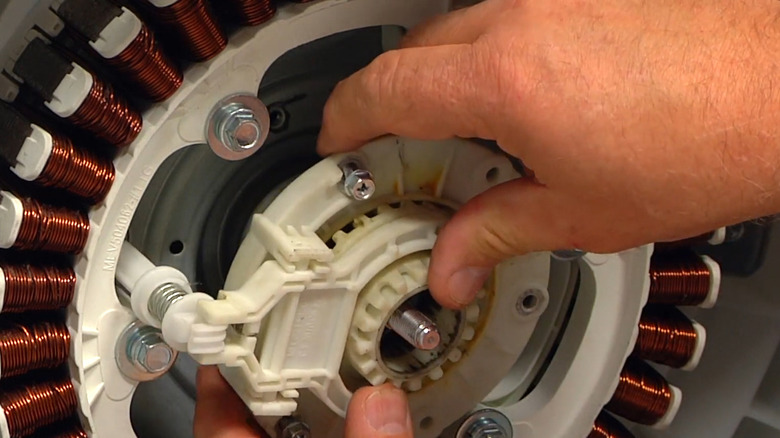
Some washing machine parts, like suspension rods, get a lot of wear and will fail sooner or later. Others get a lot of wear and fail by design in order to protect the more expensive parts of the appliance. The latter is part of the motor coupling's role: It joins the washer's motor and transmission, so it inevitably wears out. But it will also occasionally break when the machine is overloaded rather than allowing those more expensive parts to bear the burden. However positive that sounds, when the motor coupling is broken, the washer won't spin.
Inspecting a bad motor coupling will show cracks in the plastic or heavy wear to its teeth. Open the back of the machine and remove the rotor housing to get access to the piece and assess its condition. This leaves you about 80% of the way to a full replacement, so if you're fairly confident that the coupling is failing, it might be a good idea to have a new one on hand when inspecting the old one. If you find cracks or broken/worn teeth, go ahead and swap in a new model.
Motor couplers like this are a feature of direct-drive top-loading washing machines. Many of these models have an analog in the form of a drive belt, though more expensive front-loading machines may also be direct-drive. If you have a front loader and find that your drive belt is worn or broken, it should be replaced.
Washer noisy and not spinning because of a bearing
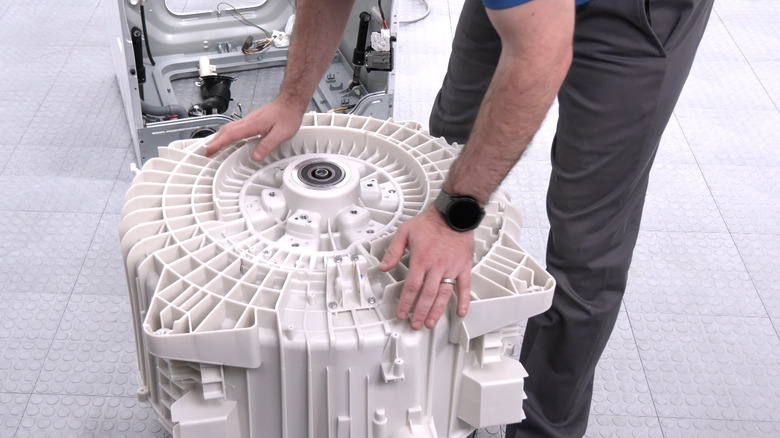
Bearings are one of those miracle components that allow machines to do the seemingly impossible work of spinning freely while, ahem, bearing extremely heavy loads. The nature of this part means that it will eventually wear down and stop working smoothly ... or stop working altogether, in which case your washer will no longer spin. Bearings also have a way of announcing their displeasure with loud, unpleasant grinding or roaring sounds. They're protected from the water and chemicals in your laundry by rubber tub seals, but both of these parts are eroded by the same chemicals. So if you're not constantly, proactively monitoring seals and lubricating bearings, you'll eventually hear the screech of the latter.
When it happens, you have a few choices. Bearing replacement involves disassembling a large portion of your washer, and it requires some gear and skills (like pressing bearings into place) you don't necessarily have. It's an advanced repair, not suitable for every DIYer. One strategy is to purchase an assembly that includes the already-pressed bearing and an outer drum replacement that you probably don't need. Another approach is to hire a technician to do the work for you. And a third is to simply replace the washer. All of these are expensive options, which might make learning to deal with bearings more appealing to you. But do watch a video about the required steps before you take the work on yourself. You might find that this is a job for ... well, anyone else.
Washer won't agitate because of lid switch
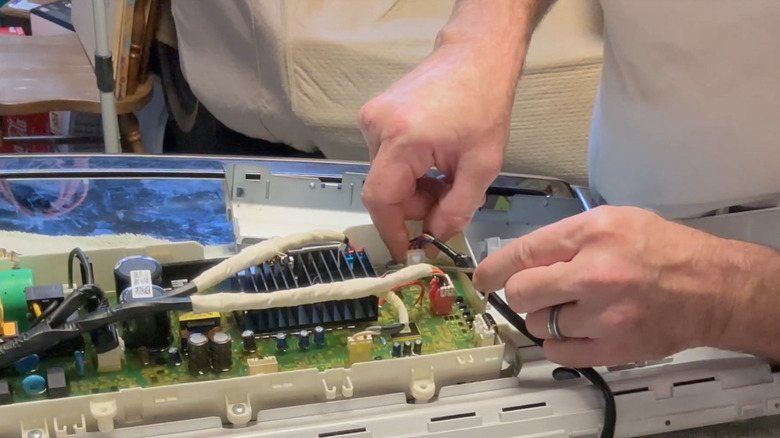
A washer's lid switch doesn't carry the same physical burden as the other components here, but it does shoulder some responsibilities when it comes to keeping your appliance operating safely and properly. As a result, a faulty switch will, by design, stop your washer from agitating or spinning and can also prevent the tub from filling with water. Like any switch that gets used (and, in fact, often slammed) a zillion times, these occasionally fail.
This is a reasonably simple DIY repair, if you're so inclined. While the washers of yore and legend were all pretty simple to get into, today, the better part of the work of replacing a lid switch/lock assembly is getting to the parts — particularly the connector where the switch attaches to the control board. In the perpetual campaign to fix things that aren't broken, LG and other manufacturers have over-engineered washers so that you must navigate endless hidden screws and a universe of unpredictable tab shapes to simply unplug something. Your best bet is to watch a video on your specific washer model. It's not difficult, just unnecessarily convoluted.
Washer won't drain because of bad drain pump
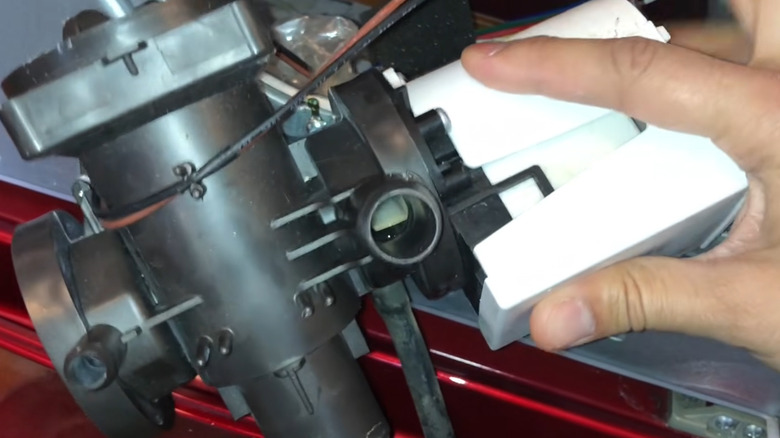
Your washer should spit out nearly as much water as it takes in by means of its drain pump. When this part isn't working, you might get some drainage via gravity and centrifugal force, but not enough to make the appliance work properly. A bad drain pump can also cause an LG washer to vibrate excessively. This part is usually an assembly that includes a motor and an impeller that moves the water, and replacing one isn't particularly difficult or expensive. With that said, some models might require more disassembly than seems reasonable, so it's probably a good idea to eliminate all other possible causes before you undertake the pump replacement. The simplest of these include a clogged or kinked drain hose and a door switch or lock that's not functioning properly. Clear the filter before proceeding, just in case it's blocking drainage. Checking the pump itself for clogs effectively requires all of the disassembly of pump replacement, so this should be a next-to-last resort.
The exact process for replacing the pump depends on the particular LG model you're repairing. Just note that there might be a few more steps than, say, replacing the same part on a dishwasher. The pump could be attached to a filter unit that's accessible from the front of the machine, so that will have to be disassembled. And the pump sometimes sits in a housing that allows generic options to be fitted to the particular LG model you're working with, and you'll need to save that housing for use with the new piece.
Washer not filling because of faulty inlet valve
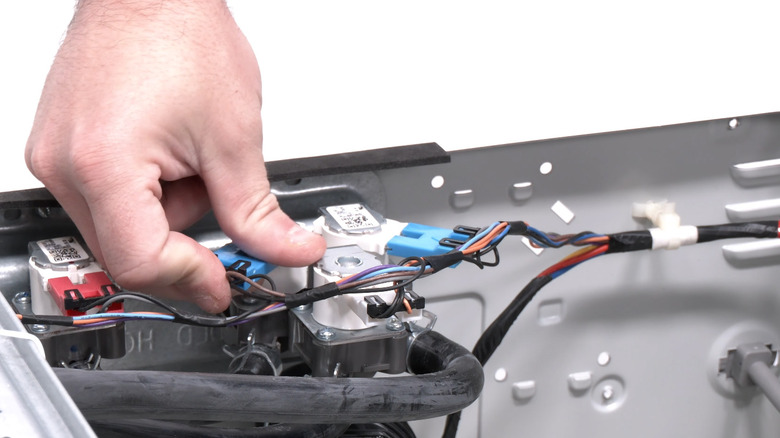
On the other end of things, a washing machine needs to allow water in so that it can do its work, and that relies on an inlet valve. Two valves, actually, because you'll have one for hot water and one for cold water. (And technically there are often more than that, because a single cold-water assembly might include two or more solenoid-actuated valves in a sort of distribution manifold for sending water where it's needed.) If your washer isn't filling as it should or is only filling with hot or cold water regardless of settings, you probably have a valve that requires replacement. These usually have plastic housings and often hold water, so they're particularly susceptible to sub-freezing temperatures. These conditions can cause cracks and serious leaks, so they should be one of your first stops when troubleshooting a washing machine leak.
The valves are easy to find because your hot and cold water lines typically attach directly to them. Follow model-specific instructions for accessing and removing the bad inlet valve assembly. You'll probably need to remove a hose for each of the solenoids in the valve assembly (one for hot water, as many as three for cold water). Wiring harnesses are often color-coded for LG washers so that you don't mix up the hot and cold water electrical connections, but it's never a bad idea to snap a photo of whatever you're about to replace so that you can put everything back exactly where you found it.