

Skip The Cleaning Vinegar: A Safer Way To Clean Wood Floors Without Damage
We may receive a commission on purchases made from links.
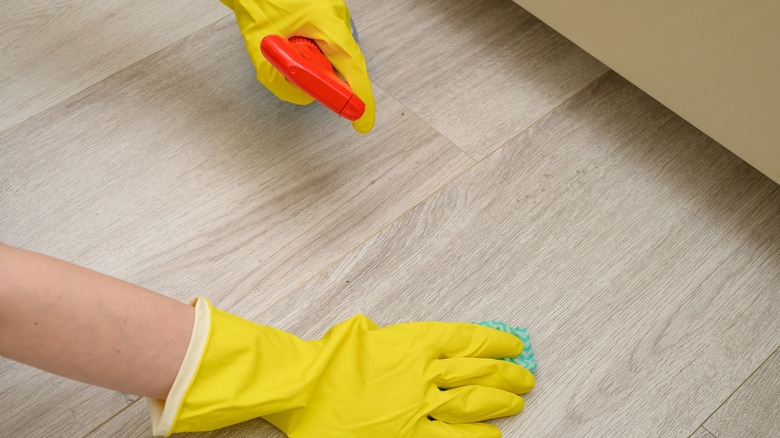
Given its versatility, disinfectant prowess, and inexpensive price tag, everyone seems to be talking about cleaning vinegar these days. Seeing your social media feed inundated with people using it to wipe, scrub, and cleanse a variety of surfaces, you might think of using a homemade vinegar cleaning solution to keep your wood floors sparkling clean. However, this can be an expensive mistake since the acetic acid in cleaning vinegar can hurt your floor's protective chemical coating over time. Once that happens, the acid will react with your exposed wood flooring and dull the shine. Moreover, certain manufacturers might even invalidate their warranty if you deliberately use an acidic cleaner. So, it's best if you skip the cleaning vinegar and vinegar cleaning hacks and employ safer ways to clean your hardwood floors.
For example, a simple dish soap and water solution can work wonders on sealed hardwood floors. Since most are sealed during manufacturing, you shouldn't face any issues while using this method. But if it's been a few years since installation, you should probably check if the coating is still intact or has it been worn down. To do this, pour a few drops of water on a concealed spot and wait for a few minutes. If it remains as-is, your flooring is probably sealed. However, if the wood greedily soaks in the drops, know that its finish has been compromised. As such, you should re-seal it before subjecting it to homemade cleaning solutions. In the meanwhile, use dedicated cleaners, such as Bona's Hardwood Floor Cleaner Spray, per the manufacturer's instructions to avoid damaging your floors (you can test it first in an unnoticeable area to be 100% sure).
How to clean your wood floors using dish soap and water
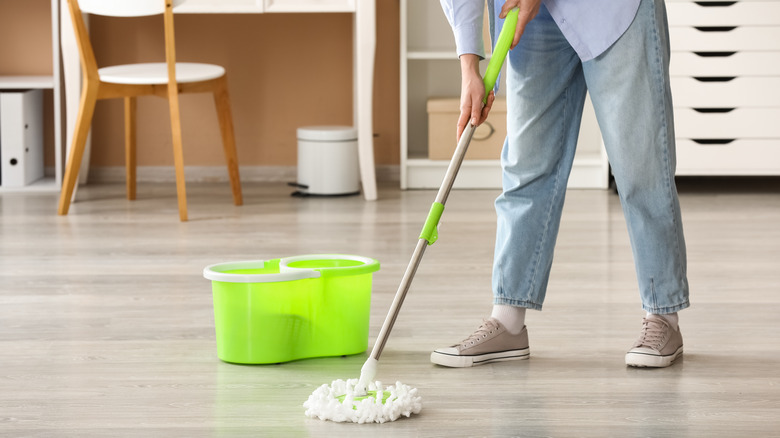
To clean a hardwood floor, start by vacuuming it with dedicated floor attachment, or sweeping it with a gentle broom or dust mop. This will rid it of tiny dirt and dust particles that can act as an abrasive and scratch the surface. Now, grab a bucket and fill it halfway with warm water. Then, add a squirt of mild dish soap and mix it well to prepare your cleaning solution.
When the solution is ready, dunk a flat microfiber mop in it and wring it out to remove excess water. Remember, wood absorbs water, especially if its protective coating is flagging in a few spots or has been rubbed thin, and can warp or swell if you continue cleaning it with a wet pad on a regular basis. Moreover, rogue droplets might even make their way into the seam and cause damage. So, ensure your mop is damp but not soaking wet before you use it on your floors. Also, clean the floor in small areas, one at a time, following the wood grain to minimize streaks. After you're through, rinse the pad and move on to the next section. Repeat this step until your entire floor is clean. Keep replacing the dish soap-water solution as it gets dirty. Finally, use your dry mop (a microfiber towel works, too) to soak up the residual water. It is also a good idea to turn on fans or open up windows so that the floor dries completely.