

You Don't Need Vinegar: Try A Citrus Essential Oil To Get Rid Of Ants Instead
We may receive a commission on purchases made from links.
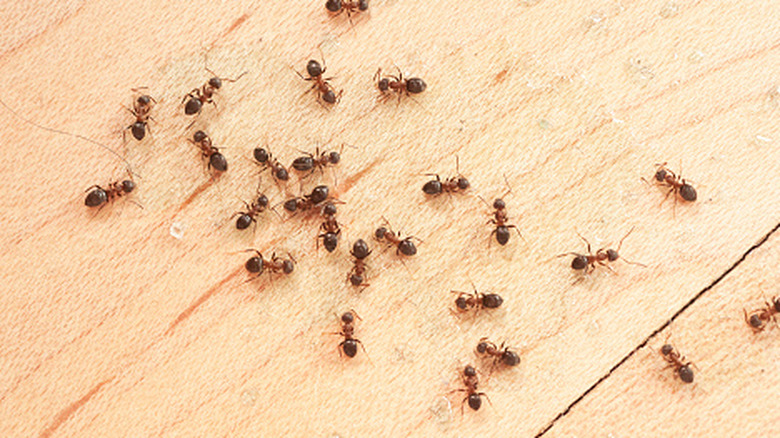
Ants are notoriously difficult pests to control. However, it's understandable that you might have reservations about using chemical sprays or traps and want to look for other ways to remove ants from your home. Many people turn to household vinegar to combat ants, and for good reason. It's an affordable, non-toxic solution compared to commercial products, and ants are said to dislike the strong smell. The trouble is that the odor of white vinegar isn't just off-putting for ants — you might find the smell to be overpowering, too. Citrus essential oils smell better, and their high levels of d-Limonene compounds may also help to control ants when used as a complement to other pest control strategies.
D-limonene is a naturally occurring compound found in citrus fruit rinds. Citrus essential oils are commonly made from peels (along with other parts of the fruits) and can therefore contain high amounts of d-Limonene. In fact, according to the National Library of Medicine, some of these essential oils may contain more than 98% d-Limonene. Not only are these compounds aromatic, but they may have other benefits around the home. Thanks to their d-Limonene content, citrus essential oils may even work against ants as a natural pesticide, per 2021 research. Not only is d-Limonene toxic to ants, but the substance can also remove their pheromone trails that help others in their colony locate food sources.
How to safely use citrus essential oils against ants

To use citrus essential oils to get rid of ants, you first need a clean spray bottle and your choice of oil. You can even consider a variety pack, such as the P&J Trading Citrus Set, which contains six different types of oils. Fill up the spray bottle with water and add several drops of the desired oil. Spray the desired area, concentrating on entry points such as around doors and windows, and allow to dry. Be sure to avoid certain surfaces, such as unsealed wood, stone, fabric, or those that are painted, as the oils can damage them. You also should not spray citrus essential oils around areas that pets might access, as they can be toxic to them.
Despite the potential efficacy of citrus essential oils against ants, there's no guarantee these DIY repellents will work as effectively as commercial versions. This isn't to say it's not worth trying them, but be sure to keep your expectations in check. If you're not seeing results, you can try another simple DIY repellent to keep ants away, or contact a pest control expert in the case of severe ant infestations. No matter which type of ant control method you use, be sure that you reduce the attractiveness of your home to them by eliminating sources of food. These include stray crumbs on the floor, pet foods left out in bowls, open containers of dried goods, and open fruit bowls.