

Does Cleaning Vinegar Kill Mold Or Do You Need Something Stronger?
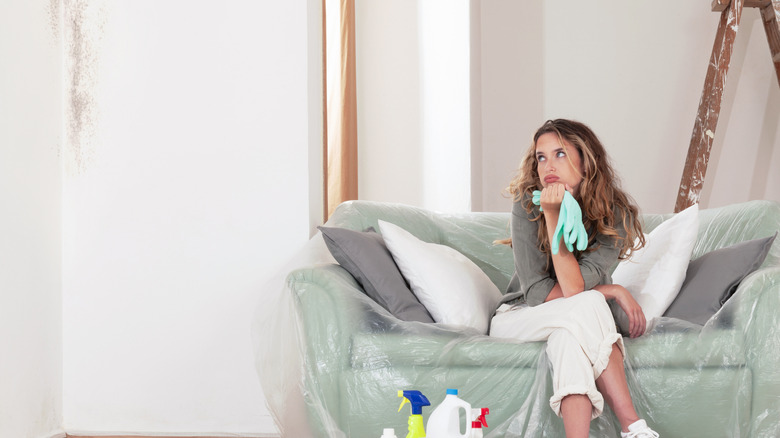
Of the possible 300,000 different mold species that exist around the world, not all are harmful (in fact, some are medicinal), but many of the ones that grow on the walls and floors of houses are. For example, black, toxic mold (Stachybotrys chartarum) is usually harmless when found in nature, but in closed spaces, the mycotoxins it produces can reach high concentrations that can cause respiratory ailments.
Many people turn to vinegar to get rid of mold colonies, and because it has a higher concentration of acetic acid than household white vinegar, they often choose cleaning vinegar. While it does kill visible mold, it won't get rid of a mold problem once and for all. It would be nice if it did, because vinegar is a relatively benign cleaner that doesn't emit toxic fumes.
Once a mold colony has established roots in a porous medium like wood, grout, or drywall, it's extremely resilient. It can easily grow back, even after having apparently been killed by a treatment with cleaning vinegar. That's because the acetic acid can't penetrate deep enough to get to the roots, even if you let the vinegar dwell on the surface for several hours. On non-porous surfaces like tile and glass, a vinegar treatment is permanent because the roots aren't buried. However, mold spores are everywhere, and vinegar won't prevent them from landing on surfaces you've already cleaned and starting a new colony.
Scrub, scrub, scrub, and keep things dry
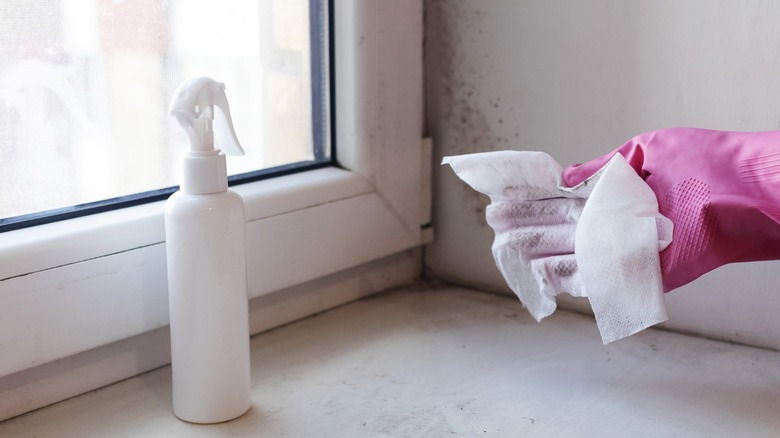
You might think chlorine bleach, rubbing alcohol, or even tea tree oil would be stronger methods to easily kill mold. And while they may be, they have the same problem as cleaning vinegar when you use them on porous surfaces: They can't penetrate to the roots. Besides that, bleach can emit harmful — potentially hazardous — fumes when used improperly, and it can discolor surfaces on which you use it. The EPA provides a list of medical-grade sterilants that are more effective than household disinfectants, but even if you could get one of these, mold would grow back if the sterilant can't reach the roots.
Once mold has penetrated a porous surface, you basically have two options for dealing with it. If the materials aren't rigid enough to scrub, the first option is to throw them out. That's the EPA-recommended way to deal with moldy drywall, ceiling tiles, and carpeting. To get mold out of rigid porous materials like wood, tile grout, and concrete, the EPA recommends scrubbing with detergent and water until the discoloration is gone. The CDC also recommends scrubbing with soap and water, but it also allows a solution of one cup of bleach per gallon of water to make scrubbing more effective (just be sure to wear a mask to protect yourself).
Probably the best way to remove mold from your house is to eliminate all moisture in the area by opening windows or using fans for ventilation, or even running a dehumidifier. The CDC recommends lowering the humidity to 50% or below, because mold can't get established or grow when there's no water.