

Green Drywall Vs. Regular: What's The Difference And When To Use Each
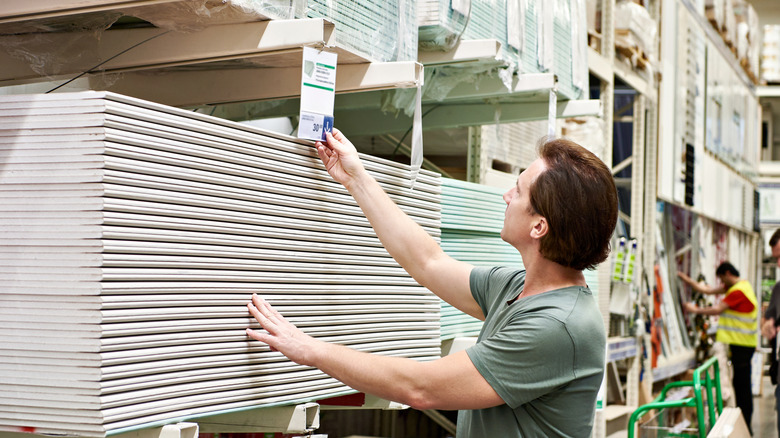
Green, purple, blue, white... what's with the rainbow of colors in the drywall aisle? The many colors of drywall aren't for aesthetic purposes, though. It's a color-coding system to let you easily identify different types of drywall. Giving the paper coating a standard color means you can distinguish the characteristics of the building material quickly. Green drywall boards are quite common to see — the green outer layer indicates that the material is moisture resistant. It also tells you which direction to install the material. Also, please note that not all drywall manufacturers follow this color-coding scheme, so make sure you read the descriptions carefully before purchasing.
Looks-wise, the noticeable difference is the light green paper on one side of the greenboard. Regular drywall has a brown side and a white or gray side. Besides this, green drywall looks very similar to the standard versions. However, the difference in function is what matters most. Unlike regular drywall, the green variety repels more moisture. That makes it worth considering when you remodel a bathroom or kitchen. You can use this type of water-resistant building material as walls or as a backer for tile in areas that won't receive direct moisture. Greenboard usually only comes in ⅝-inch and ½-inch thicknesses, whereas white drywall usually also comes in ¼-inch, ⅜-inch, and ¾-inch.
Regular drywall, sometimes referred to as white board, is the general option used in most rooms in the home. You can use it in areas where moisture isn't a concern. It's typically the most budget-friendly type of drywall. Both options are installed the same way, although the green version can be a little more delicate.
Choosing green vs. regular drywall
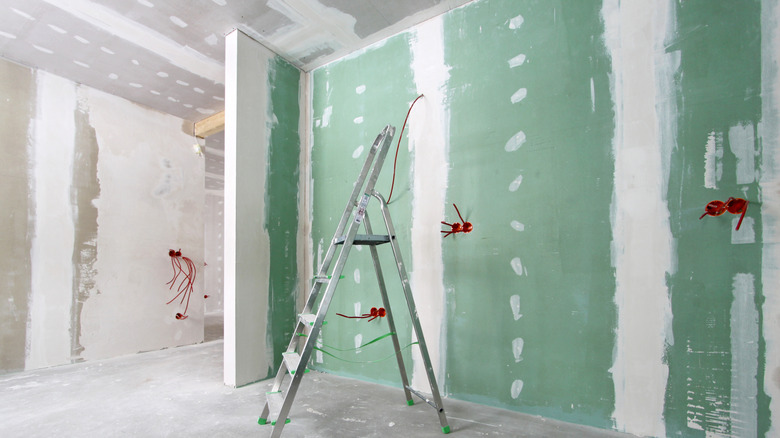
Green drywall is ideal for high-moisture areas, but it's not waterproof, so it's not great for areas that will receive direct water, like a shower or areas around an indoor tub or pool. (You'll need waterproof drywall when you tile a shower wall or cover wet areas.) Using it in those areas will often result in damage to the drywall, which can require costly repairs. Rooms where you can use green board drywall include kitchens, bathroom walls outside the shower area, attics, utility rooms, and laundry rooms. Of course, you can use it throughout your home, but you don't really need it in spaces that stay dry.
Regular white drywall goes in spaces that typically stay dry, including bedrooms, living rooms, and dining rooms. Using it in an area with high moisture could cause the material to deteriorate. You can also use regular drywall for different purposes. Thinner sheets bend easier if you have uneven walls, for example, while thicker sheets can dampen sound — one of many techniques for soundproofing walls.
When it comes down to it, you really only need to use greenboard in areas where moisture could cause a problem. It costs roughly 20% more than the standard drywall, so only using it when necessary keeps your project costs lower. But it's a good way to keep your home safe from water damage and mold growth in those humid rooms by slowing moisture absorption.