

Forget Traditional Asphalt Driveways: Use A Cheaper Variation
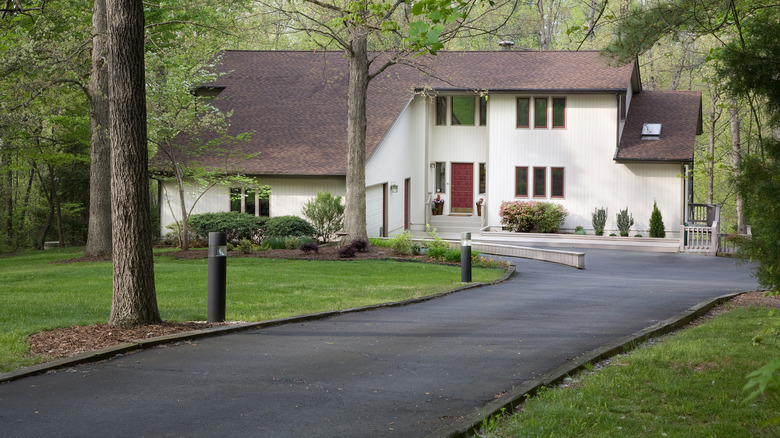
Asphalt driveways have a lot going for them. They look clean, they have a smooth surface for cars, and they can last for nearly 30 years with some maintenance. However, there's a problem: Asphalt can be somewhat expensive. For instance, a traditional asphalt driveway can cost nearly $7 to $13 per square foot (including labor), and if you choose a porous asphalt, the cost rises to about $8 to $15 per square foot. There's no reason to worry, though. If you're looking for something cheaper but somewhat similar to asphalt, you can always go with a tar-and-chip driveway.
A tar-and-chip driveway only costs about $2 to $5 per square foot. The lower price comes from the fact that the process uses cheaper materials and simpler methods, and unlike traditional asphalt, there's no use of an asphalt plant and expensive, machine-mixed blends. Just keep in mind that the $2 to $5 per square foot figure is only an average. Your quote may be slightly higher based on where you live, what the site is like, and the type of chipped stone you use to build the driveway.
Also, note that tar-and-chip driveways do have some limitations. For instance, tar can soften and shrink in areas with extreme temperature fluctuations which can loosen the chips over time. Similarly, snow plowing is trickier on tar-and-chip. A low blade can easily scrape away chips instead of gliding cleanly over them. So, if any of these things seem like a valid concern, make sure that you check out some other asphalt driveway alternatives, too, when planning your driveway.
What exactly is a tar-and-chip driveway?
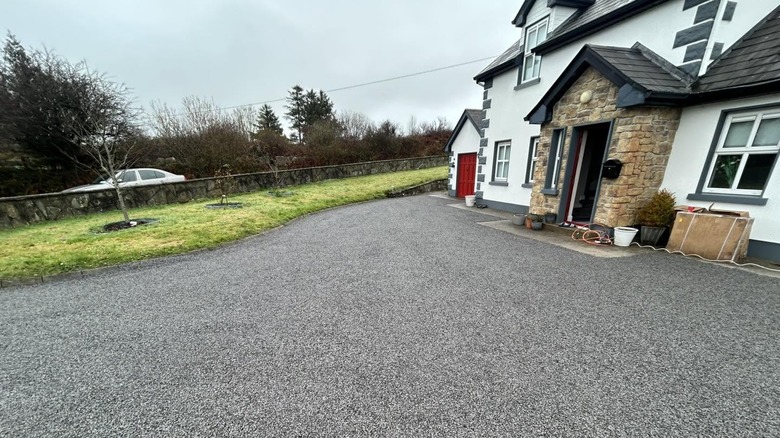
Building a tar-and-chip driveway is not as simple as just pouring rock and topping it off with tar. You start by carefully clearing the area, making sure that the site does not have any old materials like debris and overgrown grass. Next, the ground is graded. This ensures water moves away from the house and doesn't keep accumulating under the driveway or home. Once clearing and grading have been completed, the contractor spreads a 6- to 8-inch-thick layer of gravel and compacts it with a heavy roller. This layer acts as the backbone of your driveway. It makes sure that it can handle weight without cracking or shifting.
Once the base of the driveway has been laid, workers spray or pour liquid bitumen over it, making sure they complete this step as soon as possible, as liquid bitumen cools and solidifies quickly. If this step is delayed and the tar sets, the chips won't stick to it properly. Nevertheless, immediately after the tar has been applied to the gravel base, stone chips measuring about ¾ to ½ inch in size are spread across the whole surface of the driveway.
Finally, a drum roller presses the chips firmly into the tar, and that's it. Now all you have to do is make sure that no one walks over the driveway for about 24 hours so that the tar can properly grip the chips. Installed correctly, a tar-and-chip driveway can last about 10 to 15 years. This is a shorter lifespan than asphalt and something you should definitely keep in mind when choosing a driveway material.