

Lawn Mower Vs. Lawn Tractor: What's The Difference?
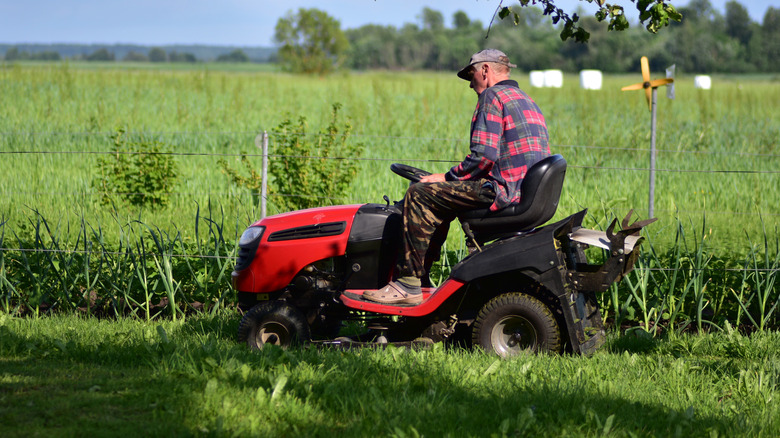
We may receive a commission on purchases made from links.
If you're in the market for new lawn care equipment, you'll come across all sorts of categories, some of which are broad, confusing, and seemingly overlapping. One example is the division between lawn mowers and lawn tractors. These terms, easily mistaken for one another, represent two different types of outdoor power equipment. The basic explanation is this: Both machines cut grass, but lawn mowers tend to be smaller and less versatile while lawn tractors are larger, stronger, and able to perform various landscaping tasks. The differences can be subtle, but they affect the machine's price, mowing ability, and effectiveness at maintaining your yard.
Since most people are likely more familiar with the term "lawn mower," which in itself is quite broad, the first question to answer is: What exactly is a lawn tractor? For starters, they shouldn't be confused with traditional tractors that are used for large-scale farming and agricultural needs, such as hauling objects or plowing soil. Instead, lawn tractors are a significantly scaled-down version designed for everyday residential use. They can still handle a variety of landscaping tasks, including hauling, but they are designed to mow the lawn and tackle casual yard maintenance by attaching to equipment like aerators, dump carts, and snowplows. In contrast, a lawn mower is generally only used (or at least, best-designed) for mowing purposes. Zero-turn mowers fall into the "lawn mower" category since their primary purpose is cutting grass, even if you're occasionally able to hitch things to them.
Lawn tractor vs. riding lawn mower: Which is right for you?
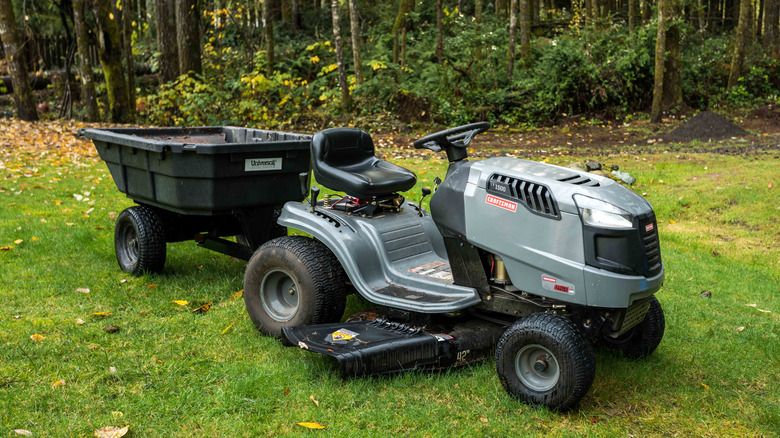
Deciding between a lawn mower and a lawn tractor comes down to a few factors, including budget and storage space, but the two most important factors are how you plan to use the machine and the characteristics of your yard itself. A yard's size, slope, and various features like trees, fences, and tight turns all affect what type of mower is best. Generally, a nimble, zippy riding lawn mower — like a zero-turn — is the better choice if your yard has a lot of small, awkward angles that require a sharper turn radius. A lawn tractor, on the other hand, should be strong and sturdy enough to handle uneven or sloped terrain.
When it comes to large yards, there isn't a definitive winner; it varies based on the mower's speed and deck size. On average, lawn tractors have a larger deck size — usually between 42 and 54 inches – so they have a slight edge. Still, it's possible to find riding lawn mowers in an array of deck sizes, even 60 inches, like the Cub Cadet Ultima Z2. This is what can make the buying decision tricky, since so much depends on the individual mower model, not just its overall category. However, the easiest dividing line is whether or not you want the versatility to haul objects and add attachments. If the answer is yes, go with a lawn tractor. If you're purely looking for a pristinely trimmed lawn independent of other landscaping tasks, stick with a riding lawn mower.