

No More Hand Pulling Or Chemicals: The Easy-To-Use Tool For Removing Weeds

Keeping weeds out of your garden is one of the most important tasks if you want it to look its very best. Weeds steal the water, nutrients, and sunshine from the plants you want growing, choke off airflow, and invite unwanted pests. If you've ever lost a perfectly good weekend to crawling around on your hands and knees yanking out these stubborn intruders, you're probably wishing for a better way to get rid of weeds in the garden. Fortunately, a lightweight, handheld electric tiller is one of those essential garden tools for home gardeners that can cut down your yard work so you can actually enjoy your weekends.
If your idea of tillers involves large gas-powered, lawn mower-like rototillers, don't worry: Handheld electric tillers are compact, lightweight, and a massive back saver. They also save you money on chemical herbicides that can harm the environment, local wildlife, and helpful microbes. Available in battery-powered or corded designs, handheld tillers use rotating metal tines to break up dirt, aerate the soil, and chop up nasty roots and weeds. Most models look a lot like a standard weed eater with a long handle and motorized head, allowing you to stand up comfortably while you work. If you have potted plants and window boxes that need attention, there's even a smaller, handheld tiller that somewhat resembles a power drill.
Choosing the correct hand tiller for your landscaping needs
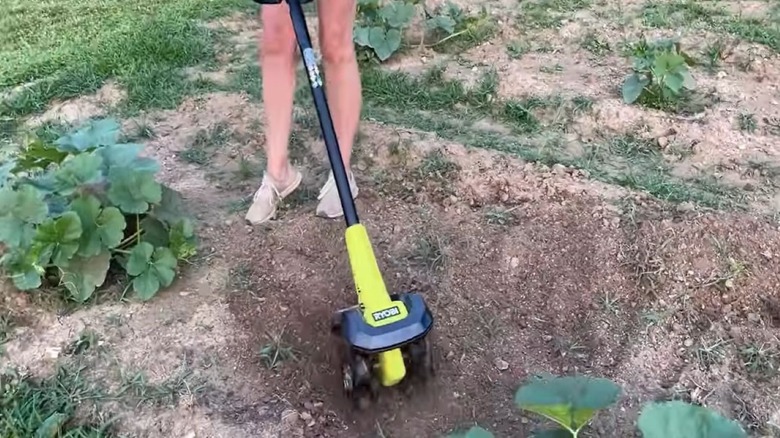
When shopping for a new handheld tiller, there are a few things to keep in mind. First is tine rotation. Counter-rotating tillers have tines that spin opposite the direction the device is moving. This action makes it easier to break hard soil and slice through thicker weeds. Counter-oscillating tillers have two sets of tines that move in opposite directions from one another. This clever design stops long weeds from tangling up around the base, making it your best bet to keep weeds out of flower beds.
Forward-rotating tillers are the most common setup for handheld electric tillers. The tines spin away from the handle, which naturally pulls the tiller forward for a really smooth motion, like a mini walk-behind lawn mower. It's perfect for mixing compost or gently touching up existing gardens and flower beds without tearing up nearby plants.
Finally, you'll want to think about motor power, which is measured in amps. For light weeding and shallow soil, a 2.5- to 4-amp motor is enough to handle the job. If your dirt is more compact, you'll want to step up to a mid-range model with a 6- to 8.5-amp motor. Also, it's a good idea to grab a spare battery. That way, you can seamlessly swap them out on larger jobs without having to stop and wait for a charge.