

Skip The Rake: How To Use Lawn Mower Blades To Dethatch Your Yard
We may receive a commission on purchases made from links.
If you've been giving your lawn enough water and fertilizer, and it's still looking brown, the problem could be a layer of thatch preventing nutrients from reaching the roots. All grasses develop thatch to varying degrees when dead rhizomes and roots collect under the canopy, and many lawns benefit from dethatching annually or even more often. You can use a dethatching rake, but that can be a big job. It's a lot easier to let your lawn mower do it for you by replacing the blade with a dethatching blade.
A universal dethatching blade like the Maxpower 16 in. Universal Power Rake/Dethatcher Blade costs less than $20 (the Maxpower costs $17.05 at Home Depot), and it fits most lawn mower models. The blade has metal springs or lengths of trimmer line that hang downward to bite into the thatch layer and bring it to the surface while you're mowing. The blade then chops the thatch into a fine material that you can rake up — or collect in a bag while you're mowing — and put on a compost pile. Raking this debris is far easier than raking thatch.
Thatch develops for several reasons, including overwatering, over-fertilizing, and mowing too infrequently. It's generally time to dethatch when the thatch layer exceeds half an inch, and you can tell it's too thick when the lawn feels bouncy to walk on, the grass turns brown, or puddles form when you water.
Mowing technique for effective dethatching
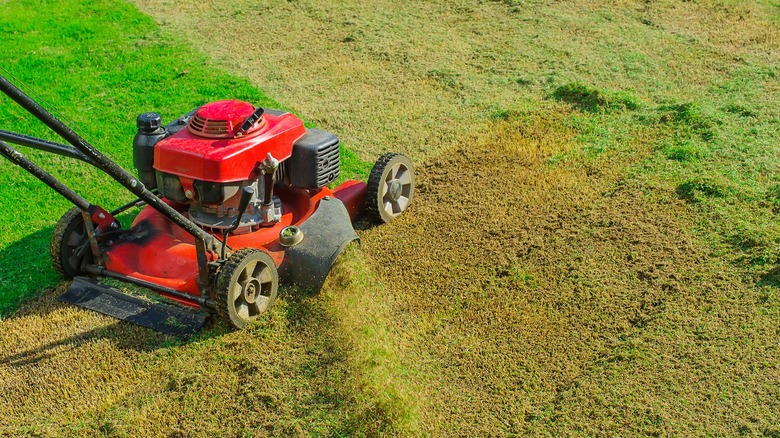
As far as your lawn is concerned, dethatching is a bit like surgery, so you want to do it at a time of year when it's easiest for grass to recover. That would be mid to late spring for warm-season grasses and early fall for cool-season grasses, and never during extremely hot weather or periods of drought. Even if you adhere to these timelines, some parts of the lawn may need reseeding to help them recover.
To ensure the dethatching blade reaches the thatch layer, it's important to do a little prep work. Cut the grass a little shorter than usual a few days before you dethatch and rake up the cuttings or collect them in the mower bag. A day before dethatching, give the lawn a light watering to soften the ground. Replace the blade on your mower with the dethatching blade, set the height of the mower so the blade just touches the soil, and you're ready to go.
When dethatching day arrives, make one pass over the entire lawn, overlapping each pass by a couple of inches, just like a mowing expert would do. To ensure complete removal of the thatch layer, make a second pass perpendicular to the first pass. For heavy thatch, you may want to do extra passes. Rake the clippings off the lawn when you're done and dispose of them. The grass will be stressed after dethatching, so water and fertilize it as needed to help it recover.