

What Does Baking Soda Do For Grass?
We may receive a commission on purchases made from links.
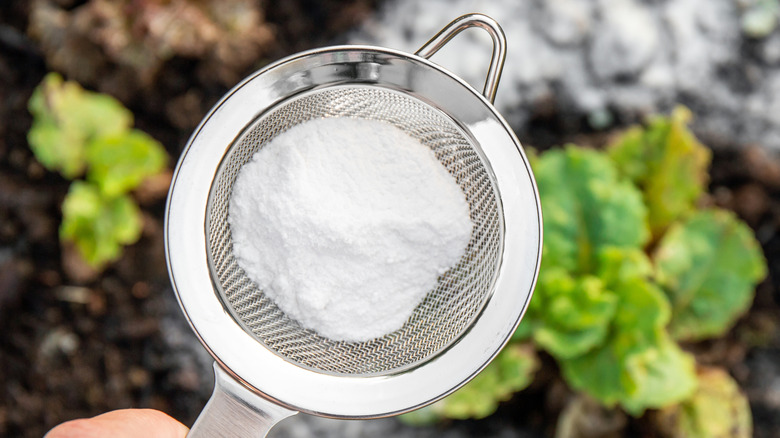
Baking soda may enjoy an indisputable spot in your pantry, but apparently it wields magic in more forms than just your fluffed-up cake. Indeed, there are several unique ways you never thought to use baking soda, such as soaking up stains, freshening your laundry, or even deodorizing your stinky dog after a water plunge. Lately, many gardeners have also taken to using baking soda as a natural preventative fungicide. After all, the EPA recognizes it as a biopesticide, though there are no commercial offerings yet. Some are also looking into the possibility of safely using baking soda on their lawns.
But the sad truth is that baking soda does more harm than good to your grass, and for the most part, should be avoided. "Baking soda (sodium bicarbonate) is not the best choice on lawns," Alexis Rochester, an investigative chemist and the owner of Chemistry Cachet, tells Hunker in an exclusive interview. "Too much of it can add unnecessary amounts of sodium onto the grass, causing issues with both the grass and soil. Small applications won't be enough to harm or help the grass or soil."
The reason? Baking soda, at its core, is a sodium salt with mildly alkaline properties. So, when misapplied, it produces effects similar to those of a salt-damaged yard, meaning the grass struggles to absorb nutrients and eventually turns brown, wilts, or dies. "Even just 1 teaspoon of baking soda has a high amount of sodium, which is not good for your grass or soil," says Rochester, while advising against using it for lawn care.
Home remedies that may improve your lawn grass
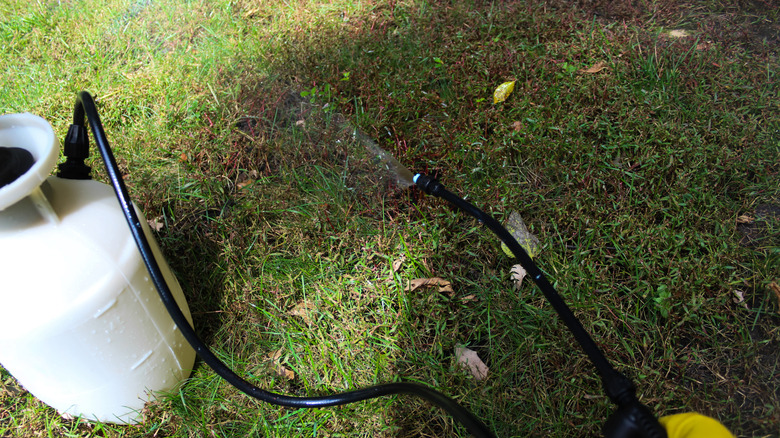
Although baking soda should be excluded from your lawn care regimen, Rochester details a unique recipe that you can use to make your lawn healthy and green. She elaborates, "If you want to use a home remedy to improve your grass, I recommend one I have used for years that contains small amounts of ammonia, beer, and baby shampoo. All of the ingredients work to nourish the soil, which helps the grass grow naturally."
According to the recipe Rochester recommends, you combine equal parts (or 1 cup each) of baby shampoo, household ammonia, and any cheap beer in a spare milk bottle. Be sure to pick the mildest shampoo without anti-bacterial properties to avoid harming the pre-established natural microbiome of your lawn. Johnson's Baby Shampoo with Aloe Vera is one such option. Here, ammonia works as a source of nitrogen, the beer enhances microbial activity, and the shampoo helps the mixture stick. Other than these, she also suggests adding 1 cup of club soda and ¼ cup of unscented Epsom salt into the mixture, as they deepen the turf's color.
However, to ensure you see the benefits, apply the mixture uniformly to the grass. Our expert advises applying it "with a hose sprayer so it distributes the solution evenly." Moreover, she recommends setting the sprayer at about 3 to 4 fluid ounces per gallon setting. Don't forget to water your lawn shortly to enable percolation and repeat at three-week intervals. The only exception is when temperatures exceed 85 degrees Fahrenheit, as the grass will be too stressed and shouldn't be stimulated into producing new growth.
Avoid home remedies for weed treatment
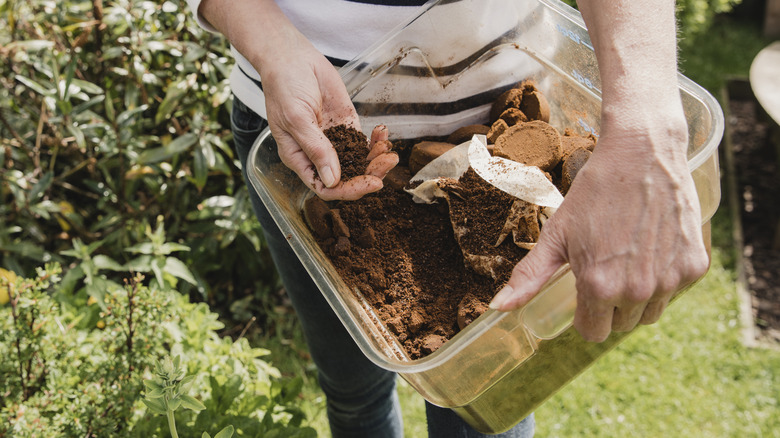
Apart from her DIY recipe, you can also grow a thriving green lawn with a natural fertilizer from your kitchen, says Rochester. "Spreading coffee grounds on the soil in your lawn can also boost the soil's nitrogen content, which can help grass grow," she tells us. As it's understood, spent coffee contains around 2.5% nitrogen, along with traces of some micronutrients that enhance soil quality and overall drainage. So, after you've downed your morning cup of joe to make you sprightly for the day, consider saving the leftovers for your lawn. You can further extend these benefits by adding composted manure or retaining grass clippings.
That being said, Rochester isn't too keen about using homemade recipes to banish weeds. She adds, "Home remedies are not formulated to target weeds inside the lawn, so you have to use caution with homemade solutions." Besides, there's little proven information about the concentration of ingredients, their supposed impact on the environment, or overall effectiveness. In other words, there is a risk it may cost you dear in the long run. "If you apply anything homemade to the weeds in your lawn, it will also impact the grass," she cautions. "This is why it is best to either pull the weed or use a safe, formulated solution that targets only the roots of a weed and not the grass." So, it's best if you look for EPA-registered or OMRI-certified formulations for home use.