

What Does An Orange Fence Mean?
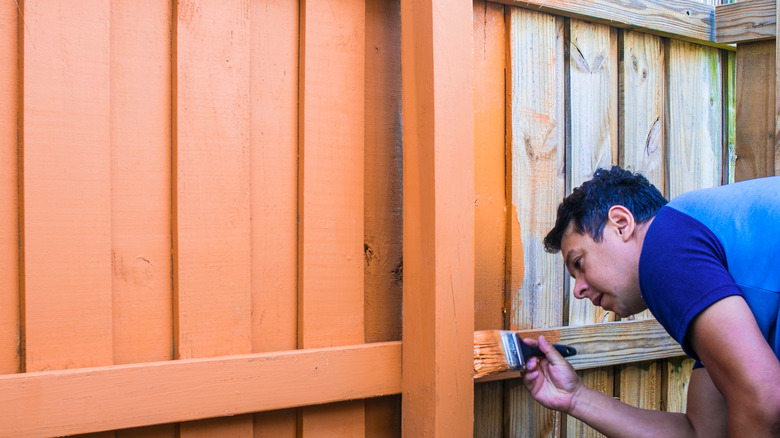
When you're driving around your neighborhood, you aren't too likely to see an orange fence. The more common types of fences are brown and wooden, black and metal, and maybe even a red brick wall or two. So what does it mean if your neighbor has a fluorescent orange fence? It's to tell anyone coming that way that they've reached the boundary of public land. This is especially true if you see an orange fence while out hiking or hunting in less populated areas. Since orange is such a bright color, it stands out against the landscape. This makes it an excellent warning system, kind of like placing traffic cones around a hazard. It lets everyone know: "Stop! Don't come any farther!"
An early example of this practice is NRS 207.200, a law Nevada passed in 2007 to keep hunters off private property. The bright orange paint serves as a warning to everyone that if they go any farther, they are trespassing. The fluorescent orange side of the fence faces public land. The unpainted side and beyond isn't accessible. Sometimes, there might not be an entire fence. The area will be marked with posts, instead. If it's a field that livestock are in, the orange posts can be every 1,000 feet. If there are no livestock, they can only be 200 feet apart. Other states have similar rules with a few variations. For example, in Montana landowners also use orange fences and posts to mark property lines, but they must also properly display a no trespassing sign.
Other reasons you might see an orange fence
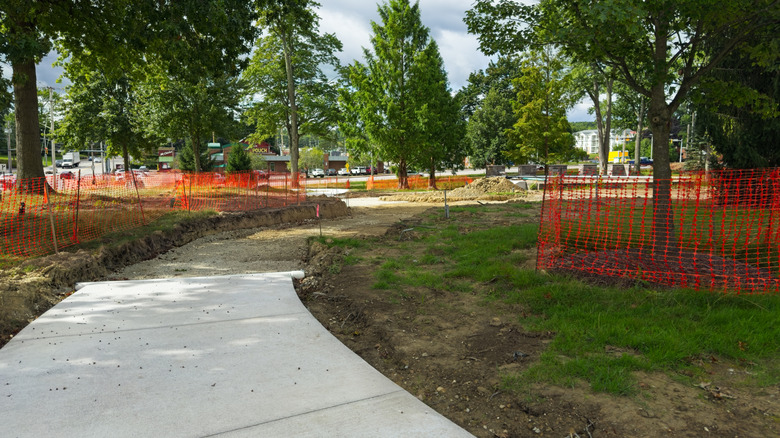
If you live in a highly residential area, it's less likely you will see fences painted orange to denote private property to hikers and hunters. While it is still possible, what is more common is to see temporary orange fences set up around the boundaries of construction sites, plus other places that shouldn't be disturbed. These fences are typically made of a plastic mesh and can't stand up on their own. They are supported by plastic or metal posts. Just like the painted fences, these boundaries are orange, as the color has long been associated with warning and safety. This way, they stand out from the landscape and draw your eye, making them more likely to work.
If someone is building their own home, the orange fence marks the boundary of the worksite. Everyone who passes by knows it's not safe to enter without permission, or the proper PPE, like a hard hat. Local governments might also use orange fences to cordon off places that shouldn't be walked on just yet, like freshly paved sidewalks in your neighborhood park or landscaping that shouldn't be disturbed. But no matter if it's a painted post in the woods or a piece of plastic in the park, the message is clear: stay out!