

Step Aside, Traditional Drywall: A Lower-Maintenance, More Attractive Alternative
Whether you're refinishing a room or adding an extension to your home, you may want to give the walls a little more oomph and interest than you can typically get with traditional drywall. One surefire way to achieve that is with shiplap. This type of wall paneling was originally used to keep ships and seaside houses watertight and insulated, and inside homes, it acted as a protective underlayer that was affixed to the house's frame and covered up. Depending on the age of a home, you may even find shiplap hiding beneath the plaster, drywall, or ancient wallpaper. Today, this wall treatment is prized for its farmhouse flair and good looks, along with its functionality.
Shiplap is distinguished by the way the wood boards are joined together. Each plank is connected by a half-lap joint, created by making a 90-degree cut along each edge. The joint allows for some flexibility in the distance between the boards, so the visible gaps can be wider or narrower. This is what gives shiplap its distinctive texture and charm.
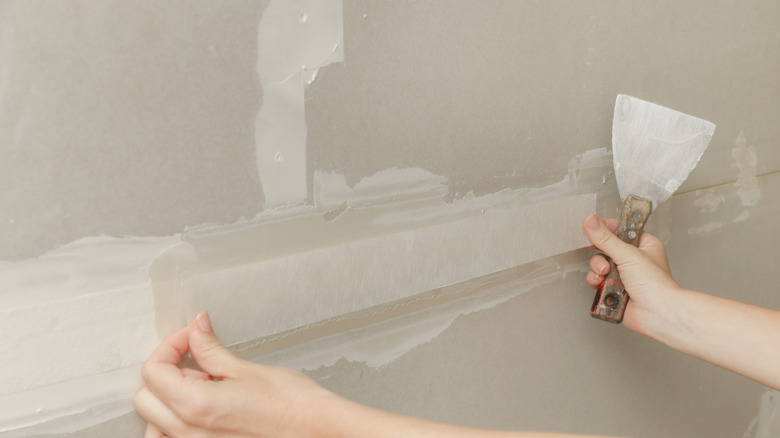
While drywall is a bit of a blank canvas, shiplap brings character with it. Another advantage shiplap has over drywall is its lower maintenance demands. It's easy to ding and damage drywall, whereas shiplap is more impact-resistant and less likely to show marks. The downside is that it costs considerably more than drywall, sometimes more than three times as much per square foot.
What makes shiplap so appealing
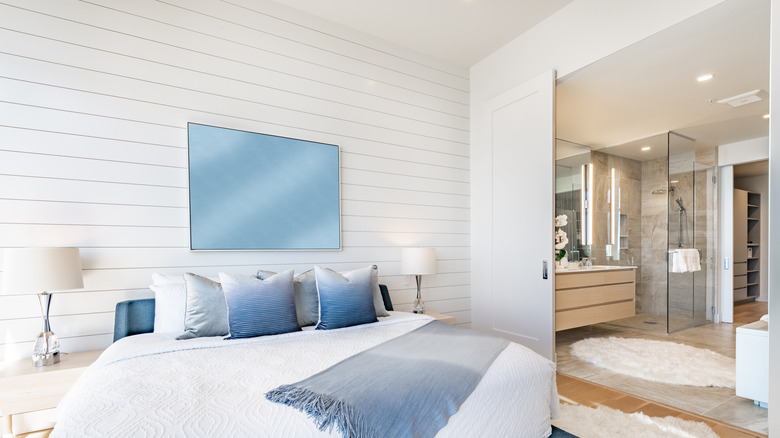
Your aesthetic options are nearly unlimited when using shiplap, as the wood panels work with a wide range of styles. It's all about what you do with them. Paint the panels white for a rustic, country home look, or let their natural wood grain shine through for a breezy Scandinavian style. You could even opt for a dark hue to create an industrial vibe. While shiplap is often used today as a Joanna Gaines-approved accent wall, you may decide to use the wood paneling throughout a room, such as a bedroom, kitchen, or hallway.
How you install the wood panels also plays a part in shiplap's overall appeal. To make a narrow room feel wider, install the panels horizontally so the boards run across the wall. Consider arranging them vertically if you want a room with low ceilings to feel more open. Or, better yet, install the panels diagonally to make your walls really pop.
Unlike drywall and its paper surface, shiplap comes in a variety of materials, including pine, spruce, cedar, oak, and medium-density fiberboard. The wood species you choose will affect the grain and appearance of the shiplap, as well as its cost and durability. Pine, for instance, is a softer wood and may show dings and marks more readily than hardwood. No matter which wood you choose or how you install it, keep your shiplap looking as good as new by dusting it every now and then, paying particular attention to the grooves and joints.