

Easier Than Using A Metal File: Sharpen Garden Shears With A Drill Attachment
We may receive a commission on purchases made from links.
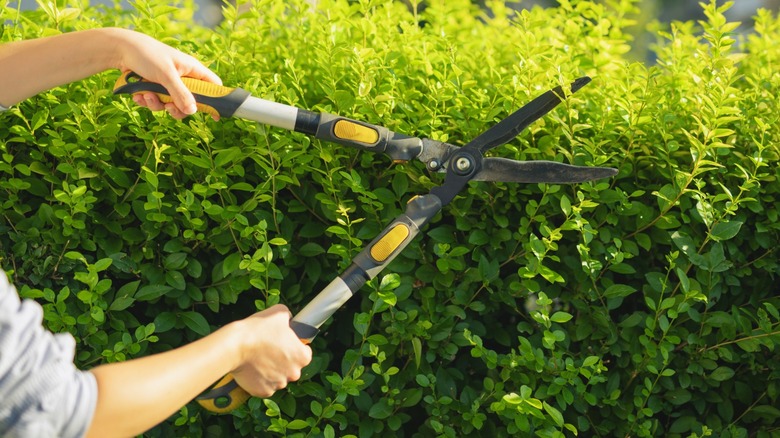
For everyday landscaping, shears are one of the most essential garden tools to keep in your kit. There are a variety of garden shears designed for everything from pruning flowers to tidying hedges, but every single one requires a sharpened blade to do its job efficiently. Consistent, clean pruning with a sharp set of shears helps to encourage healthy plant growth and makes your garden look neater. One way to ensure you have access to ready-to-use tools whenever you need them is a quality sharpener. But if grinding dull garden shear blades with a metal file or other manual sharpener sounds time consuming and labor intensive, don't fret — there's a much quicker and easier solution that's compatible with a power tool you likely already own.
Blade-sharpening drill bit attachments consist of discs made of ultra-hard grinding materials like corundum (aluminum oxide) or diamond (metal with an abrasive diamond grit). The sharpening stone is attached to a shank that fits into a standard power drill, offering a convenient way to keep your garden shears in top shape. Even better, they often come in kits with various stones that can be used for sharpening lawn mower blades, kitchen knives, scissors, and more. You'll also find high-quality single pieces like the UF-SHARP Diamond Sharpener for under $20. Simply tighten the attachment in the drill, power it up, and run it along the length of your garden shear blades to refresh them in only a few minutes.
How to use a sharpening disc on garden shears
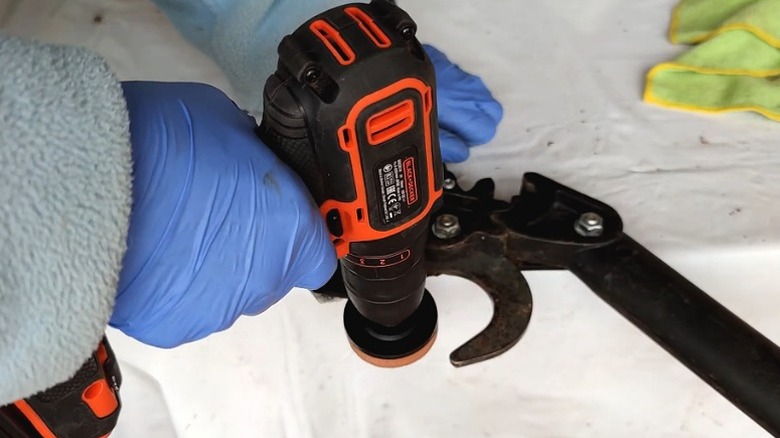
Sharpen your garden shears whenever they get dingy and dull, and give them a quick touch-up at the beginning of the gardening season. When using a power tool to sharpen your shears, the first step is equipping yourself with the right safety gear. At the very least, wear safety goggles and cut-resistant gloves to protect against flying debris and sharp edges.
Corundum and diamond sharpening stones for drills are often practical for larger hedge shears, while mini rotary tools like Dremels could work well for scissors and smaller pruners. Still, a drill can be used successfully on different types of shears and pruners with the proper steps. Begin by cleaning your garden tools properly with warm soapy water and removing stuck-on residue with sandpaper or steel wool. If possible, take your shears apart by removing the pivot bolt before sharpening. Separating the blades will make it easier to sharpen the entire length of the cutting edge. Most importantly, hold the shears securely with a vice as you work.
Connect the sharpening disc to your drill. Get the drill up to speed, and run the underside of the stone along the cutting edge of the blade in a single direction until it's sharp. Many drill attachments have a metal disc just under the stone, creating a notch that the blade can fit into to guide the stone along the edge's length. To remove the burr (the folded strip of metal that forms on the opposite side of the sharpened edge), run the outside of the sharpening stone over it until it's smooth. Once a burr forms, the blade is sharpened, but use your judgment to decide when your garden shears are sharp enough.