

This Fascinating Flower Releases Flammable Oils — Here's What To Know Before Planting It

Some flowers are just nice to look at, while others come with fascinating quirks or abilities. While that may call to mind poisonous petals or insect repellent properties, there are also plants with real firepower. If you're planning a flower garden, Dictamnus albus, also called gas plant or fraxinella, is a beautiful perennial with tall flower spikes lined with pink or white flowers. It produces a natural oil that smells like citrus fruit, but don't sniff it too closely. This oil is flammable. A spark can ignite it, sending a small wave of fire over the plant. While this is a truly fascinating quirk, you'll need to be cautious if you want to grow it.
Gas plant's oil contains a compound called isoprene, which is found in other plants as well as some manmade goods like rubber and plastic. Isoprene is flammable and can even cause cancer, although the amount of oil produced by gas plant flowers is fairly low. Isoprene and other compounds primarily serve as protection against pests in plants. It does seem to work fairly well, as gas plant flowers generally do not have major problems with pests. The oil turns into a vapor during hot weather, giving these flowers a small, invisible cloud of flammable gas. If lit by a spark or flame, the vapor burns away quickly. It doesn't seem to damage the flower at all, but fire is still fire.
How to safely grow gas plant
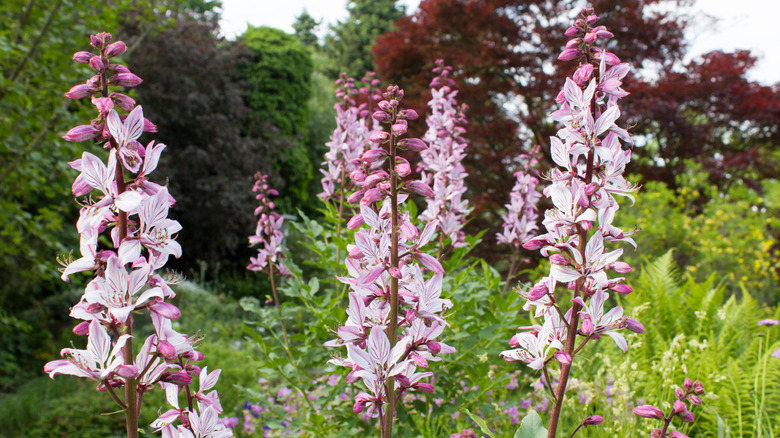
Avoid planting gas plants near open flames or other heat sources. This isn't the best flower to spruce up the area around your firepit or grill. While it may not cause any issues, you don't want a stray ember to escape and ignite the flowers. It could startle or burn unsuspecting guests who are sitting nearby. Likewise, you shouldn't plant gas plant flowers near flammable materials or against your house. The oil burns quickly, so the flame doesn't linger, but paper, sticks, and similar materials don't have the same limitations. Additionally, gas plant flowers can cause skin irritation similar to poison ivy. Garden gloves are an essential tool for home gardeners, but they're particularly important when caring for gas plant flowers.
If you have suitable space and gear, you can grow gas plants as a perennial in zones 3 through 8. They thrive in moist soil and full to partial sun. The seeds should be planted in the fall, as they need cold temperatures to germinate properly, but you can also transplant seedlings in spring. However, it takes two or more years for the plants to mature enough to bloom. If you're planning to move in the next few years, it's better to wait rather than leave the next homeowner with plants that produce flammable gases and cause rashes. You may want to swap it for a native alternative, such as the butterfly-attracting blazing star (Liatris spicata).