

Ditch The Screwdriver: Easily Remove Stripped Screws With A Drill Attachment
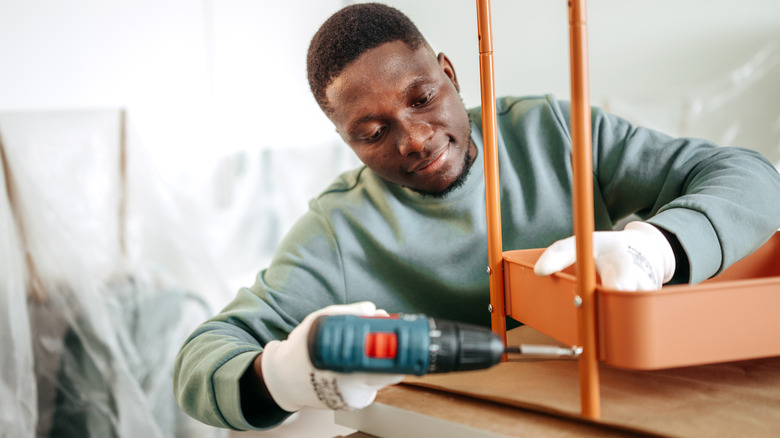
Anyone who has ever driven screws has managed to strip at least one, and usually more. It happens most often when you're using a drill and a driver bit. You hold the drill at the wrong angle, or don't apply enough downward pressure, and the driver head loses contact with the screw head and gouges out the drive — the slot or cross in which your screwdriver head sits. Once that happens, the driver isn't much use any more. If you want to extract the screw and start again with a new one, you'll find a screw extractor to be extremely helpful.
A screw extractor is a driver bit with a cone-shaped head molded into a reverse-thread spiral that fits in your drill. Extractors come in several sizes, so you have to choose the one that fits the screw head. They often come in sets with five or more different sizes, and buying a set is preferable to buying one specific size, because you may need two different sizes to extract a stubborn screw. You can also remove screws with left-hand drill bits. They're very effective but aren't as easy to find on store shelves as screw extractors.
Screw extractors come in handy in all kinds of situations, not just those you create yourself by stripping a screw. They can remove screws that are rusted and stuck or overtightened, and they'll even get out a screw with a broken or missing head. They are a great addition to any toolbox.
Tips for successful screw removal
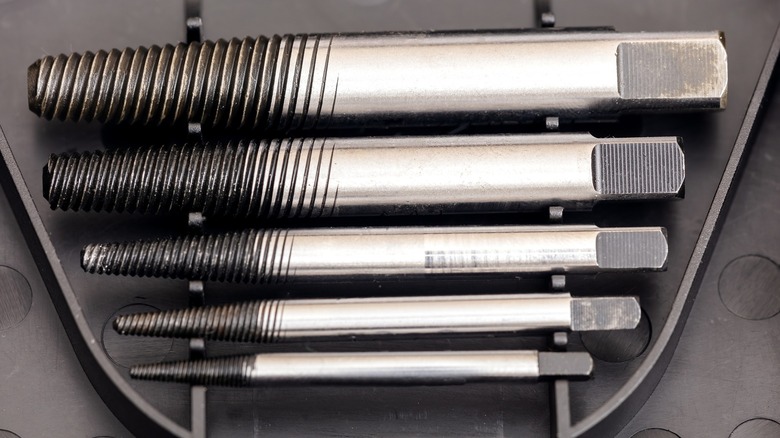
Sometimes, all you need to do to remove a screw is put on safety glasses, insert the screw extractor into the stripped threads, push hard, and operate the drill (slowly and steadily) in reverse. Unfortunately, it may not be this easy. It's common for the head of the screw to be so damaged that the extractor just slips, in which case, you need to give the extractor something to bite. Essentially you're creating a starter indentation or pilot hole in the center of the screw head for the tip of the extractor to grab on to.
Insert the tip of a nail punch in the screw head and strike it with a hammer, making a small indentation. Next, put a metal-boring bit with roughly the same diameter as the punch mark in your drill and drill a hole ⅛- to ¼-inch deep. Now when you use the screw extractor, it can grip the sides of the new pilot hole. Operate the drill at a low speed, in reverse, and the screw should back out.
To reduce frictional heat that could expand the metal and make the screw harder to extract, put a little cutting oil on the screw head before you drill it. This also helps protect your drill bit. If you're trying to extract a rusty screw from wood or metal, try dabbing a little WD-40 or penetrating oil around the screw head and any exposed threads to help loosen it. If you do all this, and the screw won't come out, drill a slightly wider pilot hole and try again with a bigger screw extractor. The larger diameter should help provide the extra torque you need.