

Skip Metal Files: There's A Quicker Way To Sharpen An Old Shovel

If you're a Gen-Xer, you probably just picked up your phone and asked your father why he never told you about sharpening shovels. If you end up asking your mother instead, she'll tell you your dad never sharpened his shovels; he said they didn't need it. That's because she did it when he wasn't looking. Your mom will tell you there's nothing particularly hard about sharpening a shovel with a file and a few spare minutes. Your dad will tell you to skip the file and just use an angle grinder, and you'll be done before the thing spins up to its full 11,000 rpm.
It's not that hand-filing is that difficult; it's just more difficult than a grinder. Hipsters and people with overstuffed root cellars might use a file for the sake of authenticity or whatnot. Why this isn't a more common maintenance task is a bit of a mystery. It has a lot of commonsense benefits. Using a dull shovel or, worse, a new shovel with a blunt factory edge is like trying to cut into a steak with the edge of a serving spoon rather than a proper kitchen knife. And while you could get round this by sharpening your serving spoons, steer clear of spoons that might fit in anyone's mouth. Anyway, sharp shovels cut through roots, are indispensable for removing and transplanting sod, and leave you with healthier plants for the trouble. It's easier and faster than digging with a blunt shovel, and you're far less likely to just throw the shovel on the ground and walk away in frustration. Which extends the life of your shovel, and of you.
The basics of shovel-sharpening
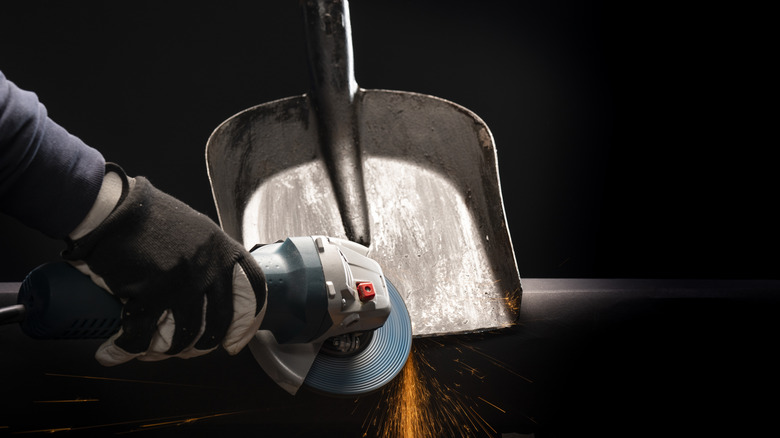
There's not much to sharpening a shovel well. These aren't Wüsthof chef's knives; if you do it wrong, it'll still be 93 percent better than it was before. Always start with a clean shovel. (Always keep your shovel clean. Dirty shovels are a sure way to transport pathogens around your property, so give them a quick wash and spray-down with alcohol after every day of use.) Secure the shovel and start sharpening only on the top side, matching the original angle of your shovel's bevel, unless you have good reason — or even just an okay reason — not to. Good reasons include digging in fluffy, well-cultivated garden soil, in which case you can grind to an angle closer to 30 degrees, or digging in gravel, in which case a shallower 60-degree angle will dull less quickly. Depending on the angle at which you sharpen, about ⅛ inch of freshly ground or filed, shiny metal should be visible at the shovel's cutting edge. Some people will tell you to only sharpen the end of your shovel or spade, but sharpening part or all of the way up the side will help with cutting roots and buried water lines using a wiggling or hacking motion.
Finally, give the blade a coat of oil or something like Rust-Oleum Rust Inhibitor to, you know, inhibit rust. And also finally, why not take the time to lightly sand and oil or stain your shovel handle, assuming it's wood? (We compare the charms of wood and fiberglass shovel handles here.) Or paint it, so you don't lose it lying out by the fence yet again.
Getting it done with an angle grinder
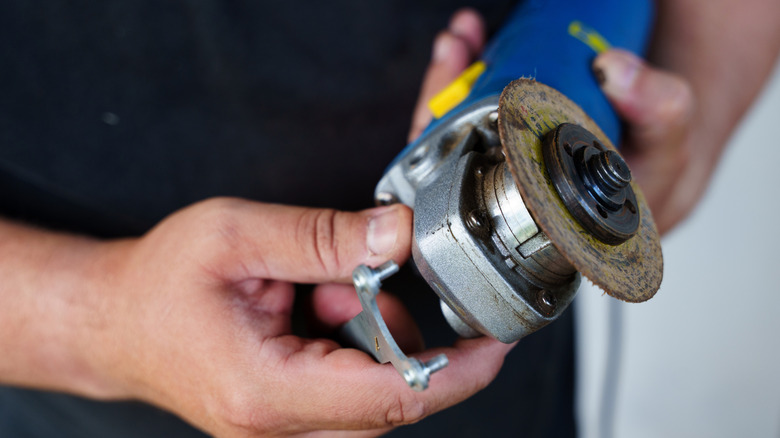
There are a few bits of information you'll need to sharpen a shovel with an angle grinder. The first is where your angle grinder is, or where you can borrow one. You'll also need to get in the habit of securing the shovel, and most things you're going to touch with an angle grinder. These wheels spin at unholy speeds, and you don't want a freshly sharpened shovel flopping about and digging into you or the side of your grinding disc. This might cause some to question the very idea of sharpening things with angle grinders, and we admit there are other ways to get a shovel properly sharpened. Some swear by sharpening shovels with drill attachments, for example. But you won't find a method more efficient than an angle grinder.
It's easy to remove too much metal with angle grinder, so a light touch is key. You can use a gentler 120-grit flap disc as well, if your tendency is to apply more pressure than self-control in such situations. Either way, don't use excessive pressure, and don't let the metal heat up, which will destroy the shovel's temper, which will in turn inflame your own temper. As we said above, sharpen only the top of a shovel blade, but you can debur the back of the shovel with a quick, very light pass of the angle grinder. We have seen shovel owners follow up the angle-grinding by filing the angle-ground edge to remove circular marks, and we celebrate neurodiversity, but this is wholly unnecessary.