

No More Asphalt Shingles: This Eco-Friendly Roofing Alternative Is Gaining Popularity
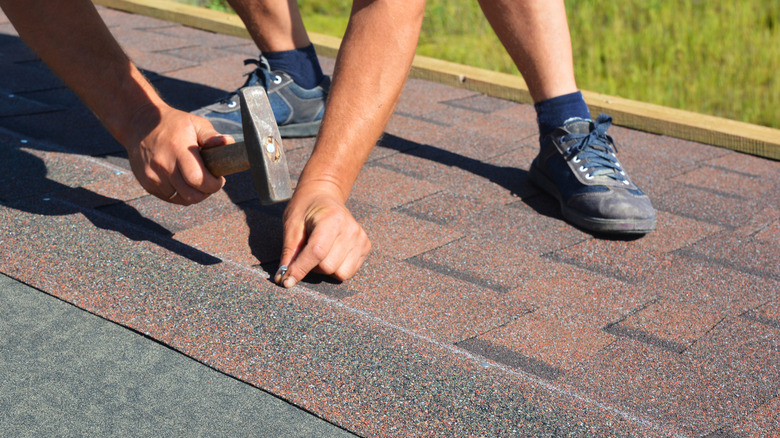
Asphalt shingles have dominated American roofs — and landfills — for years. The U.S. Environmental Protection Agency (EPA) estimates that asphalt shingles alone create over 13 million tons of construction and demolition debris annually. And it arrived at this data point nearly a decade ago in 2015! But with climate concerns mounting and landfill square footage shrinking, many homeowners are looking for roofing alternatives that won't be as damaging to the environment. The eco-friendly roofing choice currently winning this race is metal roofing, according to Oren Levy, the founder of Gesh Group.
Elaborating on why homeowners are shifting away from asphalt shingles in his exclusive interview with Hunker, Levy states, "Asphalt shingles don't last as long and usually end up in landfills when they're replaced." Indeed, BASF conducted a study which found that over 35% of roofers were concerned about their environmental impact. As they rarely last beyond 20 years, they require frequent replacements, though the worst parts are that they're rarely recycled and may even contain formaldehyde. Moreover, notes Levy, "They can also create runoff as they break down over time, which is why you see LID plans to retain water on site." LID, or low impact development plans, involve practices designed to retain stormwater rather than channeling it away through pipes.
Metal roofs, in contrast, have an average life of 40 to 70 years. So, they're more sustainable, delay replacements by decades, and are fully recyclable. "Metal roofs last much longer, can often be recycled, and are a more environmentally friendly choice overall," asserts our experts.
Why are metal roofs becoming popular
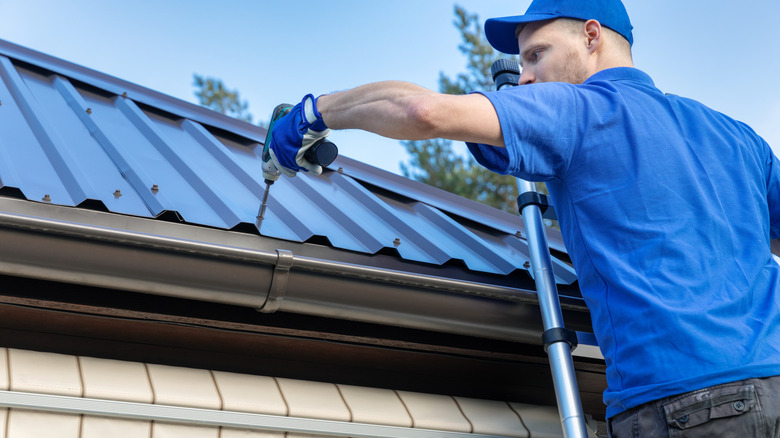
Touching on their popularity, Levy mentioned experiencing a noticeable upsurge in clientele for metal roofing as a countermeasure against fire risk. "We're seeing more homeowners choose metal roofs, especially in areas where wildfires are a concern," he states. "One of the biggest benefits is that metal is noncombustible, so it offers better fire protection."
Other than fire resistance, some homeowners are favoring metal over asphalt shingles for its durability and low maintenance. "It also lasts a long time, requires very little maintenance, and has a clean, modern look," he adds. Additionally, it's known to handle moisture better, which may be useful in stormy areas, though be prepared for a dent or two if an errant tree branch falls over your roof. Those experiencing hot climates, especially with poorly-insulated homes, may also find metal roofs useful to save money on air conditioning. Metal reflects sunlight and its heat away from your roof, keeping the area relatively cooler. For this reason, EnergyStar and the EPA consider metal as a cool roof material. Brownie points if it's coated in light colors or reflective paint.
But to take advantage of these benefits, metal roofs should be installed properly. Unlike asphalt shingled roofs that can be installed in two days or less, metal roofs demand more skill because the installers must ensure proper alignment, fastening, and sealing, often using specialized equipment. Otherwise, their performance will be compromised. Other hidden disadvantages to metal roofing that you should know about are that they can be noisy during a heavy downpour or hailstorm and are generally expensive upfront.
Which metal roof should you go for and other sustainable choices
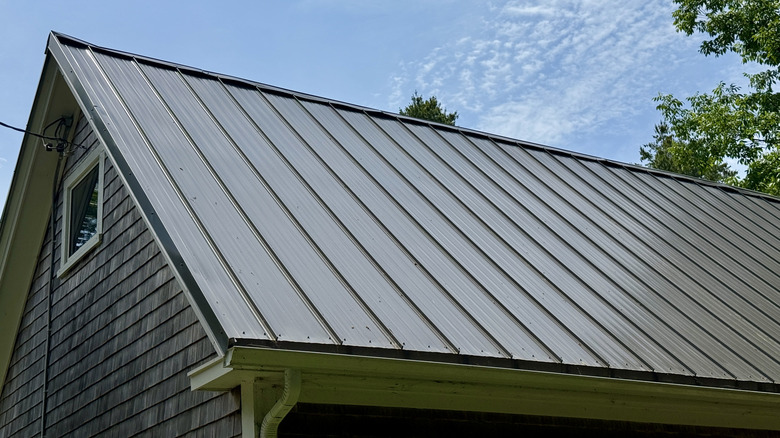
Out of different types of metal roofs, Levy makes the case for standing seam during his interview with Hunker. "I usually recommend standing seam metal roofing. It has a clean, timeless look, performs really well, and works on both modern and more traditional homes," he says. Often made of galvanized or stainless steel, aluminum, or copper, a standing seam metal roof offers the distinct advantage that all fasteners are hidden from plain sight, thus weaving a seamless, integrated unit. However, it doesn't get boring, as the seams are arranged in different ribbed or striated styles and often stand a bit higher than the main panel.
But if you aren't too keen on getting metal roofing, there are other eco-friendly roofing materials that you can explore. "Clay tile, concrete tile, and slate are all great options because they last for decades," says Levy. Well-maintained, they may hold strong for over 100 years and may be even more sustainable should you select reclaimed variants. "If the budget allows, solar roofing is another good option that can help reduce energy costs over time," he adds. By enrolling in net metering arrangements and state incentive programs, you might recoup the full cost in about 15 years or less.