

Remove Rust From Metal Files With A Kitchen Ingredient You Already Have
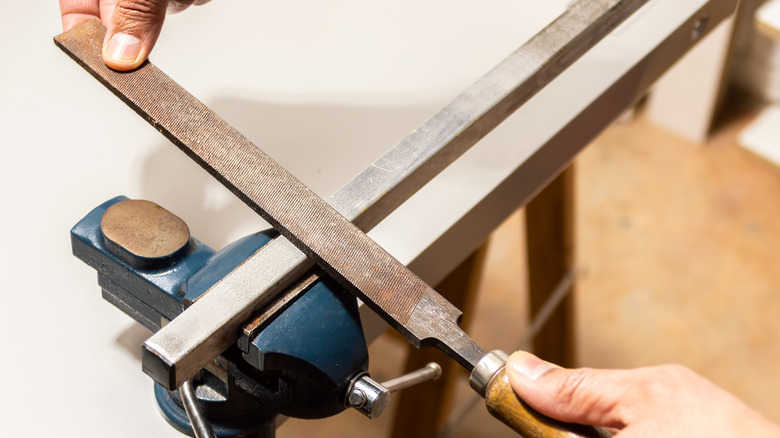
Metal files get rusty the way other tools do, from prolonged exposure to oxygen and water. The interaction between iron and water causes a chemical reaction that creates iron oxide, the brown, flaky residue we know as rust. If left unchecked, it can totally destroy a tool's structural integrity. Thankfully, you don't need a special rust remover to get rust off your files. Instead, use vinegar, which can dissolve rust as well as any industrial cleaner.
Distilled white vinegar is one of the most common types of household vinegar. It can be mixed with essential oils to create cleaning vinegar solutions, or used straight to remove rust from metal files. White vinegar is made up of acetic acid and water. When acetic acid comes into contact with the iron present in the rust, it creates a bond that lifts the rust away from the metal surface and forms iron acetate. Iron acetate makes a brown sludge that can be easily wiped away with a cloth or scrubbing pad or rinsed away with water. Once you've cleaned your files with vinegar, they should be free of rust.
How to remove rust from metal files using vinegar
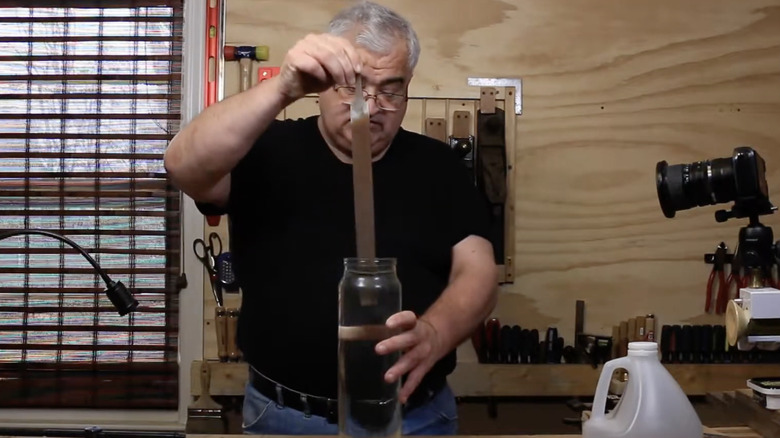
Actually, cleaning and removing rust from metal files is as easy as removing it from other items like rusty bolts. First, assemble the equipment. You'll need a container large enough to fully submerge the files, enough vinegar to fill the container, and a microfiber cloth, scrubbing pad, or wire brush.
Once the container is filled with vinegar, completely immerse the metal file in the liquid. The length of time you submerge it will depend on how rusty it is. Check after half an hour to see what progress has been made. If the surface rust was not overly built up, you should be able to scrub or wipe it away. If you find that the rust is pervasive, return the file to the vinegar and let it sit for 24 hours, routinely checking and scrubbing it to see if the vinegar has loosened the rust.
Once the tool is cleaned, any remaining vinegar on the surface must be neutralized. Empty and refill the container with a mixture of water and baking soda, using about 1 cup of baking soda for 1 gallon of water. Submerge the file in the solution for 10 minutes. Remove the file and buff with fine steel wool to dry and polish it.